Ctrl K
1890–1983
Louis Conrad Rosenberg (1890–1983), born in Portland, Oregon, to Charles and Hannah Rosenberg, emerged as one of America's foremost architectural etchers, blending his training as an architect with masterful printmaking. A precocious draftsman from childhood, he apprenticed under T. Chapell Brown in Portland starting at age sixteen in 1906, advancing to draftsman under mentor Ellis Fuller Lawrence, whose guidance secured him a scholarship from the Architectural Club of Portland. Rosenberg studied architecture at the Massachusetts Institute of Technology, graduating in 1914 with its Traveling Fellowship. He joined the University of Oregon's School of Architecture faculty as Assistant to the Dean, teaching design before enlisting in World War I's Camouflage Corps under Aymar Embury.
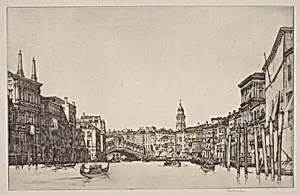
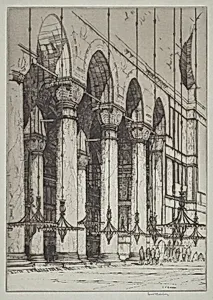
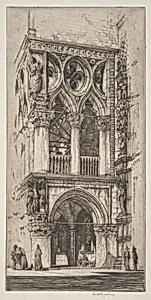
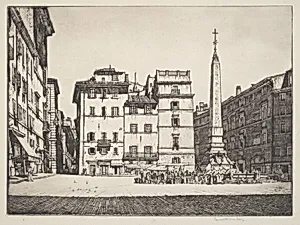
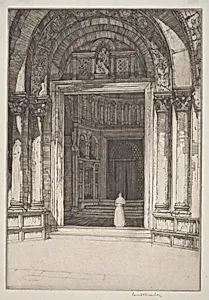
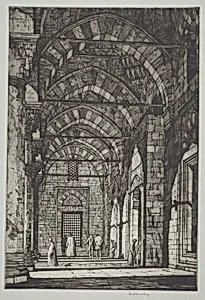
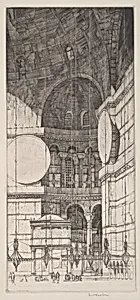
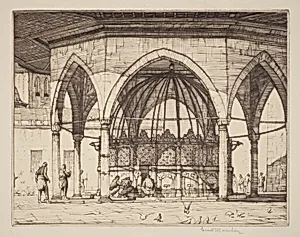
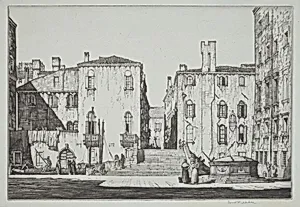
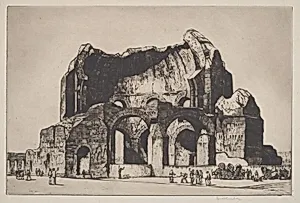
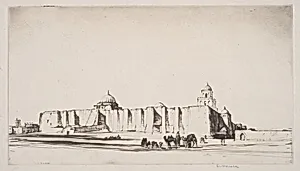
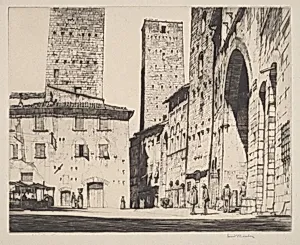
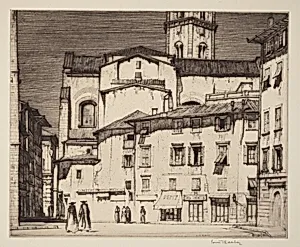
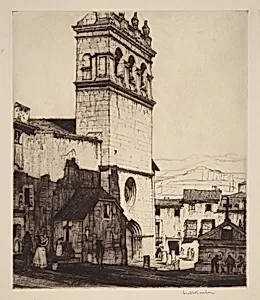
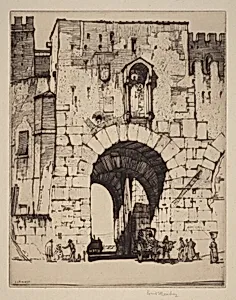
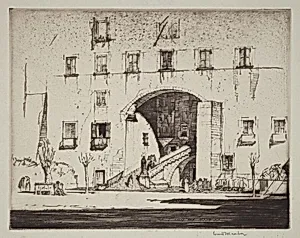
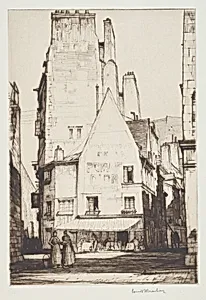
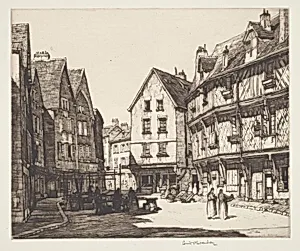
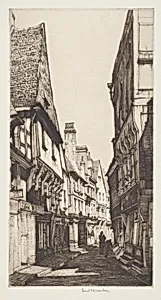
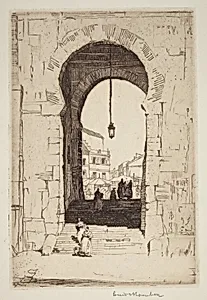
Postwar travels fueled his pivot to etching. At the American Academy in Rome (1921–1922), he studied under Robert Fulton Logan, producing his acclaimed Rome Series, including *St. Peter's Colonnade* (1922), which earned a Silver Medal from the California Printmakers Society. In London (1924), he honed drypoint techniques at the Royal College of Art under Malcolm Osborne. Rosenberg's style—precise, balanced compositions capturing picturesque architecture with animated figures in the foreground—preserved vanishing European and American structures through etching and drypoint, yielding 171 estate prints noted for their technical mastery and atmospheric depth.
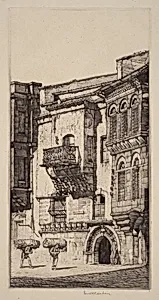
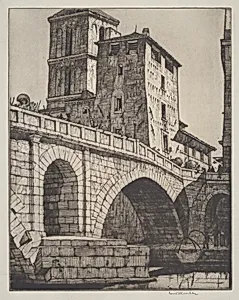
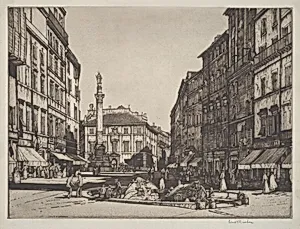
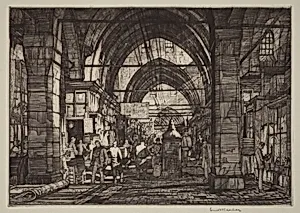
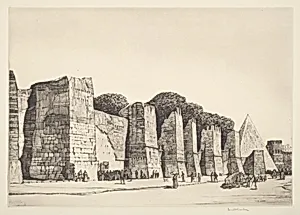
His major works include the Rome etchings; a commission from the Van Sweringen brothers for twenty-two plates documenting the Cleveland Union Terminal's construction (1927–1930), from demolitions to the towering Terminal Tower; the Cincinnati Series (1932); and evocative scenes like *Porta Ostiense, Rome*, *Great Bazaar, Constantinople*, *San Gimignano*, and *Market Place, Nuremberg*. Exhibitions at the Royal Academy, Chicago Society of Etchers, and National Academy garnered Logan Prizes (1925, 1927, 1932) and the Architectural Institute of America's Fine Arts Medal (1949).
Rosenberg's legacy endures as a pinnacle of traditional American printmaking, akin to John Taylor Arms and Samuel Chamberlain. World War II service in camouflage preceded architectural roles in New York firms until retirement in Portland. The University of Oregon archives his oeuvre, while MIT honors him with the Louis C. Rosenberg Traveling Fellowship. Married to Marie Louise Allen since 1919, he produced hundreds of works celebrating architecture's timeless allure.