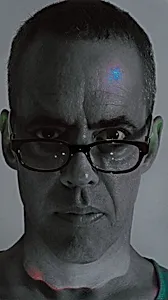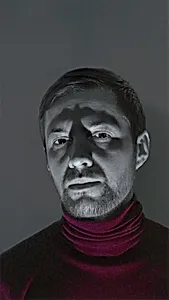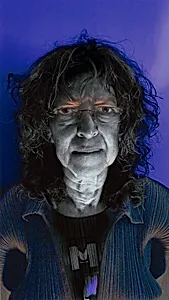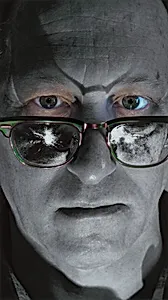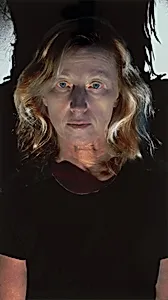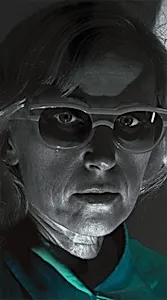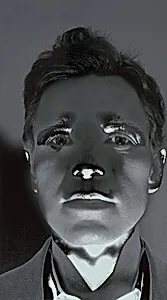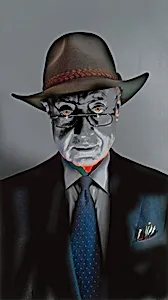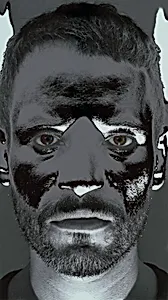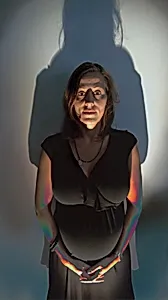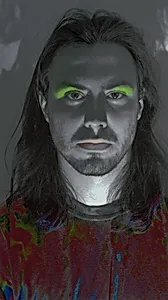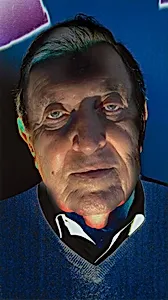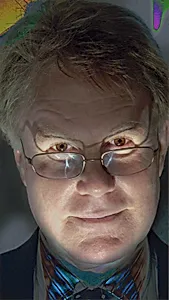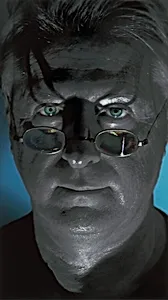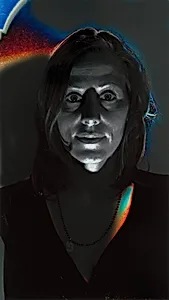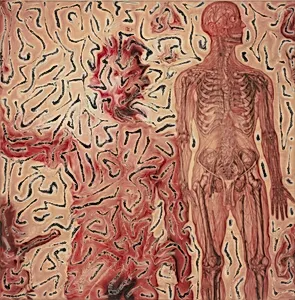
Lucas Samaras, a Greek-born American artist renowned for his boundary-defying explorations of self and identity, was born on September 14, 1936, in Kastoria, Greece. Immigrating to the United States with his family in 1948 amid the turmoil of World War II and the Greek Civil War, he settled in West New York, New Jersey. Samaras pursued studies at Rutgers University from 1955 to 1959, where he befriended Allan Kaprow and became part of the innovative Fluxus circle that included George Segal, George Brecht, and others; he even posed for Segal's plaster sculptures and participated in Kaprow's and Claes Oldenburg's Happenings. He trained in acting under Stella Adler at her conservatory and briefly studied art history at Columbia University in 1959 under the influential scholar Meyer Schapiro.
Samaras's oeuvre eluded easy categorization, blending surrealist traditions with assemblage and performance while departing from Abstract Expressionism and Pop art, always centering autobiography, the body, and psyche. His early works drew from everyday objects—nails, yarn, mirrors, feathers—cast in aluminum or plaster, reflecting a ritualistic transformation of the mundane into the perilous and erotic. Represented by Pace Gallery from 1965, he worked across painting, sculpture, photography, and installations, pioneering manipulations of Polaroid film and immersive mirrored environments that blurred art, life, and self-reflection.
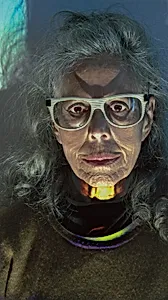
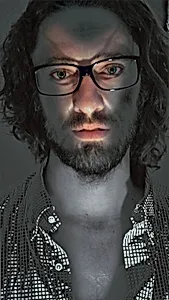
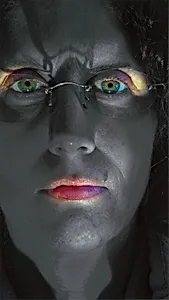
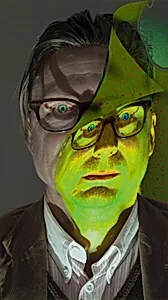
Among his breakthrough series were the assemblage boxes, beginning in 1960 and debuting at New York’s Green Gallery in 1961, featured in MoMA’s *The Art of Assemblage* that year; the iconic *Room No. 2* (Mirrored Room, 1966), now at the Buffalo AKG Art Museum; and *Auto-Interviews* (1971). His most celebrated innovation, the *Photo-Transformations* (1973 onward), used Polaroid SX-70 prints to distort and mutilate self-portraits, probing identity’s fluidity. Later highlights included *Sittings* (1979–80) portraits of art world figures, *Reconstructions* (1979–80), and *PARAXENA* at the 2009 Venice Biennale, representing Greece.
Samaras's relentless experimentation influenced generations, with major retrospectives like the Metropolitan Museum’s *Offerings from a Restless Soul* (2014) affirming his legacy as a shape-shifter of media and meaning. He passed away on March 7, 2024, in New York City at age 87 from complications of a fall, leaving a profound imprint on postwar American art.