
Ctrl K
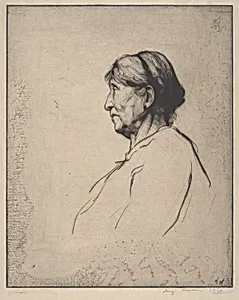
1900–1988
Luigi Lucioni (1900–1988) was an Italian-born American painter celebrated for his luminous, meticulously rendered still lifes, landscapes, and portraits that brought a classical precision to the American realist tradition of the mid-twentieth century. Born in Malnate, near Varese in northern Italy, he emigrated to the United States as a child and was raised in New York. He studied at the Cooper Union and later at the National Academy of Design, where he developed the disciplined draftsmanship and refined observation that would define his mature style.
Lucioni's paintings are distinguished by their crystalline clarity, polished surfaces, and an almost hallucinatory attention to the textures of glass, fabric, copper vessels, and the Vermont countryside he loved. He worked slowly and deliberately, producing a relatively small but consistently high-quality body of work. His still lifes — arrangements of household objects, flowers, and fruit — recall the Dutch and Flemish masters in their jewel-like precision, while his Vermont landscapes capture the rolling hills and weathered farms of New England with an affectionate, slightly idealized realism.
He achieved considerable public recognition during his lifetime, including the distinction of having his work purchased by the Metropolitan Museum of Art in New York — a significant honor for an American artist of his generation. He was a popular exhibitor at major venues and won numerous prizes, finding a wide audience among collectors who valued technical excellence and visual serenity in an era often dominated by abstract expressionism.
Lucioni's reputation has endured precisely because his commitment to traditional craft and representational clarity offers something timeless and accessible. His work represents an important strand of American realism that maintained continuity with European Old Master traditions even as the mainstream art world moved in radically different directions.