Ctrl K
1763–1800
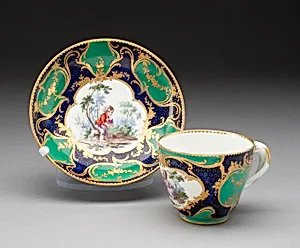
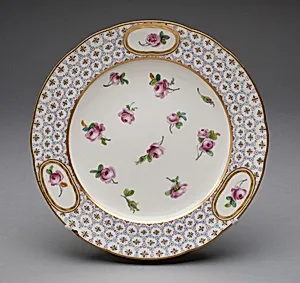
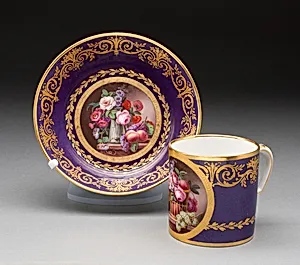
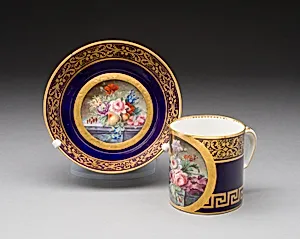
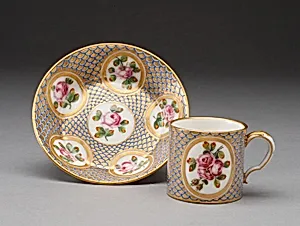
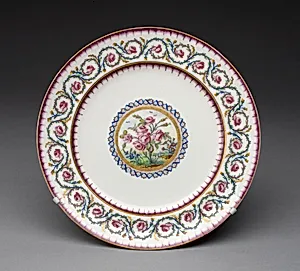
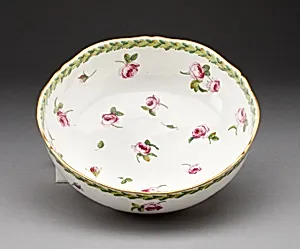
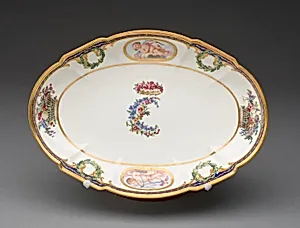
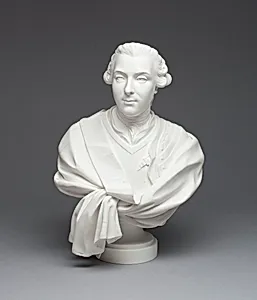
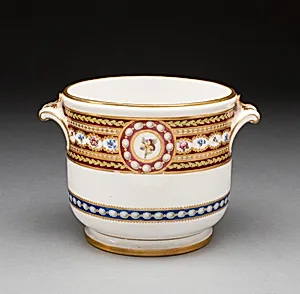
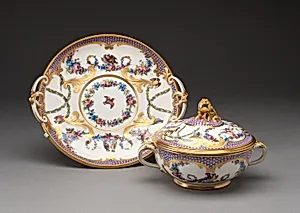
The Manufacture nationale de Sèvres, a premier French porcelain factory, flourished from 1763 to 1800 as the royal powerhouse of European ceramics, producing opulent soft- and hard-paste porcelain under the patronage of Louis XV and XVI. Originally founded in Vincennes in 1740 to rival Meissen and Chantilly, it relocated to Sèvres in 1756 and was fully acquired by the Crown in 1759, becoming the Manufacture royale de porcelaine de Sèvres. Artisans trained under artistic director Jean-Claude Chambellan Duplessis (1748–1774), who oversaw modeling, gilding, and painting workshops, followed by sculptor Louis-Simon Boizot (1774–1800), who directed the shift toward Neoclassicism. Key figures included modeler Étienne Maurice Falconet for biscuit porcelain figures and painters like Charles-Nicolas Dodin, Jean-Louis Morin, and André-Vincent Vielliard, who executed designs after François Boucher.
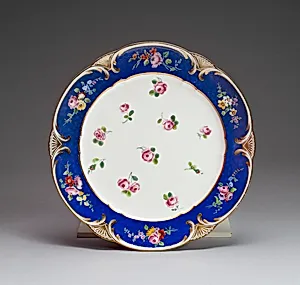
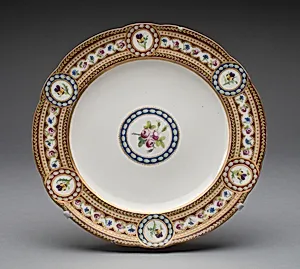
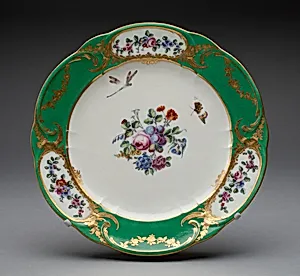
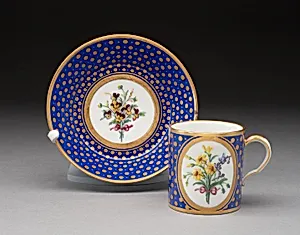
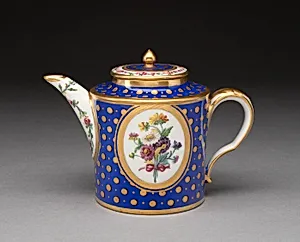
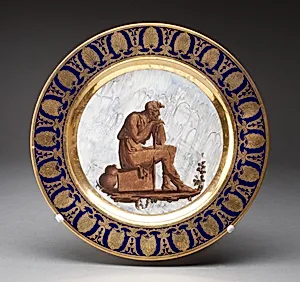
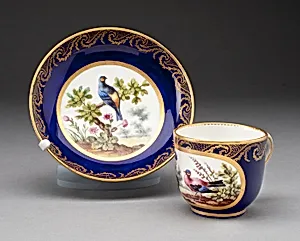
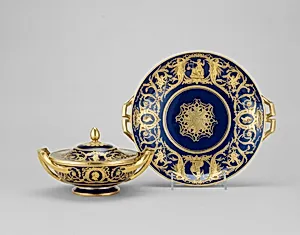
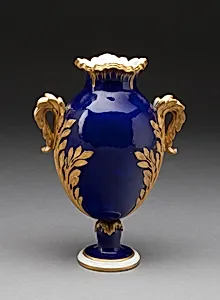
The factory pioneered techniques like slipcasting for intricate vases and the iconic bleu de Sèvres glaze from cobalt oxide, transitioning from soft-paste (perfected by Louis-François Gravant) to hard-paste after discovering kaolin at Saint-Yrieix-la-Perche in 1768, with commercial production by 1773. Stylistically, it embodied the exuberant Rococo of the 1760s—seen in floral "fleurisserie" and whimsical forms—evolving into austere Neoclassicism by the 1770s, with gilded borders, marine trophies, and genre scenes after David Teniers. Landmark works included the pot-pourri vase in the shape of a ship (Vase à vaisseau, 1764, modeled by Duplessis), of which ten survive; the Pot-Pourri Myrte (1762); vases for Louis XVI (1778–1782); and the lavish "Service à frise riche en couleurs et riche en or" for Marie Antoinette (1784).
During the Revolution, production persisted under republican directors like Antoine Régnier (1778–1793), supplying courts across Europe, including Catherine the Great. Its legacy endures as a symbol of French luxury, influencing global porcelain with over 86 documented pieces from this era alone, blending scientific innovation and artistic mastery; the factory thrives today as part of the Cité de la céramique.