Ctrl K

1831–1906
Marie-Blanche Hennelle Fournier (1831–1906), known affectionately as Blanche, was a French artist whose life intertwined with the peripatetic world of diplomacy. As the second wife of career diplomat Hugues-Marie-Henri Fournier, she accompanied him on postings to Stockholm, Sweden, and later Rome, Italy, during the 1870s. The couple had a daughter, Pauline, born in 1855, whose portraits frequently appear in Blanche's work alongside images of diplomats, Swedish royalty, and Italian nobility. Little is documented about her early life or formal training, though her exceptional watercolor technique and draftsmanship point to an aristocratic education typical of her class.
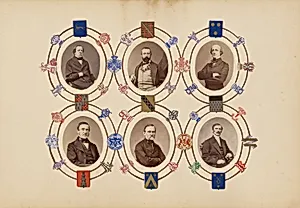
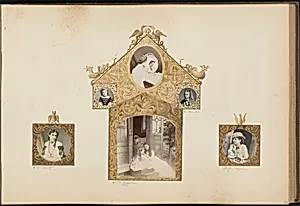
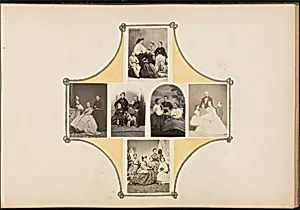
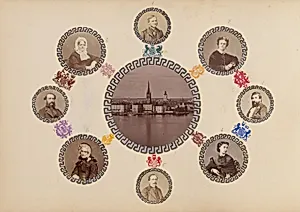
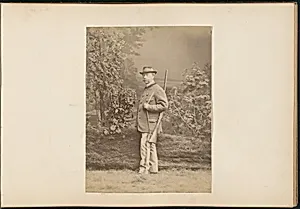
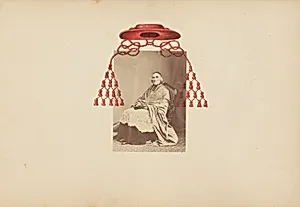
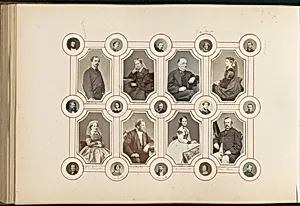
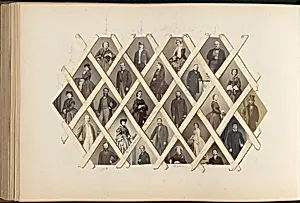
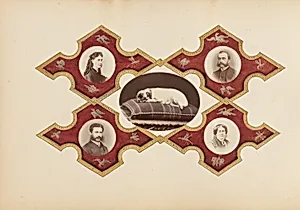
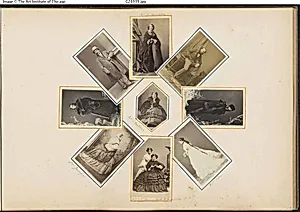
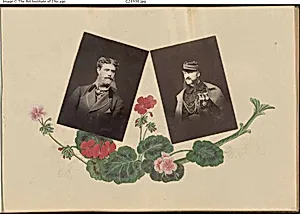
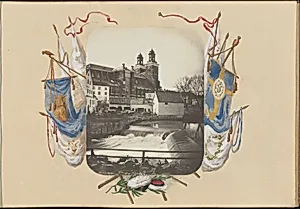
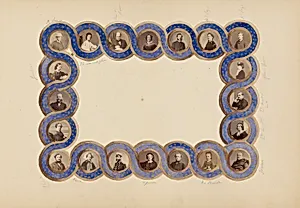
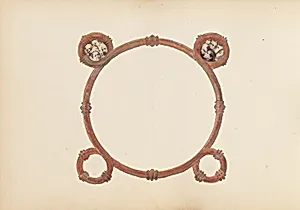
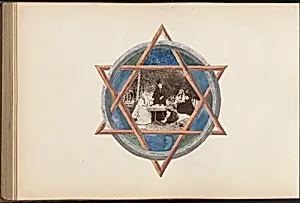
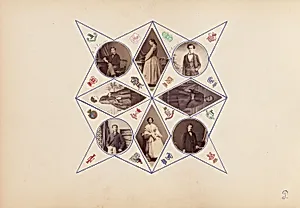
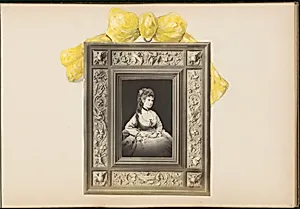
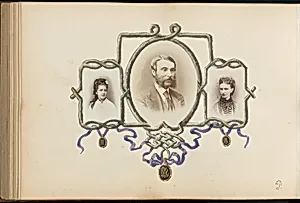
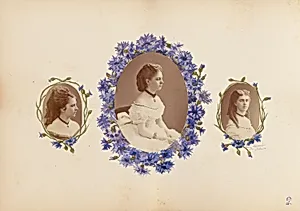
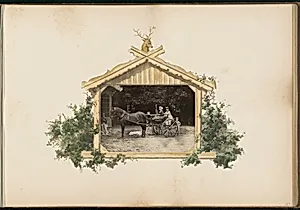
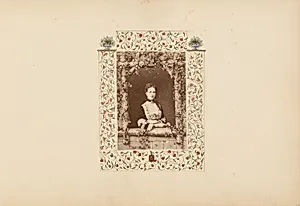
Fournier's artistic style emerged within the niche of Victorian photocollage, a domestic craft predominantly practiced by upper-class English women, making her a rare French practitioner possibly inspired by English diplomatic circles. She transformed cartes-de-visite photographs—small portrait cards popular in the era—into fantastical scenes by embedding them in meticulously painted watercolor landscapes teeming with botanical and zoological motifs. Her touch was miniaturist-precise: faces became butterfly eyespots, figures dangled from spiderwebs or perched on lily pads, and architectural details mimicked marble crazing or chainmail curtains. These hybrid compositions revealed her deep knowledge of natural history and playful irreverence toward photography as mere raw material for art.
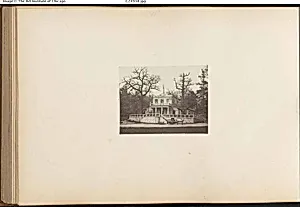
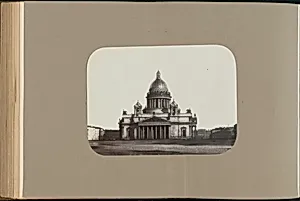
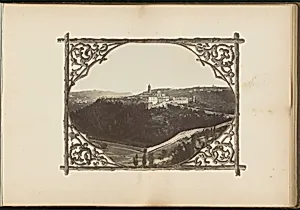
Her masterpiece, *The Madame B Album* (ca. 1870s), is a leatherbound volume of roughly one hundred such collages, blending hand-colored albumen prints, ink, and watercolor. Unsigned and unfinished—perhaps abandoned from waning interest—it served privately as a social ledger, family record, or travelogue of her diplomatic sojourns, opening with an elaborate "B" monogram. Curators at the Art Institute of Chicago, which acquired it via the Mary and Leigh Block Endowment Fund, identified Fournier through clues like the intertwined elite portraits and geographic hints.
Today, Fournier's album anchors her legacy in museum collections, with over 110 works held by the Art Institute alone, and featured in the Metropolitan Museum's 2010 exhibition *Playing with Pictures: The Art of Victorian Photocollage*. It exemplifies how women like her elevated amateur craft into sophisticated, subversive art, bridging photography's novelty with painting's whimsy and preserving intimate glimpses of 19th-century cosmopolitan life.