Ctrl K
1903–1970
Mark Rothko (born Marcus Yakovlevich Rothkowitz, September 25, 1903 – February 25, 1970) stands as one of the most influential figures in twentieth-century American art and a central pioneer of Abstract Expressionism. Born into a Jewish family in Dvinsk (now Daugavpils, Latvia), then part of the Russian Empire, Rothko's early life was marked by the fear and persecution faced by Jews in Tsarist Russia. In 1913, at age ten, he emigrated with his mother and sister to Portland, Oregon, joining his father and older brothers who had fled to escape conscription into the Imperial Russian Army. Tragically, his father died just months after the family's reunion, leaving them in poverty and profoundly shaping Rothko's lifelong engagement with themes of tragedy and the human condition. Rothko's artistic journey traversed multiple phases before arriving at his signature style. After briefly attending Yale University on scholarship (1921-1923), he moved to New York City and began studying at the Art Students League under Max Weber and George Bridgman. His early work in the 1920s and 1930s consisted of figurative paintings, particularly his haunting Subway series depicting isolated urban figures that captured the alienation of modern life. During World War II, influenced by Surrealism, Nietzschean philosophy, and Jungian psychology, Rothko turned to mythological subjects as a means of expressing universal human emotions and the tragic dimensions of existence. This period saw paintings like The Omen of the Eagle (1942) and Antigone (1941), which combined classical references with biomorphic forms. By 1949, after a transitional phase of 'multiforms'—floating, nebulous shapes that bridged figuration and pure abstraction—Rothko achieved the mature style for which he is renowned: large-scale canvases featuring luminous rectangular fields of color that seem to hover and breathe. Rejecting the violent gestures of artists like Jackson Pollock, Rothko developed a painstaking technique of thin, layered washes that created an almost mystical luminescence. He insisted his paintings were not about color relationships but rather vehicles for expressing basic human emotions—tragedy, ecstasy, doom—and considered the act of viewing them a spiritual experience. His monumental commissions, including the Seagram Murals (which he famously withdrew from in 1960, refusing to let his work decorate a luxury restaurant) and the transcendent Rothko Chapel in Houston (completed posthumously in 1971), represent the culmination of his vision of art as a site for contemplation and the sublime. Rothko's life ended tragically on February 25, 1970, when he died by suicide in his New York studio, leaving behind a profound legacy that continues to influence contemporary art and our understanding of abstraction's emotional and spiritual power.
Marcus Yakovlevich Rothkowitz was born on September 25, 1903, in Dvinsk (now Daugavpils, Latvia), a town within the Pale of Settlement in the Russian Empire. His father, Jacob (Yakov) Rothkowitz, was a pharmacist and intellectual who initially provided his children with a secular and political upbringing, though he later returned to Orthodox Judaism. According to Rothko, his father was 'violently anti-religious' during his Marxist phase. The family was highly educated—'We were a reading family,' Rothko's sister recalled—and young Marcus spoke Lithuanian Yiddish, Hebrew, and Russian. At age five, following his father's religious turn, Rothko was sent to cheder to study the Talmud.
Life in Tsarist Russia was plagued by fear for Jewish families, who were often scapegoated for the country's problems. Fearing his elder sons would be drafted into the Imperial Russian Army, Jacob Rothkowitz emigrated to the United States in 1910, settling in Portland, Oregon, where his brother Samuel Weinstein owned a wholesale clothing business. In January 1913, his two eldest sons, Moise and Albert, made a perilous journey to Ellis Island without passports. Later that year, Marcus, his older sister Sonia, and their mother sailed second-class on the SS Czar to Brooklyn, arriving at Ellis Island in late 1913. They crossed the country to reunite with Jacob in Portland, but tragedy struck when Jacob died of colon cancer just months after the family's reunion, leaving them without financial support. This loss profoundly affected young Marcus, who mourned for nearly a year at a local synagogue before vowing never to set foot in one again, severing his ties with organized religion. Sonia operated a cash register while Marcus worked in his uncle's warehouse selling newspapers to employees to help support the family.
Despite these hardships, Rothko proved an excellent student and completed his studies at Portland's Lincoln High School in just three years, graduating with honors. In 1921, he was awarded a full scholarship to Yale University. However, the scholarship was not renewed after his first year, forcing him to work as a waiter and delivery boy to support himself. Finding Yale elitist and racist, Rothko dropped out at the end of his sophomore year in 1923, never returning until he received an honorary degree 46 years later. He then moved to New York City, where he would begin his transformation into an artist.
After moving to New York in 1923, Rothko initially had no intention of becoming an artist. However, in 1924, while visiting a friend at the Art Students League, he was captivated by students sketching a nude model and immediately enrolled. He studied with George Bridgman and Max Weber, the latter being particularly influential in introducing him to modernist ideas. Through Weber's class, Rothko befriended Louis Harris and began to immerse himself in the New York art world. In the late 1920s, he was introduced to Milton Avery, a modernist painter whose simplified and vivid images of domestic subjects, treatment of paint, and approach to color left an indelible mark on Rothko's development. According to Elaine de Kooning, it was Avery who 'gave Rothko the idea that [the life of a professional artist] was a possibility.'
To support himself, Rothko began teaching in 1929 at the Center Academy of the Brooklyn Jewish Center, a part-time position he would hold for over twenty years until 1952. This work with children proved significant to his artistic philosophy; he believed deeply in children's ability to communicate their perceptions of reality through simple visual images and looked to them as a basis for his own search for truth. He even included selections of his students' work in his first solo exhibition at the Portland Art Museum in 1933, where he and his wife hitchhiked from New York for the opening. This was followed months later by an exhibition at the Contemporary Arts Gallery in New York.
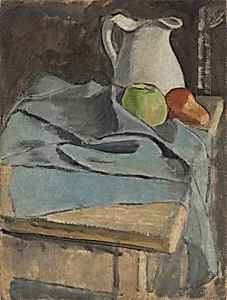
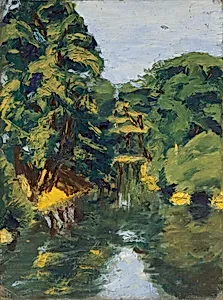
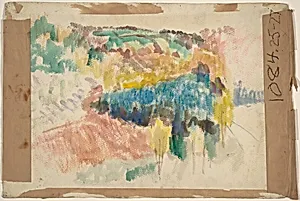
Throughout the 1920s and 1930s, Rothko produced over 1,500 figurative works in watercolor, ink, and graphite, depicting urban scenes, landscapes, and particularly subway environments. His Subway series from the mid-1930s—including works like Entrance to Subway (1938) and Underground Fantasy (1940)—featured isolated, elongated, ghost-like figures trapped in their own worlds, expressing the loneliness and alienation of modern urban life. These paintings, similar in atmosphere to Edward Hopper's work, treated figures as 'tall, spindly, stick-like forms' that were 'flat, stiff and inexpressive and yet suggestive of an inaccessible inner drama.' The subway became a metaphor for homelessness and displacement, reflecting Rothko's own story as an immigrant outsider and his tendency toward melancholy. During this period, Rothko also became involved in leftist politics, joining the WPA Federal Art Project and co-founding The Ten with Adolph Gottlieb, Barnett Newman, and others—a group committed to advancing new American art beyond regionalist and conservative traditions. On February 21, 1938, concerned about rising antisemitism in America and Europe, Rothko finally became a U.S. citizen and abbreviated his name from 'Markus Rothkowitz' to 'Mark Rothko.'
Around 1940, Rothko underwent a profound transformation in his work, turning away from figurative urban scenes toward mythological and surrealist imagery. This shift was precipitated by several factors: the outbreak of World War II and its attendant horrors, his deepening engagement with philosophy and psychology, and his growing belief that figurative painting could not adequately express the world's essential and universal qualities. In 1939, he briefly stopped painting altogether to immerse himself in reading mythology and philosophy, finding particular resonance in Friedrich Nietzsche's The Birth of Tragedy. Nietzsche's ideas about Greek tragedy serving to redeem humanity from the terrors of mortal life, and his conception of art as synthesizing Dionysian ecstasy with Apollonian form, profoundly shaped Rothko's understanding of art as drama and his pursuit of what he called 'tragic art.'
Influenced by Surrealists like Max Ernst and Joan Miró, as well as Carl Jung's theories of the collective unconscious and Sigmund Freud's Interpretation of Dreams, Rothko began creating composite images populated by mythological symbols, totems, and fragmented bodies. His paintings from this period—including Antigone (1941), The Omen of the Eagle (1942), The Sacrifice of Iphigenia, Oedipus, Rites of Lilith (1945), and works evoking Judeo-Christian imagery like Gethsemane and The Last Supper—featured flattened, stylized, ambiguous human figures alongside wings, classical architectural elements, and other symbolic forms. The Omen of the Eagle, painted during World War II, combined Greek heads in a frieze at the top, human feet in motion at the bottom, and eagles' heads and wings surmounting columnar forms that suggested both breasts and talons. Rothko saw the eagle—a national symbol for both America and Germany—as a means of expressing the war as a conflict between civilization and cruelty, refinement and ferocity.
From this period, Rothko believed that modern man's spiritual emptiness resulted partly from the lack of mythology, and he sought to create art that could free unconscious energies previously bound by mythological images, symbols, and rituals. He had read ancient Greek philosophers, was fascinated by Plato and adapted episodes from Aeschylus's Oresteia, and sought to express what Nietzsche called 'metaphysical consolation'—a yearning for a transcendent realm beyond mortal suffering. Together with Adolph Gottlieb, Rothko articulated his artistic philosophy in writings and statements, asserting that they favored simple expression of complex thought, large scale (because it has the impact of the unequivocal), and flat forms because they destroy illusion and reveal truth. This mythological phase laid the groundwork for Rothko's later conviction that painting should express basic human emotions—tragedy, ecstasy, doom—rather than formal relationships or decorative concerns.
Beginning in 1946, Rothko entered what would prove to be the most crucial transitional period of his career. Moving away from the surrealist and mythological imagery that had dominated his work during the war years, he began experimenting with increasingly abstract forms. In paintings like Untitled (1947) and the series that came to be known as 'multiforms' (a term adopted by critics and historians, not by Rothko himself), he replaced biomorphic imagery with floating, nebulous shapes of color that did not fully traverse the picture plane. These works featured fragmented, blurred color blocks without permanence or depth, creating gestures that human figures could not make. While Rothko ultimately found these forms unsatisfactory, they represented a vital bridge between his earlier symbolic content and the pure abstraction to come.
During this period, Rothko was profoundly influenced by several key developments and relationships. In 1947, while teaching a summer semester at the California School of Fine Art, he became impressed by Clyfford Still's abstract fields of color, which were influenced by the landscapes of Still's native North Dakota. Rothko and Still even flirted with the idea of founding their own curriculum. In 1948, Rothko joined with Robert Motherwell, William Baziotes, Barnett Newman, and David Hare to found the Subjects of the Artist School at 35 East 8th Street in New York. The school hosted well-attended public lectures by speakers including Jean Arp, John Cage, and Ad Reinhardt, but it failed financially and closed in spring 1949.
The breakthrough came in 1949 when Rothko became fascinated by Henri Matisse's The Red Studio, which the Museum of Modern Art had acquired that year. He later credited it as a key source of inspiration for his abstract paintings, particularly Matisse's use of dominant color and his statement that 'I began to use pure black as a color of light and not as a color of darkness'—a thought that would deeply influence Rothko's evolving palette. By early 1949, Rothko exhibited his new 'multiform' works at the Betty Parsons Gallery, and by the end of that year, he had reached his signature format: two or three soft-edged, luminescent rectangles stacked weightlessly, floating horizontally against a ground. The multiforms, filled with possibility and experimentation, had brought Rothko to the realization of the style he would pursue for the remaining two decades of his life.
From 1949 until his death in 1970, Rothko created an astonishing 836 color field paintings, establishing himself as one of the most important figures in Abstract Expressionism and Color Field painting. His signature format—two or three soft-edged, luminous rectangles stacked horizontally and floating against a colored ground—became one of the most recognizable images in twentieth-century art. Unlike fellow Abstract Expressionists who relied on violent brushstrokes, dripping, or gestural painting, Rothko developed a meticulous technique involving thin layers of paint applied with brushes or rags to unprepared canvas, allowing pigment to soak into the surface. This layered wash technique, which he guarded so closely that even his studio assistants didn't know his complete method, created an extraordinary luminescent quality that made his rectangles appear to hover, breathe, and emit light from within.
During the 1950s, Rothko's paintings featured many bright, vibrant colors—particularly reds, oranges, and yellows—expressing energy and what he called ecstasy. Works like Orange and Yellow (1956), housed at the Albright-Knox Art Gallery in Buffalo, and No. 14, 1960 at the San Francisco Museum of Modern Art exemplify this period's radiant palette. Rothko painted on a monumental scale—canvases averaging over 60 by 52 inches—because he wanted viewers to be fully immersed in the work. He specified that his paintings should be viewed at close range, ideally 18 inches away, to create an enveloping, transformative experience. He likened viewing his paintings to a religious experience, stating: 'The people who weep before my pictures are having the same religious experience I had when I painted them.'
Rothko vehemently rejected interpretations of his work as purely formal or decorative exercises in color relationships. Although critics classified him as a Color Field painter, he insisted that color was 'merely an instrument' serving a greater purpose—the expression of basic human emotions such as tragedy, ecstasy, and doom. His signature paintings, he maintained, were simply a purer form of expressing the same fundamental concerns as his earlier mythological works. During this period, Rothko achieved considerable recognition and commercial success. In 1955, Fortune magazine named one of his paintings a good investment, though this led to tensions with Barnett Newman and Clyfford Still, who branded him a sell-out with bourgeois aspirations. Still even asked for the return of paintings he had given Rothko over the years, leaving Rothko deeply depressed by his former friends' jealousy. In 1961, the Museum of Modern Art mounted a major retrospective of his work, bringing considerable critical and commercial acclaim. Despite his success—or perhaps because of it—Rothko grew increasingly protective of how his work was displayed and experienced, establishing strict guidelines for exhibitions and becoming more reclusive and troubled.
In June 1958, Rothko accepted his first major public commission: creating murals for the Four Seasons restaurant in the Seagram Building on Park Avenue, a new modernist skyscraper designed by Philip Johnson and Mies van der Rohe. Recommended by Alfred H. Barr Jr., director of the Museum of Modern Art, Rothko was offered $35,000—the most lucrative commission ever given to an Abstract Expressionist at that time—to create 500 to 600 square feet of mural-scale canvases for one of the restaurant's dining rooms. He constructed a scaffold in his studio matching the restaurant's exact dimensions and set to work, ultimately painting 30 canvases between 1958 and 1959. These Seagram Murals marked a significant departure from his earlier vibrant work, featuring notably darker palettes of maroons, blacks, and deep blood reds. Rothko had provocative intentions, famously stating: 'I hope to ruin the appetite of every son of a bitch who ever eats in that room.'
After traveling to Europe with his family in June 1959 and visiting the completed Four Seasons restaurant upon his return—where Jackson Pollock's Blue Poles hung as a stand-in for his commission—Rothko made a stunning decision. He called a friend and announced he would be returning every cent of the commission and reclaiming his paintings, explaining to a studio assistant: 'Anybody who will eat that kind of food for those kind of prices will never look at a painting of mine.' This withdrawal reflected Rothko's deepening conviction that his paintings required contemplative viewing in specific conditions and could not serve as mere decoration for the wealthy. He eventually donated nine of the Seagram Murals to London's Tate Gallery in 1969; they arrived on February 25, 1970—the very day Rothko died. Thirteen others went to the National Gallery of Art in Washington, and seven to Japan's Kawamura Memorial Museum of Art.
Rothko received his second commission in 1961 for murals at Harvard University's Holyoke Center, though these would later suffer conservation problems. His third and final commission, from 1964 to 1967, became his most transcendent achievement: the Rothko Chapel in Houston, Texas. Commissioned by philanthropists John and Dominique de Menil, who were inspired by the ecumenical movement and France's integration of modern art into places of worship, the chapel was designed as a non-denominational sacred space. Rothko created fourteen large canvases and four alternates, arrayed in an octagonal space. These paintings, limited to deep brown, purplish red, and black, expressed what Rothko called 'the timelessness and tragedy of the human condition.' He deliberately harnessed conventions of religious viewing, wanting the chapel paintings to be approached with the same reverence one might bring to a Last Judgment or devotional triptych. Tragically, Rothko died by suicide a year before the chapel's dedication in 1971. The chapel, along with Barnett Newman's Broken Obelisk sculpture dedicated to Martin Luther King Jr., has since welcomed over 100,000 annual visitors and hosted interfaith gatherings for Buddhists, Muslims, Jews, Christians, Hindus, and others seeking contemplation at the intersection of art, spirituality, and human rights.
Rothko's final years were marked by increasing darkness, both in his work and his life. By the mid-1950s, his palette had begun shifting toward dark blues and greens, a trend that intensified in his last years. In 1968, he was diagnosed with an aortic aneurysm; surgical intervention was ruled out due to advanced liver disease resulting from years of heavy drinking. In 1969, he separated from his second wife Mell, with whom he had two children, and was treated for depression with the antidepressant Sinequan while continuing to drink heavily. Near the end of his life, he painted the 'Black on Grays' series—black rectangles above gray rectangles that many associated with his deteriorating mental state, though critic David Anfam rejected such interpretations as 'naive,' arguing they were a continuation of lifelong artistic themes. On February 25, 1970, Rothko's assistant Oliver Steindecker found the artist dead on his kitchen floor, covered in blood. He had overdosed on barbiturates and sliced his arms with a razor blade. There was no suicide note. He was 66 years old. Some, including author Lee Seldes in The Legacy of Mark Rothko, questioned whether it had been suicide, citing anomalies in the circumstances, though depression and deteriorating health make the official determination credible. His daughter Kate Rothko Prizel later reflected on the difficulty of separating his late paintings from his depression, noting the works' darkening tones and decreased emotional accessibility.
Biography length: ~2,847 words
All 3 artworks loaded