
Ctrl K
1700–1788
**Mary Delany (1700–1788)** was an English artist, letter-writer, and prominent bluestocking best known for her innovative “paper-mosaicks,” a pioneering form of botanical collage that she developed late in life. Born Mary Granville on 14 May 1700 in Coulston, Wiltshire, she came from a loyal Tory family with court connections. Her early education included French, history, music, needlework, and dancing, and she showed an early aptitude for paper-cutting while living with relatives after her family’s move to London and later Gloucestershire.
Delany’s first marriage in 1718 to the much older MP Alexander Pendarves proved unhappy and ended with his death in 1725. As a widow she enjoyed greater independence, pursuing artistic interests and moving in intellectual circles. In 1743 she married the Irish clergyman Dr Patrick Delany, with whom she spent many years in Ireland, sharing a passion for botany and gardening. After his death in 1768 she became a frequent guest of her close friend Margaret Bentinck, Dowager Duchess of Portland, at Bulstrode, where she met leading botanists including Joseph Banks.
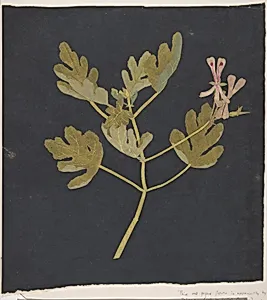
Although she had long practiced drawing, painting, and needlework, Delany began her celebrated series of paper mosaics at the age of seventy-one in 1771. Working from live specimens, she cut hundreds of tiny pieces of coloured tissue paper—sometimes layering them—to create botanically precise representations of flowers against black backgrounds. She produced 985 such works, collectively known as *Flora Delanica*, before failing eyesight forced her to stop around 1788. These collages, now regarded as an early form of modern collage or decoupage, demonstrate remarkable accuracy and artistic innovation.
Delany’s legacy endures through her surviving works, including volumes of *Flora Delanica* held by the British Museum, an embroidered bedcover in the Ulster Museum, and numerous letters that offer a vivid portrait of eighteenth-century polite society. King George III and Queen Charlotte supported her in later years, and her influence continues to be celebrated in exhibitions, biographies, and even a rose variety named in her honour. Her late-flowering artistic achievement remains an inspiring example of creativity sustained across a long life.