
Ctrl K
1722–1822
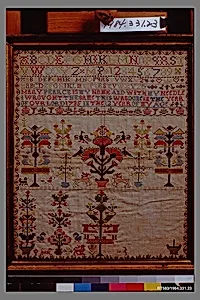
Mary Pearce (c. 1722–1822) was a British needlewoman whose sole surviving work, an embroidered sampler dated 1735, exemplifies the educational needlework practiced by young girls in 18th-century England. Born around 1722, Pearce created this piece at approximately age 13, a common age for such projects that served as both skill demonstrations and markers of accomplishment. Measuring 18¼ x 15 inches and worked in silk threads on a linen ground, the sampler is now preserved in the Metropolitan Museum of Art, gifted in 1984. Little is known about her early life or family background, as historical records beyond the artifact itself are scarce.
Samplers like Pearce's were staples of female education in Georgian Britain, taught in homes or informal schools to instill proficiency in a range of stitches—cross, chain, satin, and more—while incorporating practical motifs such as alphabets, numerals, crowns, floral borders, and symbolic figures like birds or trees of life. Pearce's work adheres to this band sampler tradition, featuring vertical rows of patterns that progressed from basic lettering to elaborate designs, reflecting the structured curriculum of the era. These pieces were not mere exercises but heirlooms, often framed for display and symbolizing a girl's readiness for household management and future domestic roles.
Remarkably long-lived, Pearce survived into the early 19th century, witnessing profound social changes from the Hanoverian courts to the Regency period, though no records detail her later career or personal circumstances. Her legacy endures through this single artifact, a testament to the artistry of anonymous women whose needlework preserved cultural motifs and stitching techniques. Housed in a major institution, it offers invaluable insight into 18th-century textile practices and the hidden contributions of female makers to British decorative arts. Today, it inspires reproductions and studies in embroidery history, underscoring the enduring appeal of samplers as windows into everyday creativity.