
Ctrl K
1800–1899
**Masazumi Ryusai (正澄竜斎, 1800–1899)** was a Japanese ukiyo-e woodblock print artist active during the late Edo period. He specialized in polychrome illustrations that captured both the everyday and the supernatural, contributing to the vibrant tradition of popular printmaking in 19th-century Japan.
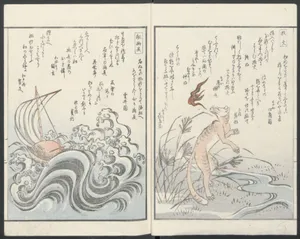
Ryusai is best known for his illustrations in the 1853 book *Poems on One Hundred Ghost Stories* (*Kyōka hyaku monogatari*), a collaborative work compiled by the poet Tenmei Rōjin. This polychrome woodblock-printed volume features eerie and atmospheric scenes drawn from ghost stories and kyōka (comic poetry), showcasing Ryusai’s skill in rendering dramatic figures, expressive faces, and otherworldly effects with vibrant inks on paper. Additional attributed works include landscape prints such as *Waterfall of Kirifuri at Nikko* and narrative scenes like *Li Guangli Shoots an Arrow through a Tiger-Shaped Rock*, demonstrating his range across supernatural, historical, and scenic subjects.
Working in the established ukiyo-e school tradition, Ryusai produced affordable, mass-produced prints and books that appealed to a broad urban audience. His style emphasized bold lines, rich color, and narrative clarity, typical of mid-19th-century printmakers who balanced commercial demand with artistic expression. Though details of his training remain undocumented, his output aligns with the collaborative studio practices common among Edo-period artists.
Ryusai’s legacy endures through surviving impressions of his prints held in major collections, including the Metropolitan Museum of Art. These works offer valuable insight into the cultural fascination with ghosts, poetry, and everyday spectacle during Japan’s transition from the Edo to the Meiji era, preserving a vivid record of 19th-century Japanese visual storytelling.
All 1 artworks loaded