Ctrl K
1450
Master IB, also known as the Monogrammist IB, was a German printmaker active in Nuremberg from around 1523 to 1530. He belonged to the circle of the Little Masters, a group of engravers celebrated for their exceptionally small, intricately detailed prints that often measured no larger than a postage stamp. His early life remains undocumented, as he is known solely through the monogram “IB” that appears on his plates; scholars have occasionally but incorrectly linked him to contemporaries such as the young Georg Pencz or Jacob Binck.
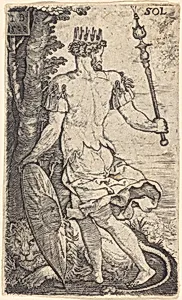
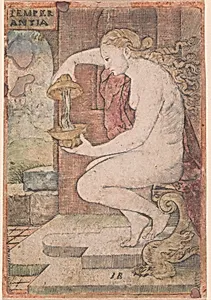
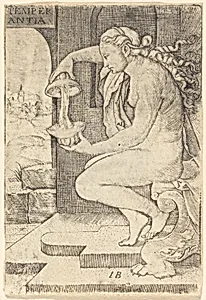
Working firmly within the Nuremberg Little Masters tradition, Master IB specialized in engravings that combined Renaissance ornamental motifs with mythological, allegorical, and portrait subjects. His style features precise line work, delicate hatching, and a preference for circular or compact compositions that allowed collectors to appreciate minute details. Recurring themes include the planetary gods, personifications of virtues such as Temperance and Fortitude, and lively narrative scenes drawn from classical antiquity.
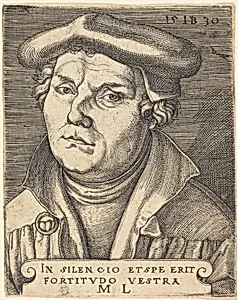
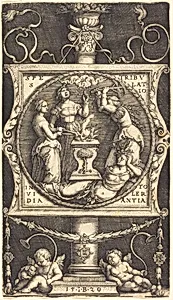
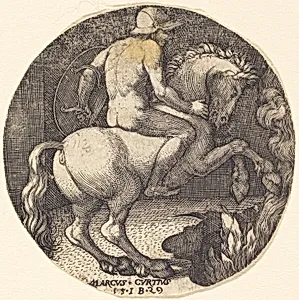
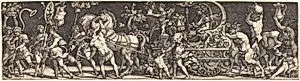
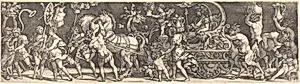
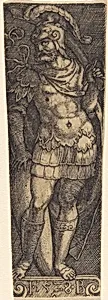
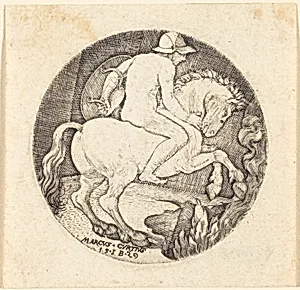
Among his most notable works are the 1530 engraving of Martin Luther, the 1529 depiction of the Roman hero Marcus Curtius, The Triumph of Bacchus of 1528, and the planetary series that includes Sol (The Sun) of 1528. He also produced ornamental designs such as sheaths with warriors or satyrs and emblems illustrating Hope, Tribulation, Envy, and Tolerance. These prints, many of which survive in impressions held by the National Gallery of Art, demonstrate both technical virtuosity and a sophisticated engagement with humanist iconography.
Master IB’s legacy endures as a distinctive if anonymous voice within German Renaissance printmaking. His small-scale engravings circulated widely among collectors and craftsmen, serving both as independent works of art and as pattern sources for goldsmiths and other artisans. Although his personal identity continues to elude researchers, the quality and inventiveness of his plates secure his place among the minor yet accomplished Little Masters who enriched the visual culture of sixteenth-century Nuremberg.