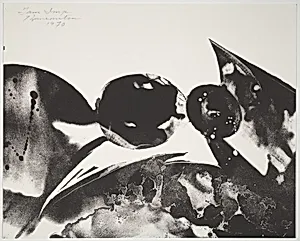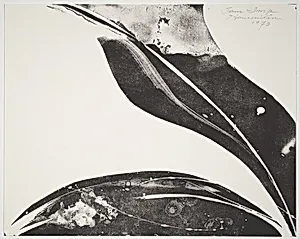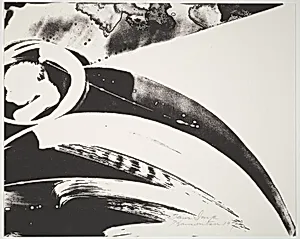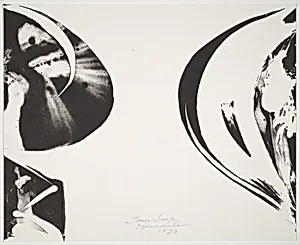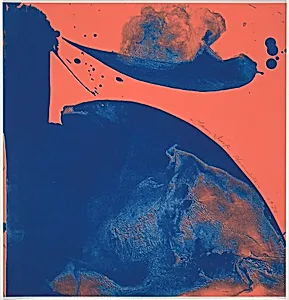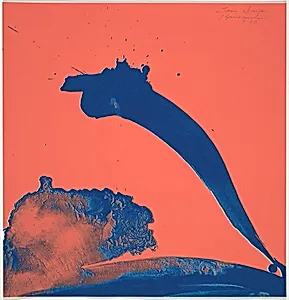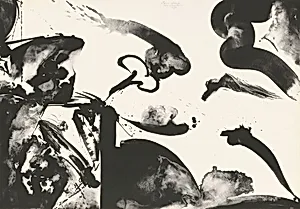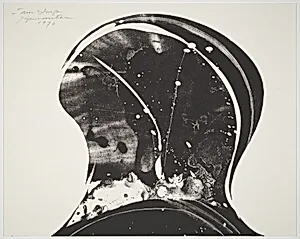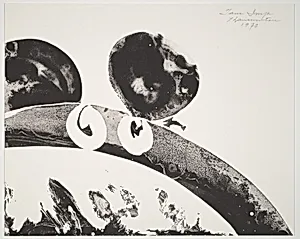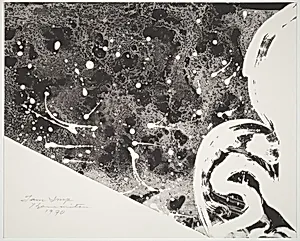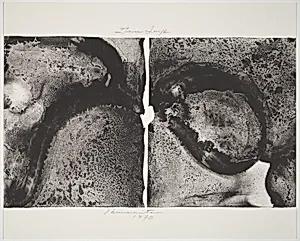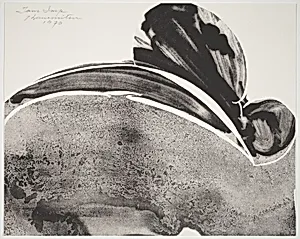
Matsumi Kanemitsu (1922–1992), known to friends and colleagues as Mike, was born in Ogden, Utah, to Japanese immigrant parents and spent his early childhood in Hiroshima, Japan, with his grandparents. He returned to the United States in 1940 and enlisted in the U.S. Army the following year. After the attack on Pearl Harbor, he was arrested and confined in internment camps, an experience that marked him profoundly. He eventually served as a military hospital assistant in Europe, and when his military service ended in 1946 he remained abroad for two years, studying in Paris under Fernand Léger and moving in circles that included Henri Matisse and Pablo Picasso.
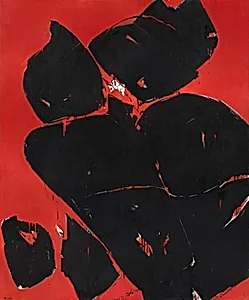
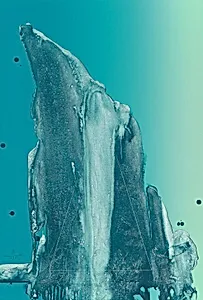
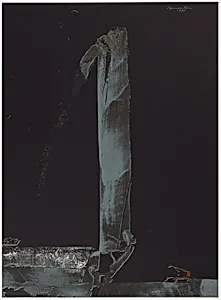
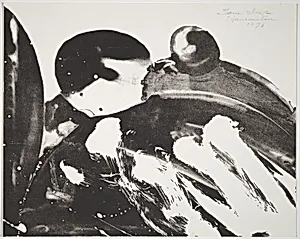
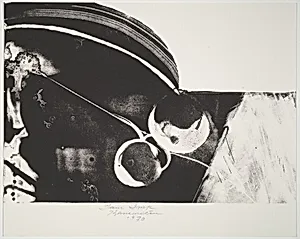
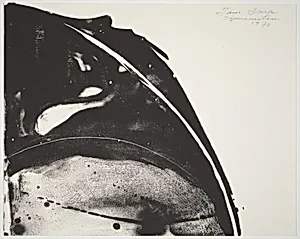
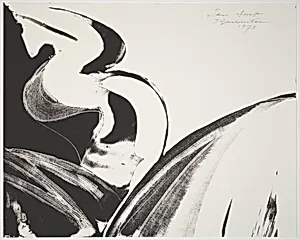
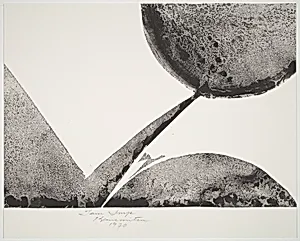
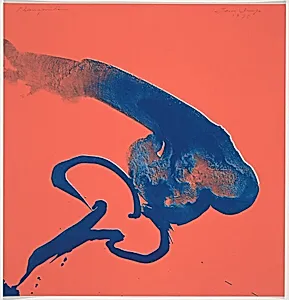
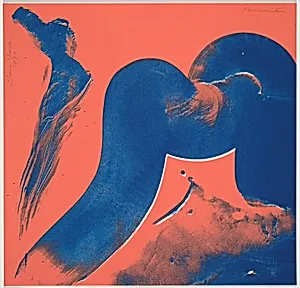
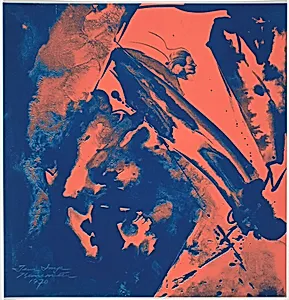
Kanemitsu returned to New York in 1949 and immersed himself in the postwar art world at precisely the moment when Abstract Expressionism was establishing itself as the dominant force in American painting. Though his early work in the 1950s included representational elements, he became identified with the second generation of Abstract Expressionists, producing non-objective paintings characterized by expressive, often hard-edged passages of color. Throughout his career he maintained a parallel practice in Japanese sumi ink and brush, insisting that the tonal range achievable in black ink—from dense black through every gradation to near-white—offered as rich an expressive vocabulary as color painting.
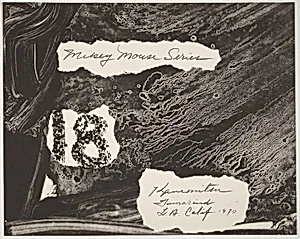
In the late 1950s and early 1960s Kanemitsu received Longview Foundation awards and a Ford Foundation Fellowship that brought him to the Tamarind Lithography Workshop in Los Angeles, an encounter that deepened his commitment to printmaking. He eventually relocated to Los Angeles, which became his permanent home. He taught at the Chouinard Art Institute from 1965 to 1970, the California Institute of the Arts from 1970 to 1971, and the Otis College of Art and Design from 1971 to 1983, shaping generations of West Coast artists.
Kanemitsu's work embodies a rare synthesis: the gestural freedom and emotional directness of American Abstract Expressionism fused with the meditative discipline and material sensitivity of East Asian ink traditions. His biography—spanning wartime internment, European modernism, the New York avant-garde, and California institution-building—traces an arc that is at once deeply personal and representative of broader twentieth-century cultural histories.