Ctrl K
1847–1935
Max Liebermann (1847–1935) was the towering figure of German Impressionism, an artist whose long career and formidable institutional influence made him the dominant voice in German painting for more than four decades. Born in Berlin into a wealthy Jewish family, he received his earliest training at the Weimar School of Art before traveling to Paris, where sustained exposure to the French Barbizon painters and, later, to the Impressionists proved decisive in shaping his mature style.
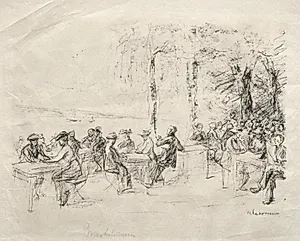
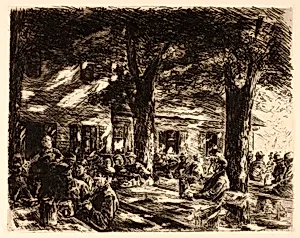
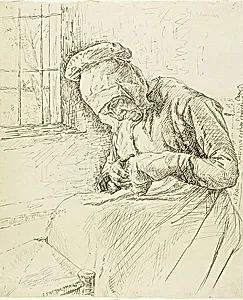
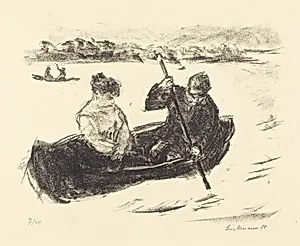
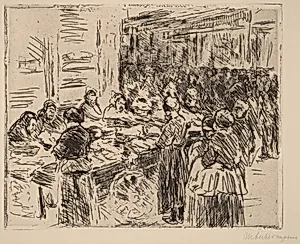
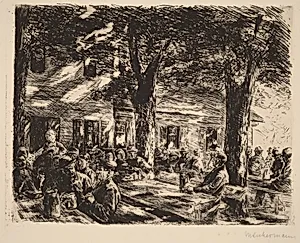
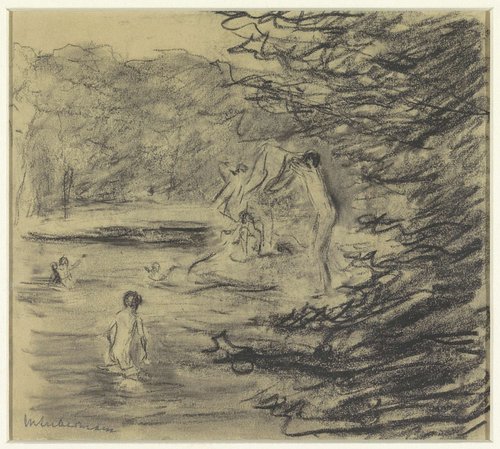
Liebermann's early work, characterized by scenes of peasant labor rendered with an earthy, unsentimental directness, attracted both admiration and controversy in Germany. Gradually his palette lightened and his brushwork loosened under the influence of Édouard Manet and the French Impressionists, and he became the leading advocate for a plein-air, light-filled approach to painting in a German art world still dominated by academic historicism. His scenes of leisure — bathers, garden parties, polo matches, and the animated life of public spaces — capture the textures of bourgeois modernity with extraordinary freshness and skill.
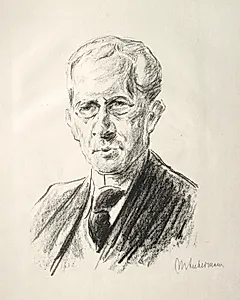
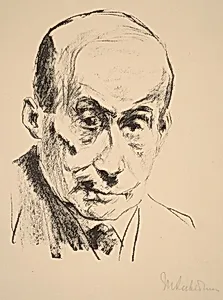
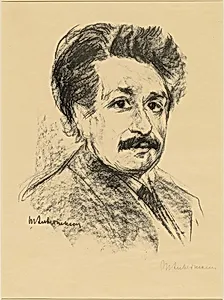
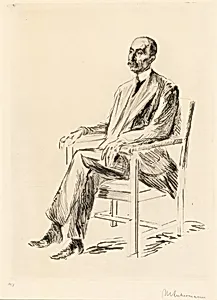
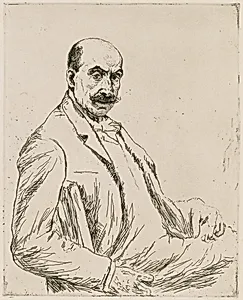
As a co-founder and long-serving president of the Berlin Secession, Liebermann championed progressive art against the conservative establishment, and his villa on the Wannsee, with its celebrated garden, became both a personal sanctuary and a subject for some of his most luminous late paintings. His portraits of leading intellectuals, scientists, and public figures are among the finest produced in Germany in the early twentieth century.
The final years of his life brought tragedy: with the Nazi seizure of power in 1933, Liebermann was stripped of his honors and his art was suppressed. He died in 1935, just before the worst persecution began. His legacy as the architect of German Impressionism and as a courageous advocate for artistic freedom endures as a defining chapter in the history of European modernism.