Ctrl K
1881–1961
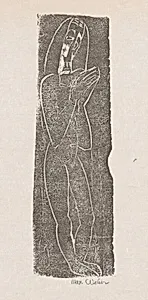
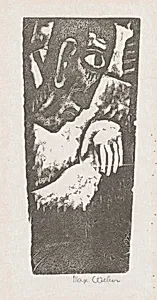
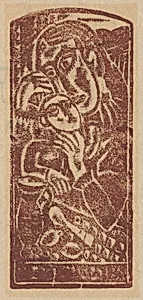
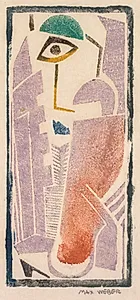
Max Weber (1881–1961), born in Białystok in the Russian Empire (now Poland) to Orthodox Jewish parents, immigrated to Brooklyn, New York, at age ten with his family, joining his tailor father.) There, he pursued art studies at the Pratt Institute under Arthur Wesley Dow, an innovative teacher who emphasized expression and form over traditional narrative, drawing from Japanese art and Paul Gauguin.) After graduating around 1900, Weber taught drawing in Lynchburg, Virginia, and at the State Normal School in Duluth, Minnesota, saving funds for Europe. In 1905, he arrived in Paris, studying at the Académie Julian and later under Henri Matisse at his private academy. He immersed himself in the avant-garde, befriending Henri Rousseau (whom he later championed with the artist's first U.S. show), Pablo Picasso, and frequenting Gertrude Stein's salon, while absorbing Cézanne's impact at the Salon d’Automne.)
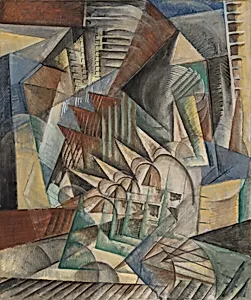
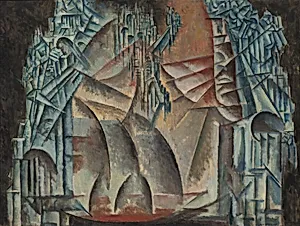
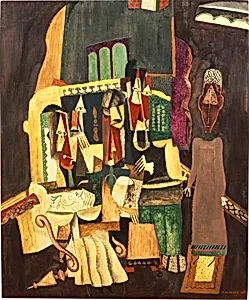
Returning to New York in 1909, Weber became a pivotal figure in American modernism, exhibiting at Alfred Stieglitz's 291 gallery despite scathing reviews labeling his work "pathological.") He pioneered Cubism in the U.S., working in the Cubist school tradition during his acclaimed "Cubist decade" (1910–1920), blending Fauvist color, Futurist dynamism, and primitive influences with fragmented forms and multiple viewpoints. Key works include *Still Life* (1911), evoking Cézanne through flattened space; *Chinese Restaurant* (1915, Whitney Museum), his finest Cubist canvas capturing urban bustle; *Russian Ballet* (c. 1916); and *Sabbath* (1919).) His 1913 solo at the Newark Museum marked the first modernist show in a U.S. institution.)
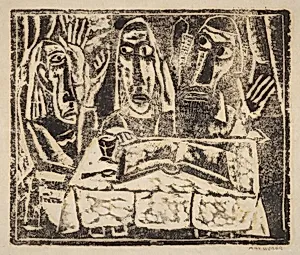
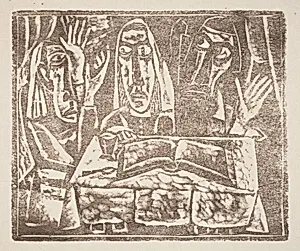
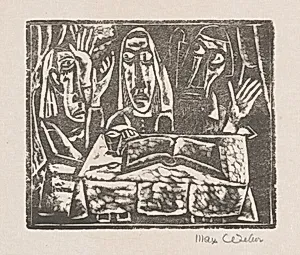
In later decades, Weber shifted to figurative Expressionism, depicting Jewish life, rabbis, and rituals from his heritage, as in *Adoration of the Moon* (1944) and *Students of the Torah* (1940). He taught at the Art Students League (1919–1921, 1926–1927), influencing Mark Rothko, and at the Clarence White School, while publishing *Cubist Poems* (1913), *Essays on Art* (1916), and *Primitives* (1926).) Retrospectives at the Museum of Modern Art (1930, its first for an American artist) and Whitney (1949) cemented his legacy as a bridge between European vanguard and U.S. modernism, introducing Cubism and Fauvism while championing spiritual abstraction. Though prickly, Weber's bold synthesis reshaped American art.)