Ctrl K
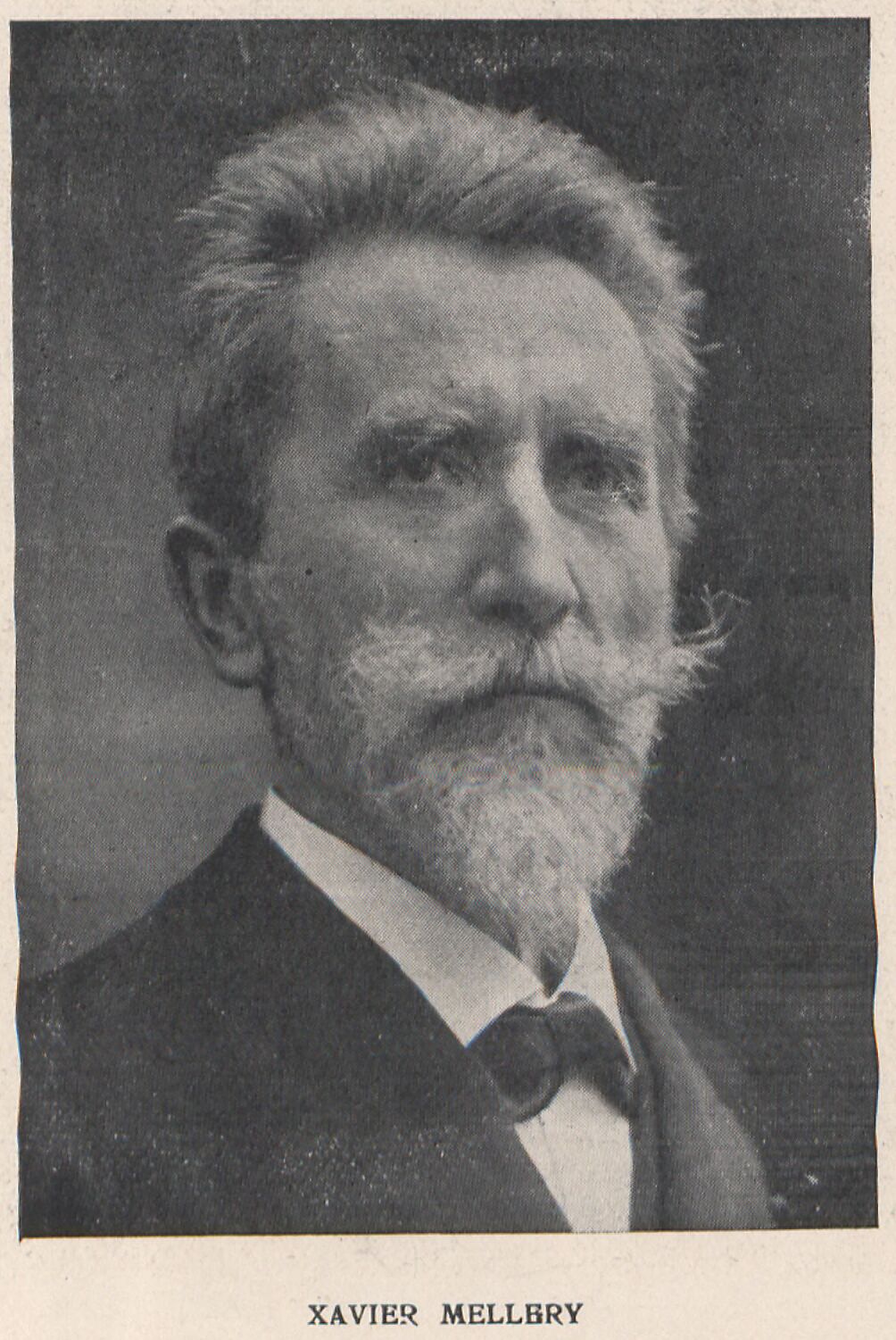
1845–1921
Movements
Occupations
Xavier Mellery (1845–1921) was a Belgian symbolist painter, draftsman, and illustrator who stands as a crucial precursor and founding figure of Belgian Symbolism, one of the most distinctive movements in late 19th-century European art. Born on August 9, 1845, in Laeken (a district of Brussels) as the son of a gardener at the Royal Palace, and dying on February 4, 1921, in Brussels, Mellery's career encompassed rigorous academic training culminating in winning the prestigious Prix de Rome (1870), transformative study of Italian Renaissance frescoes, and the development of a profoundly original approach to painting that sought to express "the soul of things" (l'âme des choses). His intimistic drawings and paintings depicting silent, empty interiors—monastery corridors, staircases, and domestic spaces where solitude and time become palpable presences—established a distinctive symbolist vocabulary that influenced younger Belgian artists. Mellery's involvement with the avant-garde groups Les XX and Salon Pour l'Art, his contacts with critics Octave Maus and poet Émile Verhaeren, and his design of the 48 historical profession statues for Brussels' Petit Sablon garden confirm his central role in Belgian artistic culture during its symbolist flowering.
Xavier Mellery was born on August 9, 1845, in Laeken, a district of Brussels, into modest circumstances as the son of a gardener at the Royal Palace. This humble origin provided early exposure to aristocratic art and architecture while his father worked on the palace grounds.
Mellery initially worked with the painter-decorator Charles Albert, gaining practical experience in applied arts and decorative painting. This introduction to the craft aspects of art provided foundation in technical skills before formal academic training.
From 1860 to 1867, Mellery attended the Royal Academy of Fine Arts of Brussels, Belgium's premier art institution. His professor Jean-François Portaels (1818–1895) was an important Orientalist painter who emphasized careful drawing and compositional structure.
During his academic years, Mellery committed himself intensely to studying nature, antiquities, and historical composition. His dedication and talent earned him the Prix de Rome in 1870, Belgium's most prestigious award for young artists, which provided funding for extended study in Italy.
Mellery's Prix de Rome allowed him to travel to Italy, where he studied Renaissance paintings and particularly the fresco cycles he encountered in Italian churches and palaces. These Italian frescoes—large-scale narrative paintings integrated into architectural settings—profoundly affected his artistic vision.
Spellbound by the frescoes' monumental simplicity and their integration of image and environment, Mellery aspired to create a "peinture d'idées" (painting of ideas) without abandoning realism. This ambition—to express abstract concepts and spiritual meanings through carefully observed reality—would become his lifelong artistic goal and the foundation of his symbolist approach.
The Italian Renaissance frescoes suggested possibilities for art that transcended mere representation, using visual means to evoke spiritual and philosophical dimensions. This revelation transformed Mellery's understanding of painting's potential purposes.
Returning to Belgium, Mellery initially worked in relatively conventional modes while gradually developing his distinctive approach. His technical mastery and academic credentials earned recognition, but his most original work lay ahead.
During this period, Mellery began exploring the themes and subjects that would define his mature symbolist work: silent interiors, empty spaces, the play of light and shadow, and the attempt to capture what he called "the soul of things" (l'âme des choses).
His involvement with progressive artistic circles brought contacts with Octave Maus, the critic and organizer who founded Les XX (The Twenty), and with Émile Verhaeren, the symbolist poet who became an important interpreter of visual symbolism. These relationships positioned Mellery at the heart of emerging Belgian Symbolism.
Starting around 1885, Mellery created his most distinctive and influential works: the intimistic drawings and paintings he titled "Emotions d'Art: L'Âme des Choses" (Artistic Emotions: The Soul of Things). These works expressed his search for the meaning and spiritual presence in everyday objects and spaces.
The subjects of these works emphasized loneliness and silence: empty monastery corridors, unused staircases, dim church interiors, deserted rooms in the artist's own home. Living beings, when present at all, blend into their surroundings, becoming almost indistinguishable from the architecture and furnishings.
Mellery's lack of color in many of these works—executed primarily in drawing media or monochromatic painting—enhanced their intimate, contemplative character. The restricted palette focused attention on form, light, atmosphere, and the ineffable spiritual presence Mellery sought to capture.
His dim nocturnal interiors achieved a dreamlike quality, crepuscular scenes of masterful finish that suggested mysteries beyond visible reality. Empty chairs, unused doorways, corridors leading to unseen destinations—all became charged with symbolic meaning and spiritual suggestion.
Mellery exhibited with Les XX, the progressive Brussels artists' group founded in 1883 that championed avant-garde and symbolist art. His participation confirmed his status among Belgian Symbolism's leading figures. He also showed at the Salon Pour l'Art, further establishing his reputation.
In a different register, Mellery designed the statues representing 48 historical professions for the Petit Sablon/Kleine Zavel garden in Brussels, though different sculptors executed the actual statues. This public commission demonstrated his versatility and integration into Brussels' artistic establishment.
In his final decade, Mellery continued working while his reputation as a symbolist master was secure. His influence on younger Belgian artists, particularly those exploring symbolist and spiritual themes, confirmed his importance beyond his own production.
Among his notable later works was "The Rondo of the Hours," demonstrating his continued exploration of time, atmosphere, and spiritual suggestion through visual means.
Xavier Mellery died on February 4, 1921, in Brussels, having lived through the transformation of European art from Academic traditions through Symbolism to the threshold of Modernism. He had witnessed Belgium's golden age of Symbolist art and contributed crucially to its development.
His legacy rests primarily in his profoundly original intimistic works depicting silent interiors. These paintings and drawings established a distinctive symbolist vocabulary—the use of empty, contemplative spaces to evoke spiritual presence—that influenced subsequent Belgian and European symbolist artists. His concept of "l'âme des choses" articulated a central symbolist ambition: to reveal the spiritual dimension within material reality through careful, patient observation and subtle artistic suggestion.
Artheon Research Team
Last updated: 2025-11-09
Biography length: ~1,520 words
Wikidata/Wikimedia Commons