Ctrl K
1609–1680
Occupations
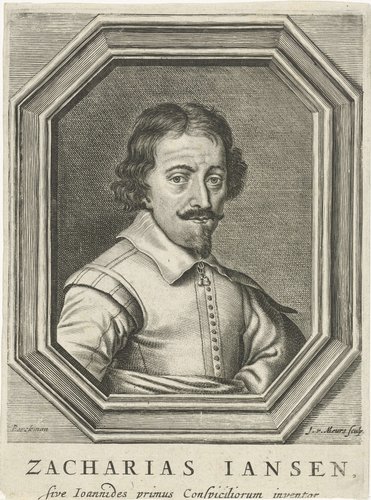
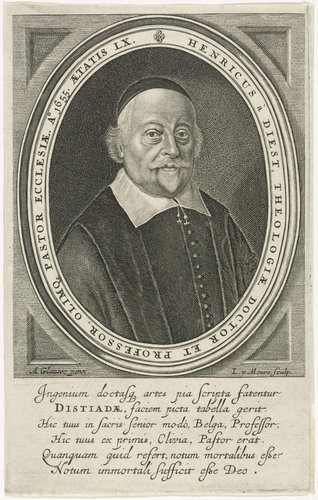
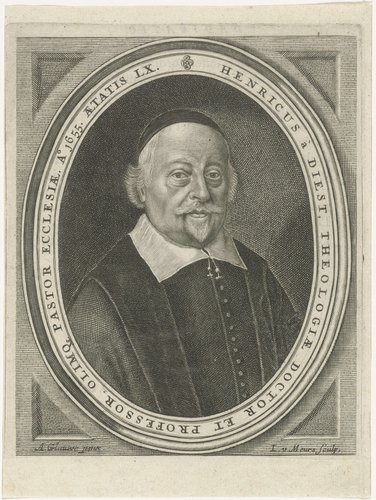
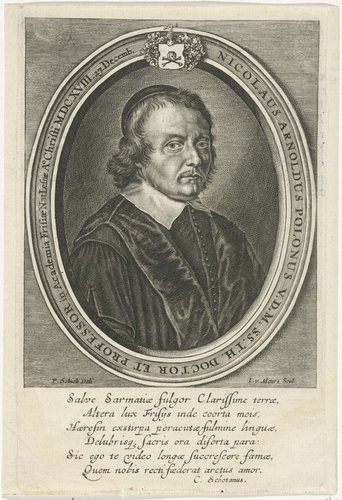
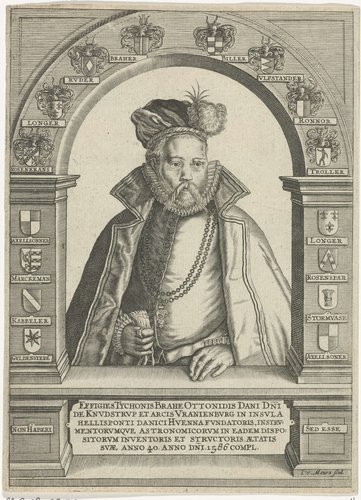
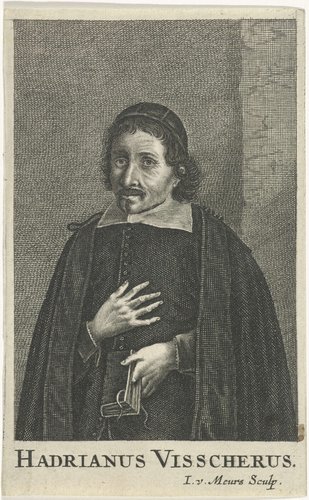
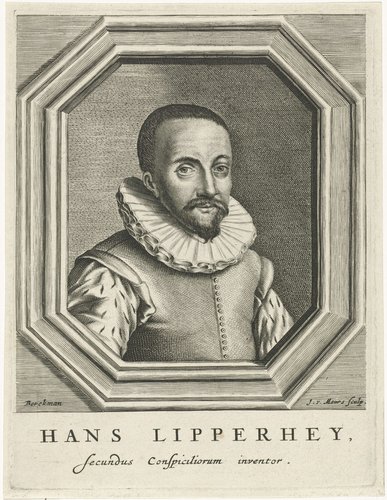
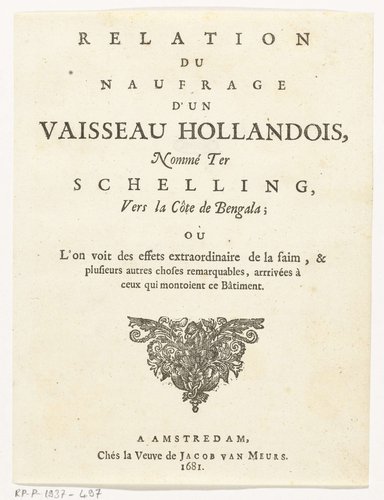
Jacob van Meurs (c.1619–1680) was a Dutch engraver and publisher from Amsterdam who specialized in geographical works, travelogues, and historical publications. Born in Arnhem around 1619 and active in Amsterdam from 1651 to 1680, Van Meurs played a crucial role in disseminating knowledge about the wider world during the Dutch Golden Age. His publishing house produced some of the earliest and most influential illustrated accounts of the Americas, Asia, and other regions being explored and colonized by European powers in the seventeenth century. Van Meurs's most significant achievement was his collaboration with the scholar and writer Arnoldus Montanus on numerous lavishly illustrated historical and geographical works. Together, they published 'De Nieuwe en Onbekende Weereld' (The New and Unknown World, 1671), one of the most comprehensive early descriptions of the Americas and the Southern lands. This work included 125 copper engravings created by Van Meurs, featuring some of the earliest known European views of New York City, Japan, China, and various American locations. These images, though often based on secondhand descriptions rather than direct observation, shaped European understanding of distant lands for decades. As both engraver and publisher, Van Meurs controlled the entire production process, from creating the copper plates to printing and distributing the finished books. His engravings demonstrated solid technical skill in the Dutch tradition of line engraving, translating written descriptions and rough sketches into polished, detailed images. Though the geographical accuracy of his views varied—some were reasonably faithful to reality while others reflected European imagination more than actual observation—Van Meurs's publications represented the cutting edge of geographical knowledge in the seventeenth century. His works are now held in major institutions including the National Gallery of Art and the Library of Congress, valued both as artistic achievements and as important historical documents showing how Europeans visualized the wider world during the Age of Exploration.
Jacob van Meurs was born around 1619 or 1620 in Arnhem, a significant city in the eastern Netherlands (Gelderland province). Little is known about his family background or early life, though his eventual success as an engraver and publisher suggests he received substantial education and training.
During his formative years, Van Meurs would have apprenticed to learn the demanding craft of copper engraving. This training involved mastering the use of the burin—a small steel engraving tool—to incise lines into copper plates with precision and control. Engravers also needed to understand composition, be able to translate sketches or paintings into linear terms, and comprehend the technical aspects of printing from metal plates.
The timing of Van Meurs's training coincided with the Dutch Golden Age, when the Netherlands led Europe in cartography, scientific illustration, and book production. Amsterdam in particular had become a major center for publishing, with numerous firms producing maps, atlases, travel accounts, and scientific works that circulated throughout Europe and beyond.
By the late 1640s, Van Meurs had completed his training and was ready to establish himself as an independent engraver and publisher. His decision to focus on geographical and historical publications reflected both the robust market for such works in the Netherlands and his own interests and capabilities.
Van Meurs established his publishing business in Amsterdam around 1651, positioning himself in the center of Dutch commercial and intellectual life. Amsterdam's prosperity, built on global trade networks, created strong demand for information about distant regions where Dutch merchants and colonists were active.
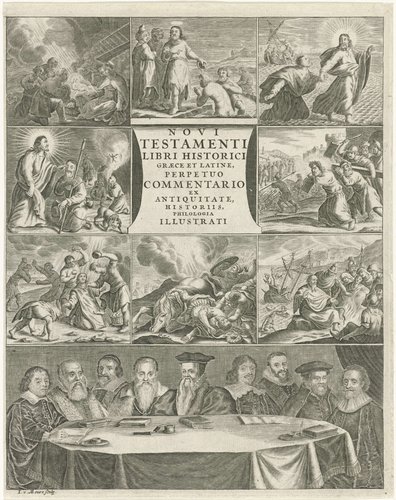
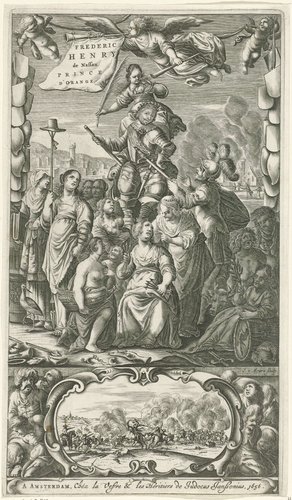
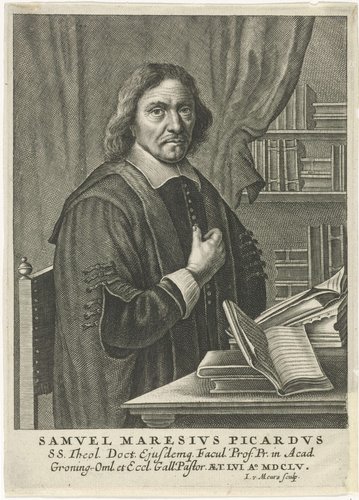
As a publisher-engraver, Van Meurs occupied a dual role. He created the copper-engraved illustrations for his publications while also managing the business aspects—acquiring manuscripts, financing production, coordinating printing, and arranging distribution. This integrated approach allowed him to maintain quality control and maximize profits.
During the 1650s and early 1660s, Van Meurs began building his reputation by publishing illustrated works on geography and history. These publications required substantial capital investment—copper plates were expensive, skilled labor was required for printing, and production timelines extended over months or years. The business demanded both artistic skill and commercial acumen.
Van Meurs developed relationships with scholars and writers who could provide the texts for his illustrated publications. Among these collaborators, none proved more important than Arnoldus Montanus, a Dutch theologian, historian, and geographer whose wide-ranging interests and extensive research made him an ideal partner for Van Meurs's publishing ambitions.
The collaboration between Van Meurs and Arnoldus Montanus produced some of the seventeenth century's most influential geographical and historical publications. Montanus provided the scholarly text, drawing on travel accounts, official reports, correspondence, and earlier published sources. Van Meurs created the engravings that brought these descriptions to visual life and managed the publication process.
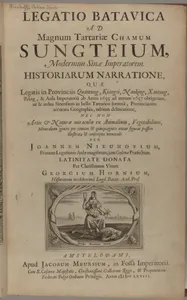
Their most ambitious project appeared in 1671: 'De Nieuwe en Onbekende Weereld: of Beschryving van America en 't Zuidland' (The New and Unknown World: or Description of America and the Southland). This massive work attempted a comprehensive description of the Americas and Terra Australis, regions that remained largely mysterious to most Europeans despite more than a century of exploration and colonization.
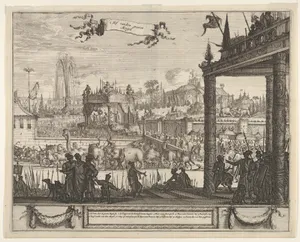
Van Meurs created 125 copper engravings for this publication, depicting landscapes, cities, peoples, flora, fauna, and events from the Americas and beyond. Among these images were some of the earliest European representations of New York City (still relatively recently acquired from the Dutch by the English), views of Japanese cities and Chinese landscapes, and scenes from various American locations.
The geographical accuracy of these engravings varied considerably. Some were based on reasonably reliable sketches or descriptions by travelers and colonists who had actually visited the depicted locations. Others relied on secondhand accounts, earlier publications, or pure imagination. European artists working thousands of miles from their subjects inevitably introduced errors, misunderstandings, and artistic conventions that bore little relation to reality.
Nevertheless, these images profoundly influenced European understanding of distant lands. For most readers, Van Meurs's engravings provided their only visual reference for the Americas, Asia, and other regions. The images circulated widely, were copied by other publishers, and shaped European imagination about the wider world for decades.
Other significant publications from the Van Meurs-Montanus collaboration included works on Japan and China, regions of intense European curiosity due to trade connections and Jesuit missionary reports. These publications combined textual descriptions with Van Meurs's engravings showing architecture, customs, landscapes, and daily life.
The collaboration proved mutually beneficial. Montanus gained a skilled illustrator and reliable publisher for his scholarly works. Van Meurs obtained high-quality texts that justified substantial publications, allowing him to create ambitious engraving projects and command higher prices than simpler publications could support.
Van Meurs continued his publishing activities through the late 1670s, though the pace of major new publications appears to have slowed. He may have focused increasingly on the business aspects of publishing—managing his backlist of titles, overseeing reprints of successful works, and coordinating distribution networks.
The copper plates Van Meurs created represented valuable assets that could be used repeatedly. As long as the plates remained in good condition, additional impressions could be printed to meet ongoing demand. Successful publications like the Americas work could generate income for years after their initial release.
Jacob van Meurs died around 1680 in Amsterdam, probably in his early sixties. The exact date of his death has not been firmly established, reflecting the limited biographical information available about seventeenth-century engravers and publishers who were not part of the social elite.
Van Meurs's legacy resides primarily in the visual archive he created. His engravings of the Americas, Asia, and other regions preserve seventeenth-century European perceptions of the wider world—valuable not because they are necessarily accurate representations but because they show what Europeans believed these places looked like and how they conceptualized geographical and cultural difference.
Modern institutions including the Library of Congress, the National Gallery of Art, and numerous historical societies and museums hold examples of Van Meurs's publications. These works are valued as important primary sources for understanding European expansion, colonial encounters, and the history of geographical knowledge. Art historically, they demonstrate the high level of Dutch engraving and book production during the Golden Age and show how visual images shaped knowledge circulation in the early modern period.
Artheon Research Team
Last updated: 2025-11-09
Biography length: ~1,675 words
Wikidata (CC0); Getty ULAN (ODC-By)