Ctrl K
1640–1723
Michael Burghers (c. 1647/48–1727), a Dutch engraver and illustrator, was born in Amsterdam and baptized in a Lutheran church before apprenticing to an engraver from a young age. Fleeing political turmoil after Louis XIV's forces captured Utrecht in June 1672, he settled in England, arriving in Oxford around early 1673. There, he became assistant to the prominent engraver David Loggan in 1673 and succeeded him as the University of Oxford's official engraver, or *calcographus academicus*, following Loggan's death in 1692—a position he held until eyesight issues forced his retirement in 1719.
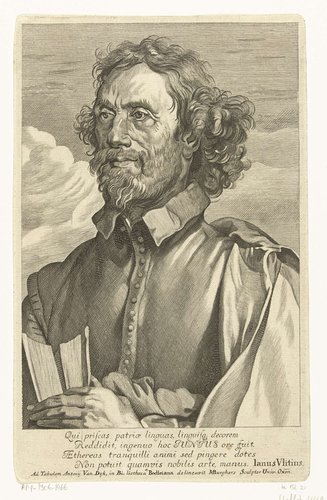
Burghers worked almost exclusively in engraving, employing the graver tool in a characteristically stiff style that, while lacking flair or deep design knowledge according to contemporary critic Joseph Strutt, excelled in precise topographical views and faithful copies after masters like Claude Mellan. He established a near-monopoly on Oxford's engraving needs, producing plates for the university's annual almanacks from 1676 to 1719, as well as maps, estate plans, and illustrations of aristocratic homes commissioned by English nobility. His topographical prowess shone in detailed prospects of cathedrals for Browne Willis's surveys (published 1727) and natural history illustrations, including those for Robert Plot's *Natural History of Oxfordshire* (1677) and *Natural History of Staffordshire* (1686).
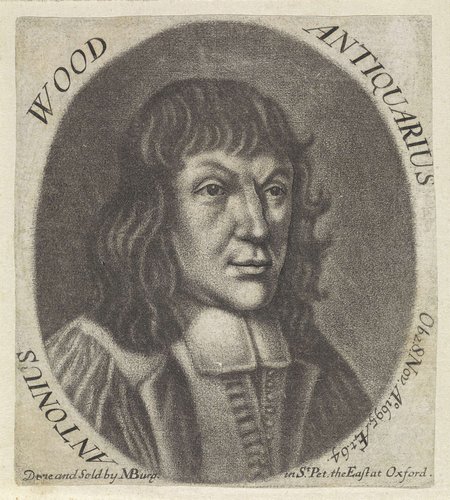
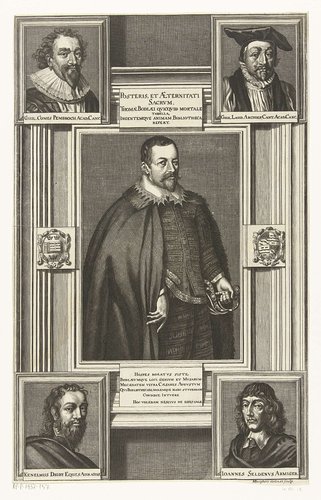
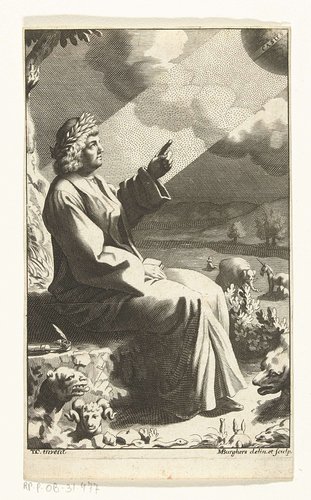
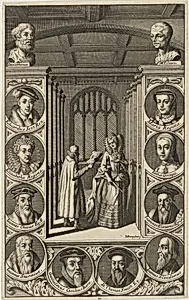
Among his standout works are eleven engravings for the fourth edition of John Milton's *Paradise Lost* (after J.B. de Medina and others), his sole mezzotint portrait of antiquary Anthony à Wood, and frontispieces like Sir Thomas Bodley with university benefactors. Burghers also authored *Ancient Mysteries Described*, a volume on religious rituals featuring his own engravings such as *Descent into Hell*, reprinted into the 19th century.
Burghers's legacy endures through his preservation of vanishing antiquities—abbey ruins, curiosities, and relics now lost—via meticulous engravings that served scholars like Thomas Hearne and Robert Plot. His Oxford tenure not only documented Britain's intellectual and architectural heritage but also bridged Dutch engraving traditions with English antiquarianism, influencing generations of illustrators.