Ctrl K
1914–1995
**Michael Fenga (1913–2006)** was an American artist best known for his contributions to the Index of American Design, a Federal Art Project initiative under the Works Progress Administration (WPA) during the Great Depression. Born around 1913, likely in New York given the project's regional focus, Fenga's early life and artistic training remain sparsely documented, with no records of specific teachers or art schools identified. In the late 1930s, he produced meticulously rendered watercolor, graphite, and gouache drawings of everyday American crafts and decorative arts, capturing the nation's material culture for posterity. The National Gallery of Art holds 57 such works, highlighting his role in this ambitious documentation effort.
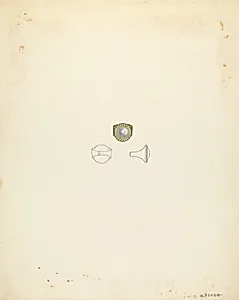
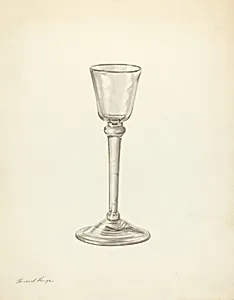
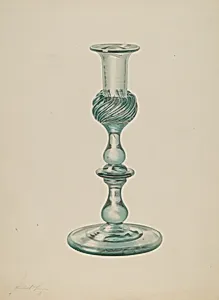
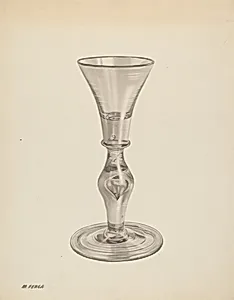
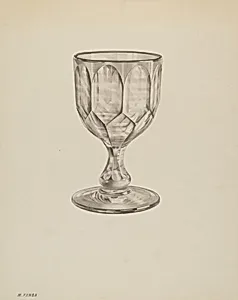
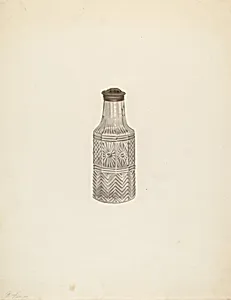
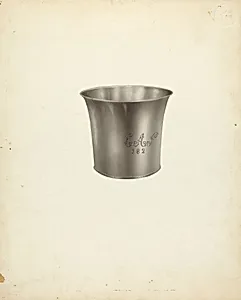
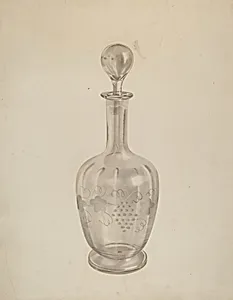
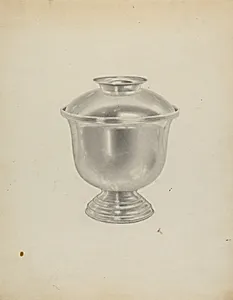
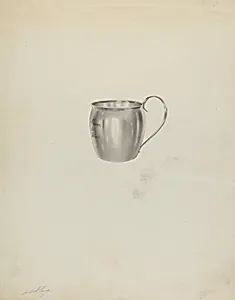
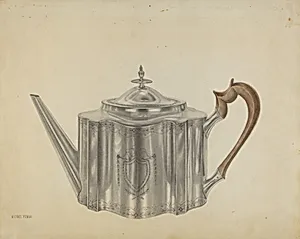
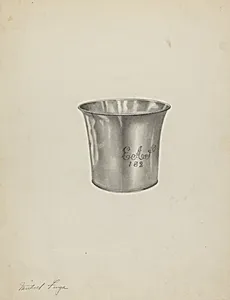
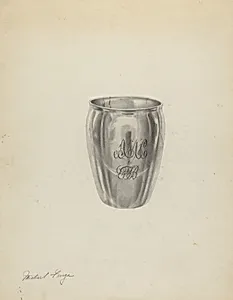
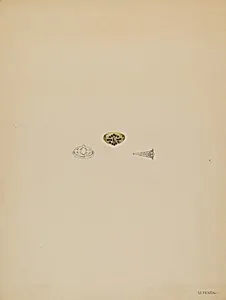
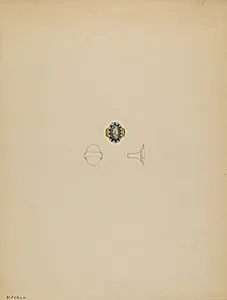
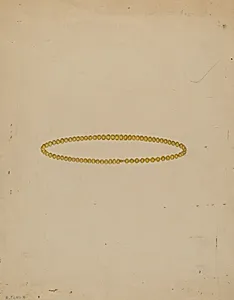
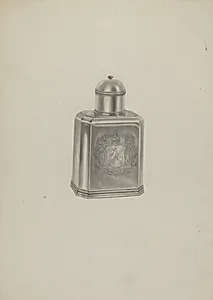
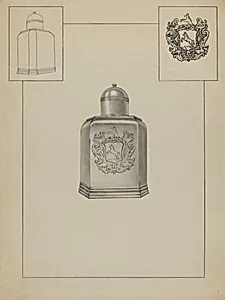
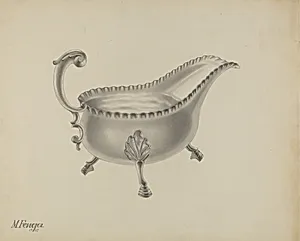
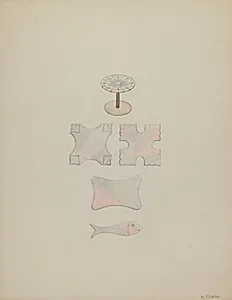
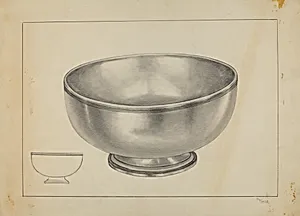
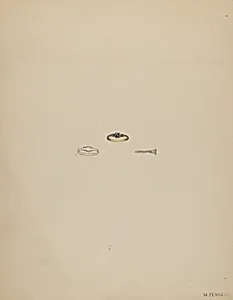
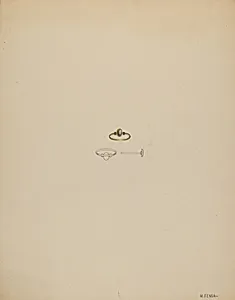
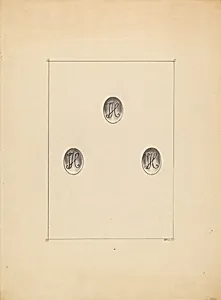
Fenga's artistic style exemplified the precise, objective realism demanded by the Index, blending technical accuracy with subtle artistic sensitivity to highlight form, texture, and historical detail. His depictions of silverware, glassware, and jewelry—such as *Silver Mug* (c. 1936), *Wine Glass* (c. 1940), *Memorial Ring* (c. 1937), and *Silver Sugar Bowl* (c. 1938)—reveal ornate engravings, reflective surfaces, and functional elegance typical of early American craftsmanship. These pieces, often on paperboard around 30 x 23 cm, served not just as illustrations but as vibrant homages to vernacular design, from cruets and candlesticks to buttons and compotes.
Beyond the WPA era, Fenga appeared in the Art Directors Club of New York annual in 1945, suggesting a transition to commercial illustration. Though his later career details are elusive, his Index portfolio endures as a vital archive, preserving thousands of artifacts amid economic hardship and influencing mid-20th-century design scholarship. Fenga's work underscores the Federal Art Project's legacy in democratizing art historical preservation, making American folk traditions accessible to future generations. Today, his drawings continue to educate on the interplay of utility and beauty in everyday objects, a testament to an artist whose quiet precision captured a nation's creative heritage.(312 words)