Ctrl K
1710–1743
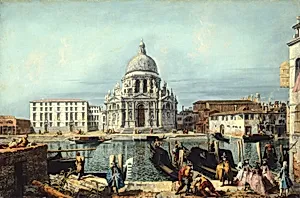
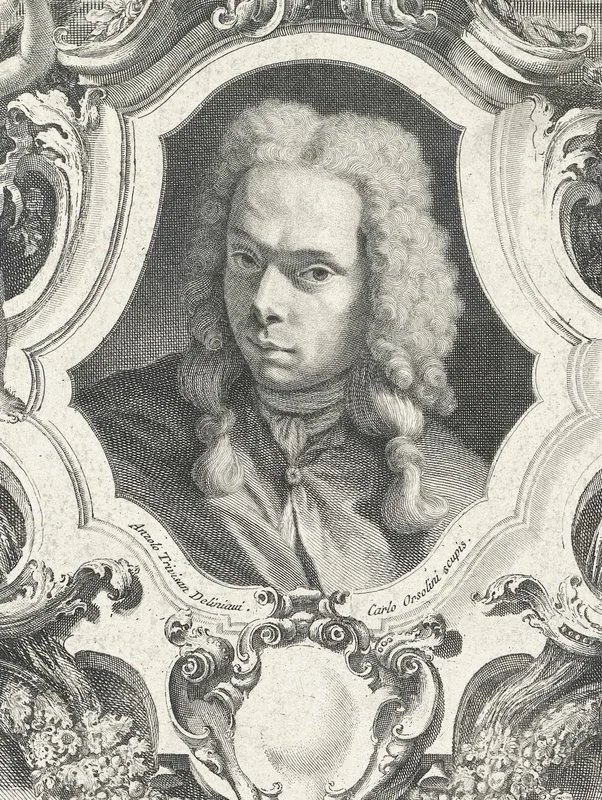
**Michele Giovanni Marieschi** (also known as Michiel; 1710 – 18 January 1744) was an Italian painter and engraver renowned for his vedute, or city views, primarily of Venice, along with architectural capricci that blended fantasy and observation. Born in Venice as the son of an engraver, he began his career in theatrical scene painting before turning to easel pictures of the city’s landmarks and imaginary architectural compositions.
His early training is not fully documented, though he likely studied under Gaspare Diziani or Canaletto, or possibly both; one contemporary biography notes that his father may have been his initial teacher. Marieschi spent time in Germany working as a stage designer before returning to Venice by 1731. There he produced scenery and, in 1735, created decorative effects for the funeral of Maria Clementina Sobieska in Fano. He was registered in the Venetian painters’ guild (Fraglia de’ Pittori) between 1735 and 1741, and in 1737 Gaspare Diziani served as a sponsor at his wedding.
Marieschi drew inspiration from Marco Ricci and Luca Carlevarijs while responding to the market success of Canaletto. He initially favored capricci—fantastic landscapes with classical ruins—before shifting toward more topographically accurate vedute. His distinctive style featured exaggerated perspective and a lively, fresh handling of paint that set his work apart from Canaletto’s more measured approach. A notable patron was the collector Johann Matthias von der Schulenburg, who acquired twelve paintings from him between 1736 and 1738. In 1741–42 Marieschi published a celebrated series of twenty-one etchings titled *Magnificentiores Selectioresque Urbis Venetiarum Prospectus*.
Although his career was brief, Marieschi left a lasting mark on Venetian view painting. His dynamic compositions and theatrical sensibility influenced the next generation, most notably Francesco Guardi. Today his paintings and prints are held in major collections, including the Gallerie dell’Accademia in Venice, and continue to be valued for their vivid portrayal of eighteenth-century Venice.