
Ctrl K
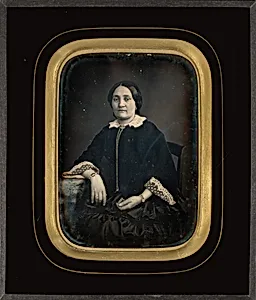
Mlle. Verdier was a pioneering French daguerreotypist active in Bordeaux during the mid-19th century, emerging as one of the rare female practitioners in the nascent field of photography at a time when the medium was dominated by men. Little is known of her early life or training, which remains undocumented in available sources, though her work reflects the technical mastery required to produce polished silver-plate images in a provincial studio setting. Operating around 1855–1858, she catered to local clientele with intimate portraits that blended photographic precision with artistic embellishment.
Verdier's signature style involved hand-applying vibrant colors to daguerreotypes, transforming stark metallic images into lifelike, painterly likenesses. Her *Portrait of a Woman* (c. 1858), now in the National Gallery of Art, exemplifies this approach: a sixth-plate daguerreotype measuring 9.8 × 7 cm, enhanced with delicate applied pigments and bearing a studio label for "Mademoiselle VERDIER" on the frame verso. The image captures a poised female subject in exquisite detail, with the coloring lending a jewel-like warmth characteristic of her output. Another attributed work, a quarter-plate portrait of a "Colorful Lady" (c. 1855), features bold reds, golds, blues, and yellows on an original mount, confirming her flair for opulent tinting that bridged painting traditions and photographic innovation.
Documented in Pierre Barou's *Photographes en Gironde*, which reproduces her studio labels alongside those of contemporaries like the Barberons, Verdier's contributions highlight the regional diversity of early French photography. Though her oeuvre survives in fragments—recently acquired pieces entering major collections—her legacy endures as a testament to women's understated roles in democratizing portraiture. By infusing mechanical processes with personal artistry, Verdier helped elevate daguerreotypy from novelty to cherished heirloom, paving the way for future photographic color techniques in art history.