Ctrl K
1785–1857
Occupations
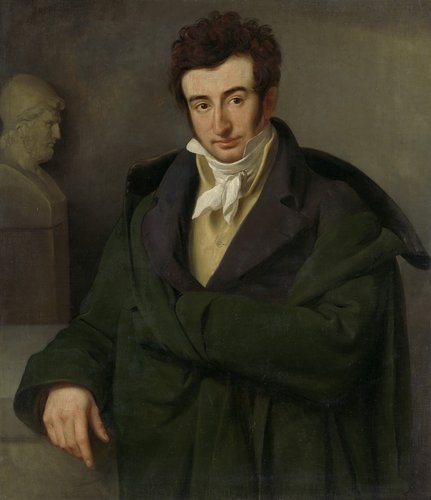
Woutherus Mol (1785–1857) was a Dutch painter and draftsman who pursued an ambitious artistic career that took him from provincial Haarlem to the cosmopolitan art world of Napoleonic Paris. After studying with Haarlem masters and joining Jacques-Louis David's prestigious Paris atelier, Mol won the Dutch Prix de Rome in 1807, launching what seemed a promising career. His 1818 painting The Death of Prince William I brought him significant recognition for creating an original historical composition. However, his later career was marked by declining quality and public favor, culminating in a nervous breakdown that led to his final decade in a Catholic almshouse. Mol's life trajectory reflects both the opportunities and pressures facing Dutch artists in an era of political upheaval and changing artistic tastes.
Born on March 21, 1785, in the Netherlands, Mol showed early artistic inclinations. Once he decided to pursue art as his profession, he received instruction from the Haarlem painter Hermanus van Brussel, learning the fundamentals of drawing and painting.
In 1802, at age seventeen, Mol joined the Haarlem drawing society Tekengenootschap Kunstmin en Vlijt, an important organization for artistic education and networking in the city. This membership connected him to the local artistic community and provided opportunities for study and exhibition.
In 1806, Mol made the significant decision to move to Paris, the artistic capital of Europe under Napoleon. He arrived with recommendations to study with Gerard van Spaendonck, the renowned floral painter, but Mol's interests soon shifted toward the more prestigious genre of historical painting.
He entered the studio of Jacques-Louis David, the leading Neoclassical painter and Napoleon's official court artist. Under David's instruction, Mol absorbed the principles of classical composition, heroic subject matter, and the grand manner that dominated French painting. In 1807, his dedication was rewarded when King Louis Napoleon of Holland awarded him the Dutch Prix de Rome, a prestigious scholarship for study in Italy.
Mol returned to the Netherlands and worked to establish himself as a historical painter. In 1818, he achieved his greatest success with his submission to the Amsterdam art exhibition: The Death of Prince William I. This painting was particularly significant as critics recognized it as his first truly original work, not primarily derived from copying existing masterpieces. The painting brought Mol considerable recognition and established his reputation as a serious historical painter.
Despite his earlier promise, Mol's later works were considered inferior in quality, and public opinion gradually turned against him. The reasons for this decline are not fully documented, but the pressure to maintain his earlier standard and perhaps changing artistic tastes took their toll on the artist's mental health.
Mol suffered a nervous breakdown, and in 1846, he entered the Catholic almshouse in Haarlem. During the final decade of his life, he no longer painted. He died in the almshouse on August 30, 1857, at age seventy-two, a largely forgotten figure despite his earlier achievements.
Artheon Research Team
Last updated: 2025-11-09
Biography length: ~492 words
Wikidata (CC0); Getty ULAN (ODC-By)
All 2 artworks loaded