Ctrl K
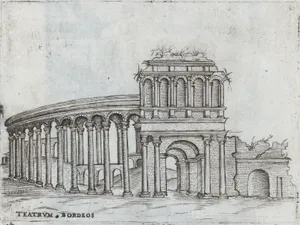
1535–1535
**Monogrammist G.A. with the Caltrop**, an enigmatic Italian engraver active in Rome during the 1530s and 1540s, remains one of the shadowy figures of the Renaissance print world. Identified solely by his monogram "G.A." accompanied by a distinctive caltrop symbol—a spiked iron ball used in warfare—little is known of his personal life or training. His early years are not well documented, and no teachers or mentors have been identified in surviving records. Flourishing around 1538, he operated amid the fervent revival of classical antiquity, contributing precise engravings that captured the grandeur of ancient Roman architecture for architects, scholars, and collectors across Europe.
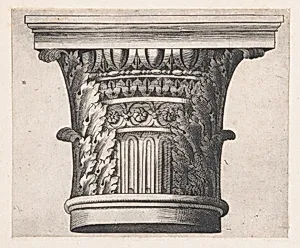
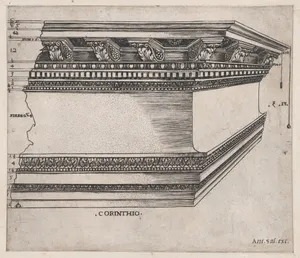
Working in the tradition of Roman antiquarian printmaking, the Monogrammist specialized in detailed depictions of architectural elements, reflecting the era's obsession with Vitruvian proportions and archaeological accuracy. He engraved plates illustrating the Doric, Ionic, and Corinthian orders for Sebastiano Serlio's influential *Regole generali di architettura sopra le cinque maniere degli edifici* (1537 onward), published by Antonio Salamanca. Many of his works appeared in Antonio Lafréry's famed *Speculum Romanae Magnificentiae*, a compendium of over 500 prints documenting Rome's ruins. His style features meticulous linework, showcasing intricate acanthus scrolls, grotesque masks, and measured profiles that bridged ancient models with Renaissance innovation.
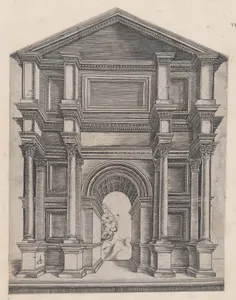
Among his notable engravings are the *Corinthian Base* (ca. 1530–40), with its ornate scrolling and sectional views; the *Arch by Master GA with the Caltrop* from the *Speculum*; and an *Ionic Capital* published by Lafréry, part of a set of 30 ancient fragments. Other highlights include *Composite Capital with Measurements* and bases revealing hollow cores, now held in collections like the Metropolitan Museum of Art, Victoria and Albert Museum, and Ashmolean Museum.
Though anonymous, the Monogrammist's legacy endures in the widespread dissemination of classical motifs, fueling the architectural revolution from Palladio to Baroque designers. His prints, totaling dozens in major institutions, exemplify how mid-16th-century engravers democratized antiquity, transforming measured ruins into blueprints for modernity. Over 57 works survive in key collections, preserving his sharp eye for detail amid Rome's golden age of publishing.