Ctrl K
1824–1882
Occupations
Edmond Morin (1824-1882) was a French painter, illustrator, and printmaker whose prolific career spanned both fine art and popular illustration, though he remained disappointed by greater recognition for his commercial work than his paintings. Born in Le Havre, Morin studied at the École des Beaux-Arts in Paris under Charles Gleyre before spending eight formative years in London (1849-1857), where he established his reputation through illustrations and wood engravings for major publications including The Illustrated London News and Pen and Pencil. Returning to Paris in 1857, he became a frequent Salon exhibitor while simultaneously contributing illustrations to prominent journals such as L'Illustration, Le Monde illustré, and La Vie parisienne. Though an accomplished landscape and portrait artist, Morin achieved his greatest fame for scenes of everyday Parisian life, executed with remarkable draftsmanship but valued more by publishers than collectors. His extensive book illustration work included notable publications of the 1860s and 1870s, yet Morin's legacy reflects the nineteenth-century tension between fine art ambitions and commercial illustration success.
Edmond Alexandre Morin was born on March 26, 1824, in Le Havre, a major port city on France's Norman coast. He pursued artistic training in Paris, enrolling at the prestigious École des Beaux-Arts where he studied in the studio of Charles Gleyre, a Swiss painter known for his academic approach and numerous successful students. Gleyre's atelier provided solid grounding in drawing, composition, and painting technique that would serve Morin throughout his career.
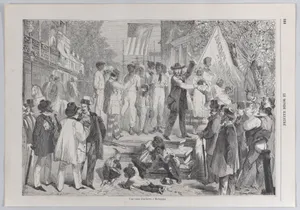
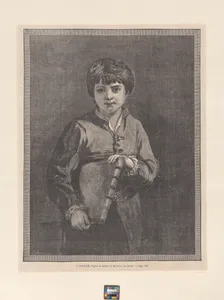
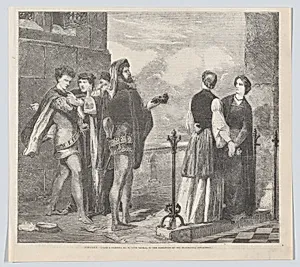
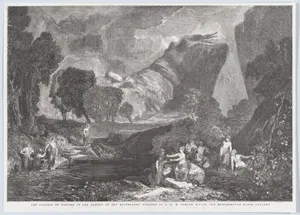
Shortly after completing his education, Morin made an unexpected decision: he left Paris for London, where he would remain for eight years from 1849 to 1857. This extended English residence proved formative for his career, though it directed him more toward illustration than pure painting. During these London years, Morin established a substantial reputation for both his illustrations and wood engravings, contributing regularly to major publications.
His work appeared in The Illustrated London News, one of the world's first illustrated weekly newspapers and a hugely influential publication reaching middle-class audiences throughout Britain and beyond. He also contributed to Pen and Pencil, demonstrating his versatility across different editorial contexts. This commercial success in London's vibrant publishing industry provided steady income while developing his distinctive approach to depicting contemporary life.
Morin returned to Paris in 1857, immediately beginning to exhibit his paintings at the Salon, France's official art exhibition that determined artistic reputations. He continued exhibiting regularly throughout the following years, pursuing recognition as a fine artist while maintaining his lucrative illustration work.
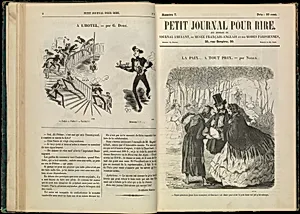
During the 1860s and 1870s, Morin became one of Paris's most prolific illustrators, contributing extensively to the period's major illustrated journals. His work appeared in Magasin pittoresque, L'Illustration, Le Monde illustré, and La Vie parisienne—publications that brought contemporary events, social scenes, and popular entertainment to bourgeois readers. His illustrations captured Parisian daily life with the observational accuracy and lively draftsmanship that characterized his best work.
Morin also illustrated numerous books during these decades, including "L'Hôtel des Haricots" (1864), "Paris-guide" (1867), and "Monsieur, Madame et bébé" (1878). These projects demonstrated his ability to create coherent visual narratives and character studies that enhanced literary texts.
Though Morin proved himself an accomplished landscape and portrait painter through his Salon submissions, his paintings never achieved the recognition he desired. Endowed with remarkable talent as a draftsman, he nonetheless failed to make his living primarily through painting. This gap between his fine art ambitions and his illustration success left him disappointed and hurt by what he perceived as non-recognition of his work as an illustrator—a telling response that reveals the nineteenth-century hierarchy valuing "high art" over commercial work.
Morin died in Sceaux, a commune in the southern suburbs of Paris, on August 18, 1882, at age fifty-eight. His legacy illustrates the tension many nineteenth-century artists experienced between fine art aspirations and commercial illustration opportunities.
Artheon Research Team
Last updated: 2025-11-09
Biography length: ~468 words
Wikidata (CC0); Getty ULAN (ODC-By)