Ctrl K
1841–1895
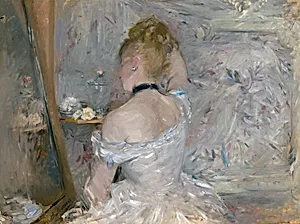
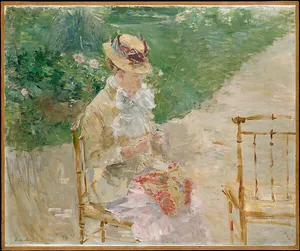
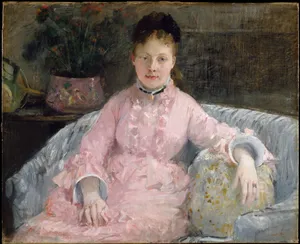
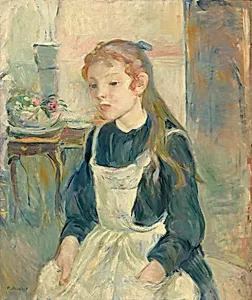
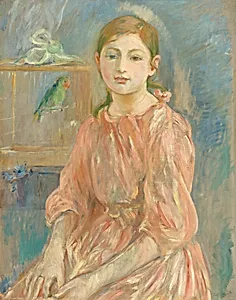
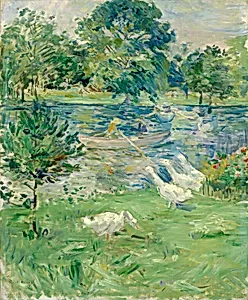
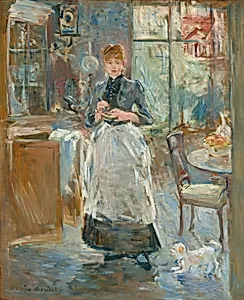
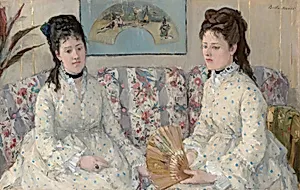
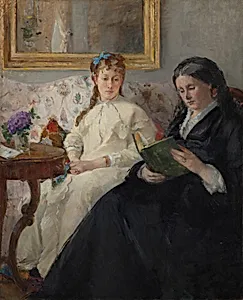
Berthe Morisot (1841-1895) was a founding member of the Impressionist movement and one of the most significant women artists of the 19th century. Born into an affluent bourgeois family in Bourges, France—her mother was a great-niece of the Rococo painter Jean-Honoré Fragonard—Morisot received serious artistic training despite the social constraints facing women of her class. Under the guidance of Jean-Baptiste-Camille Corot, she adopted en plein air painting before it became central to Impressionism. By age 23, the official Salon had accepted two of her landscape paintings—an extraordinary achievement for a young woman. Her meeting with Édouard Manet in 1868 proved transformative for both artists; she influenced his move toward outdoor painting while absorbing his innovative approach to modern subjects. Morisot was the only woman among the six painters whose first exhibition scandalized Paris in 1874. She participated in all but one of the eight Impressionist exhibitions between 1874 and 1886, and her works sold well during her lifetime—often outselling contemporaries including Degas, Monet, and Sisley. Because social conventions restricted her access to the public spaces her male colleagues depicted, Morisot focused on domestic life, gardens, and intimate moments generally closed to male artists. Her loose, rapid brushwork and sophisticated compositions revealed aspects of feminine experience in late 19th-century France with unprecedented honesty and artistic ambition. Art critic Gustave Geffroy ranked her among 'les trois grandes dames' of Impressionism alongside Mary Cassatt and Marie Bracquemond. Her legacy extends beyond her considerable artistic achievement to her demonstration that a woman could sustain a professional artistic career while married and raising a child—a path few of her contemporaries attempted.
Morisot and her sister Edma received artistic training from private tutors, including painter Joseph Guichard, who taught them by copying works at the Louvre. Guichard warned their parents that serious instruction would be 'revolutionary' for daughters of their social standing.
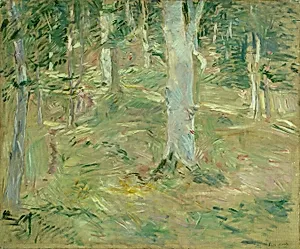
She studied under the landscape painter Jean-Baptiste-Camille Corot, a key figure in the Barbizon school, who encouraged her to paint en plein air—an approach that would become central to Impressionism.
In 1864, at age 23, the official Salon accepted two of her landscape paintings, marking the beginning of regular exhibition through the early 1870s with critical approval.
In 1868, fellow artist Henri Fantin-Latour introduced Morisot to Édouard Manet, beginning a pivotal professional and personal relationship. She influenced Manet's move toward en plein air painting while absorbing his innovative approach to modern subjects.
Morisot posed for several of Manet's paintings, including 'The Balcony' (1868-69) and 'Berthe Morisot with a Bouquet of Violets' (1872), while developing her own increasingly confident style.
By 1872, she had sold 22 works to the dealer Paul Durand-Ruel, establishing her commercial viability. In 1874, she participated in the first Impressionist exhibition despite Manet's discouragement, and married his brother Eugène the same year.
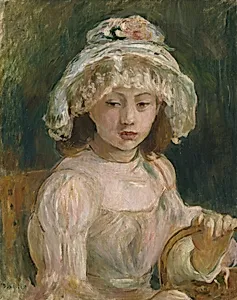
Morisot participated in all Impressionist exhibitions except one (1878, when she was recovering from childbirth). She gave birth to her only child, Julie, in November 1878, who became a frequent subject of her paintings.
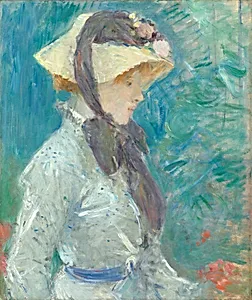
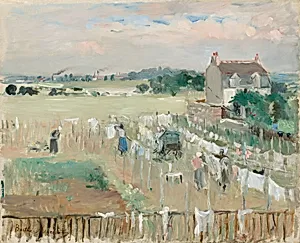
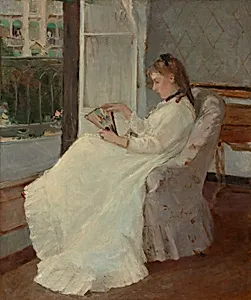
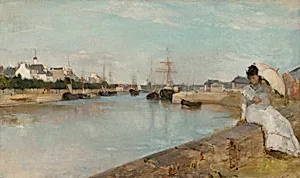
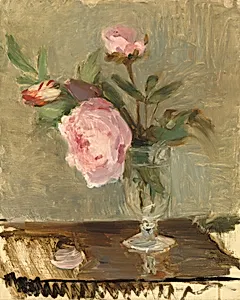
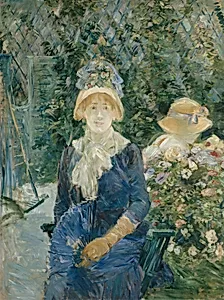
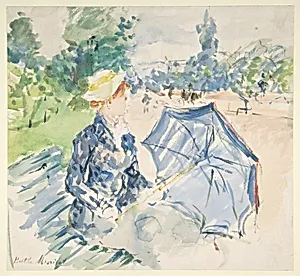
Throughout this period, she painted domestic scenes, gardens, and intimate moments with increasingly free brushwork. Her technique evolved toward looser, more rapid strokes that accentuated the flat surface of the canvas.
She exhibited under her maiden name throughout her career and helped organize the final Impressionist exhibition in 1886. Her works continued to sell well, demonstrating that a woman could maintain professional artistic practice while raising a family.
In her final years, Morisot's palette brightened considerably, moving from the muted tones of the 1870s to vibrant contrasts of orange, violet, and green.
She explored new subjects including female nudes, unusual territory for women artists, influenced by Pierre-Auguste Renoir's late work.
After Eugène Manet's death in 1892, she continued painting while raising Julie. The artistic community rallied around her—Degas, Renoir, and Monet visited regularly.
Morisot died of pneumonia on March 2, 1895, contracted while nursing her daughter through a similar illness. Her artist friends organized a posthumous retrospective featuring 380 paintings.