
Ctrl K
1622–1706
**Luo Mu (also known as Mu Luo, 1622–1706)** was a Chinese painter, poet, and prose writer of the early Qing dynasty, celebrated for his evocative landscape paintings. Born in Jiangxi province, he spent most of his life in the provincial capital of Nanchang. His work helped define what later became known as the “Jiangxi Style,” characterized by bold depictions of mountainous terrain and natural scenery rendered in the traditional shanshui (mountain-water) idiom.
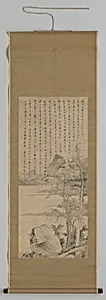
Luo Mu produced hanging scrolls and handscrolls in ink and light color on paper or satin, often capturing the grandeur and atmosphere of Jiangxi’s landscapes. Notable examples include *Spring Landscape in the Morning*, a pair of hanging scrolls, and *River Landscape in Autumn*, now in the collection of the Metropolitan Museum of Art. His paintings frequently emphasize towering peaks, winding rivers, and misty vistas, reflecting both technical mastery and a poetic sensibility that aligned with his parallel pursuits in literature.
Contemporary accounts describe Luo Mu as convivial and sociable; he counted the scholar Xu Yuxi among his close friends. While little is recorded about formal artistic training, his mature style shows a confident synthesis of earlier landscape traditions adapted to the tastes of the early Qing period. He remained active into advanced age, continuing to paint and write until his death in 1706.
Today Luo Mu is remembered as a distinctive regional master whose Jiangxi Style contributed to the diversity of Qing landscape painting. His works regularly appear in museum collections and at auction, where they are valued for their atmospheric depth and historical significance. With three known artworks in the present collection, his legacy endures through both public institutions and private appreciation of his serene yet powerful visions of nature.