Ctrl K
1876–1953
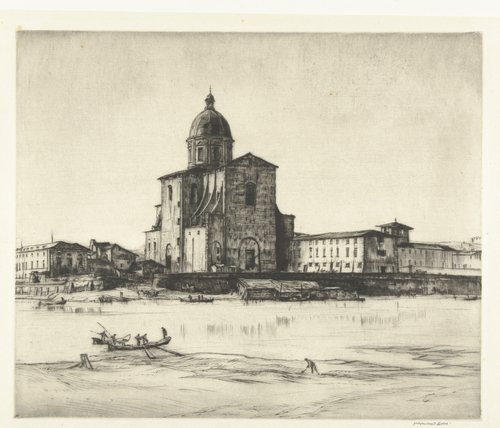
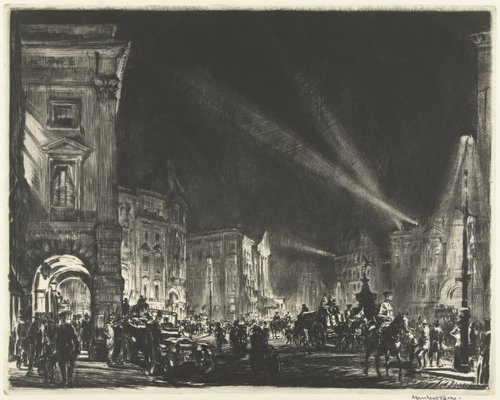
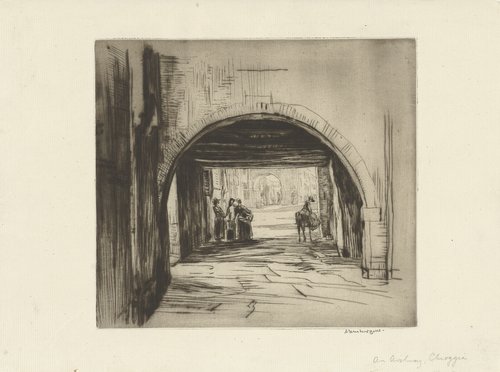
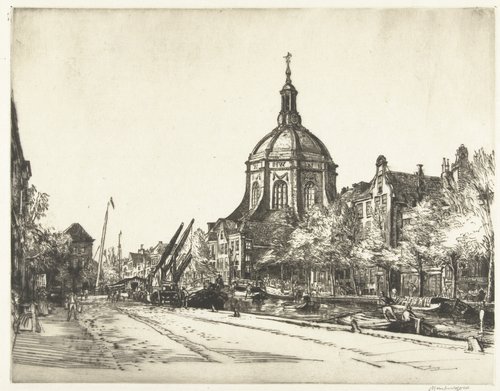
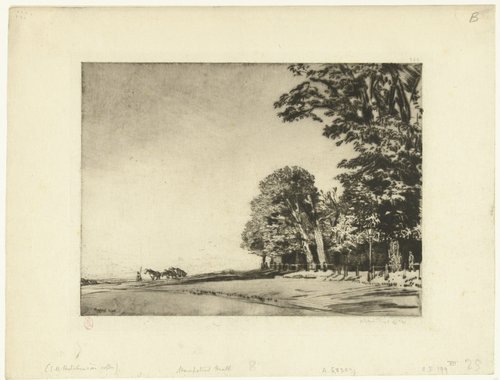
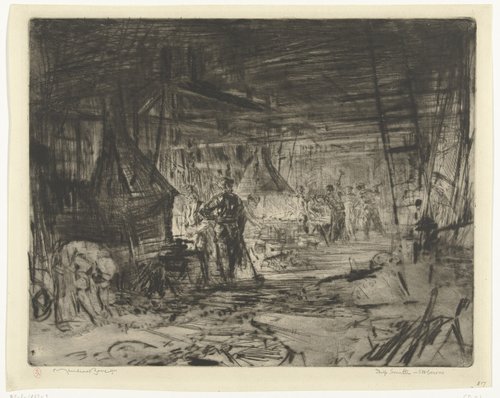
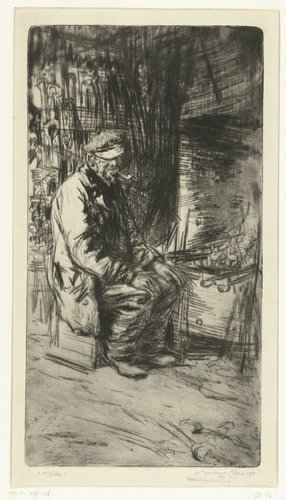
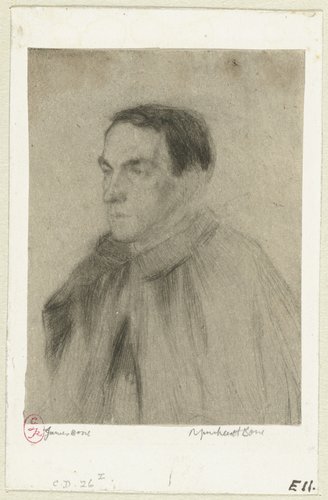
Sir Muirhead Bone was born in Glasgow on March 23, 1876, into a world of shipyards and industrial architecture that would profoundly shape his art. He trained initially in architectural draftsmanship before studying at Glasgow School of Art, developing a draughtsman's eye for structure and mass. He began printmaking in 1898, and though his first known print was a lithograph, he became celebrated above all as an etcher and drypoint artist — a central figure in the last flowering of the Etching Revival.
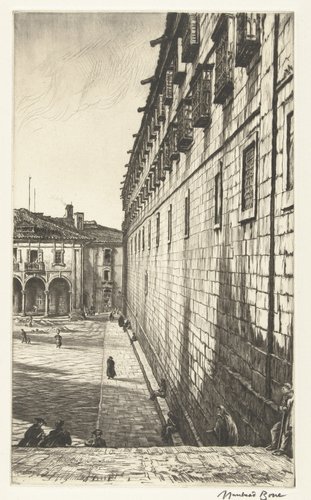
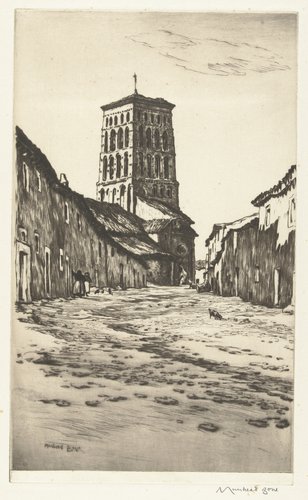
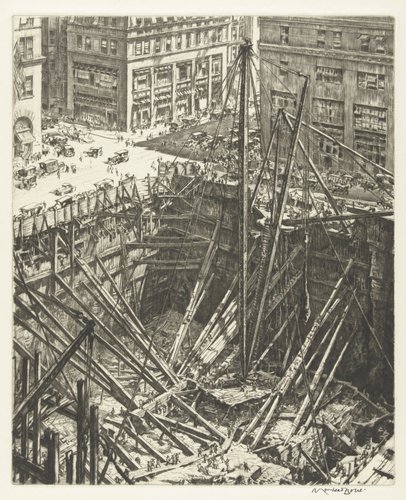
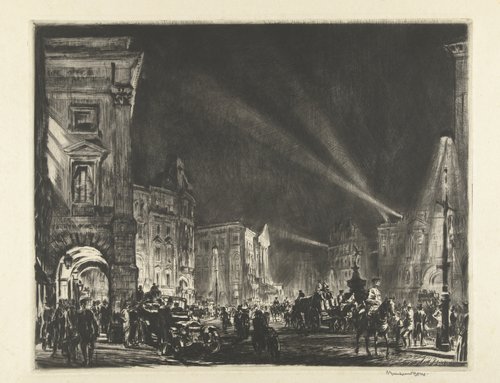
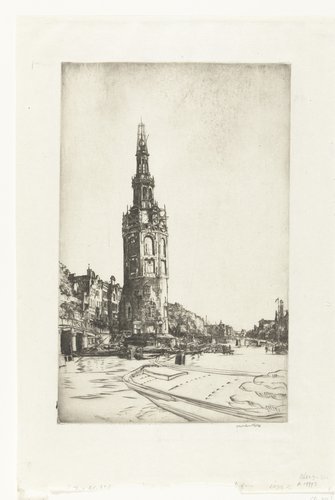
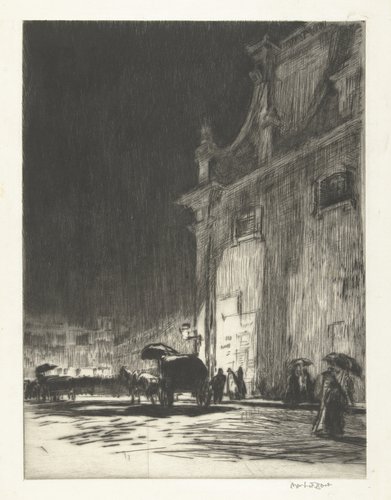
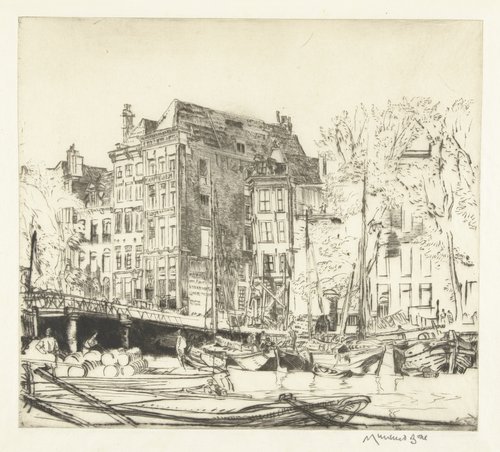
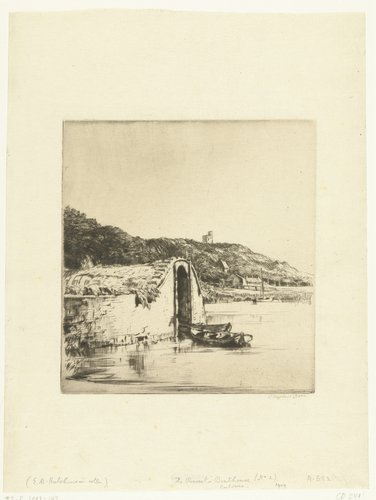
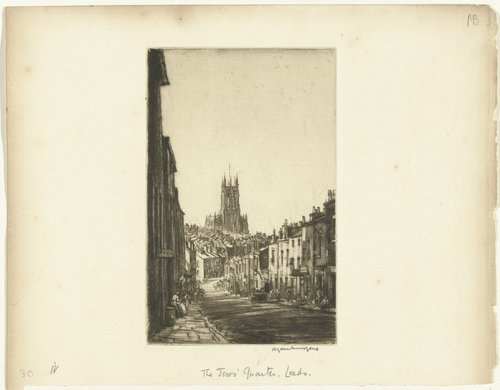
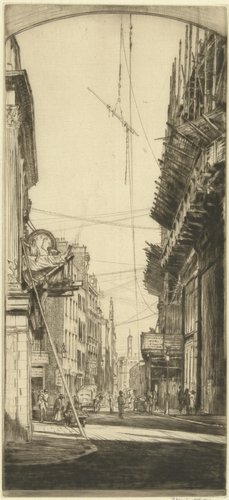
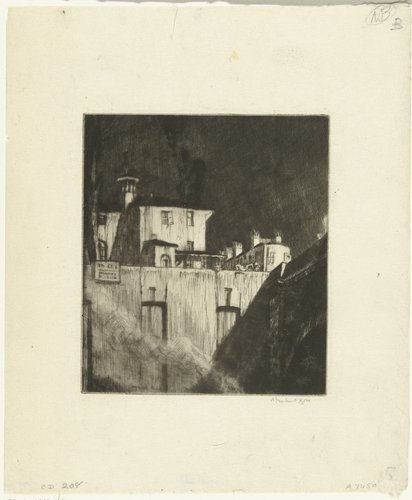
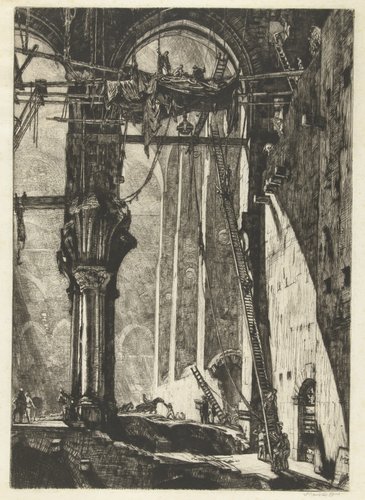
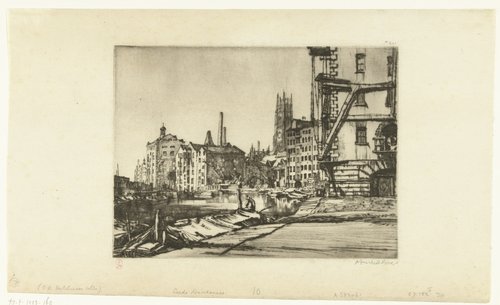
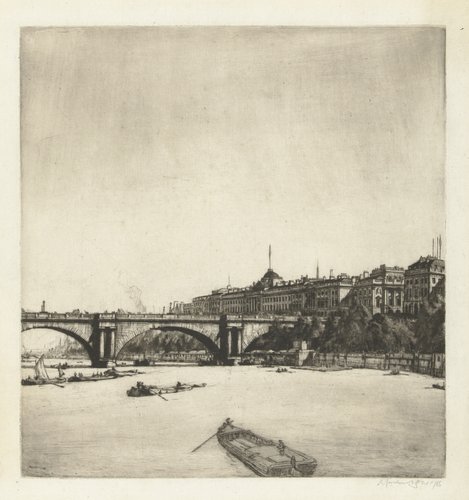
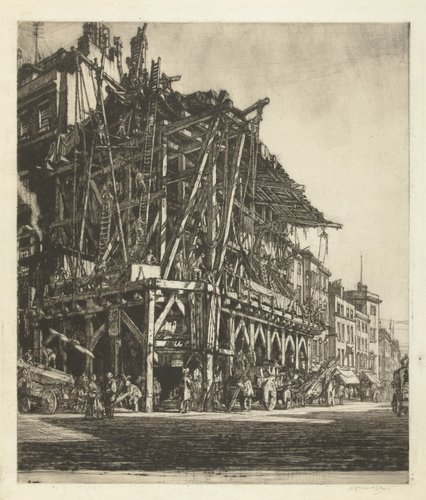
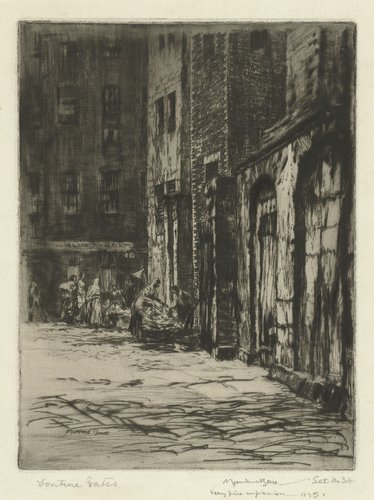
Bone moved to London in 1901 and quickly established himself in artistic circles, connecting with figures such as William Strang and becoming a member of the New English Art Club. His etchings of architectural subjects — crumbling Gothic facades, vast construction sites, industrial demolition — were distinguished by their ambition of scale and density of mark-making. Works like The British Museum Reading Room (1907) exemplify his ability to render complex, layered spaces with extraordinary precision. His large, heavily worked plates commanded exceptional prices before the collectors' market collapsed after the Wall Street Crash of 1929.
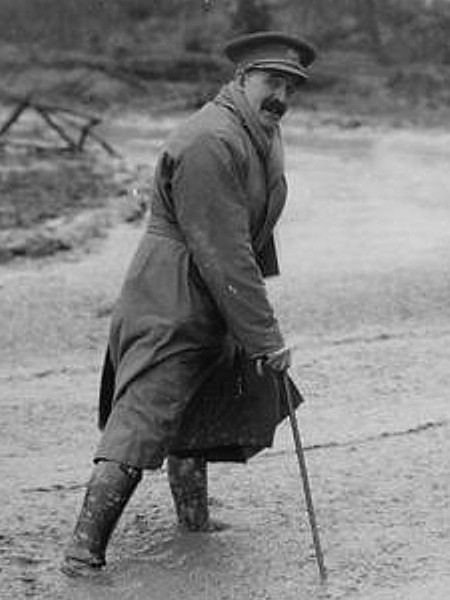
Bone's career took a historic turn in May 1916 when Charles Masterman, head of the British War Propaganda Bureau, appointed him as Britain's first official war artist. Arriving in France in August 1916 during the Battle of the Somme, he produced 150 drawings before returning home in October. He served again as an official war artist in the Second World War, specializing in naval and Admiralty subjects. Knighted in 1937, Bone also served as Trustee of the Tate Gallery, the National Gallery, and the Imperial War Museum, championing younger artists throughout his life. He died in Oxford on October 21, 1953.