Ctrl K
1470–1543
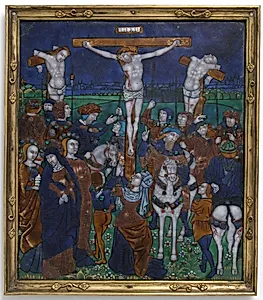
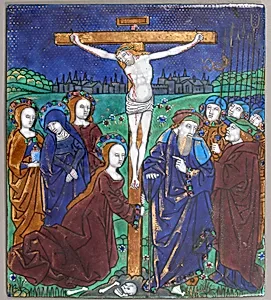
Nardon Pénicaud (c. 1470–c. 1542/43) was a pioneering French enameler based in Limoges, recognized as the founder of the first dynasty of enamel artists in that city. Little is known about his early life or training, which remains sparsely documented, but he established a workshop that produced exquisite painted enamels on copper, primarily depicting religious subjects in a distinctive French Gothic style. His works borrowed compositional details from contemporary woodcuts, blending meticulous polychrome painting with partly gilded surfaces to create luminous, narrative scenes that captivated collectors across Europe.
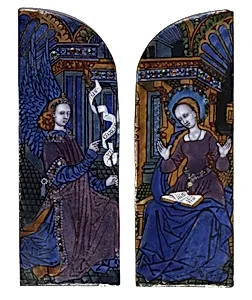
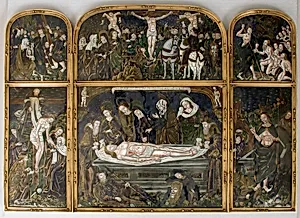
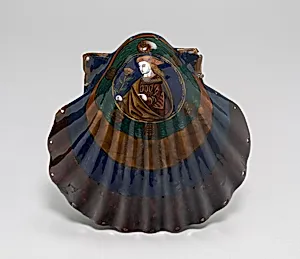
Pénicaud's artistic output focused on devotional objects such as paxes, triptychs, and plaques, showcasing his mastery of transparent and opaque enamels. Notable examples include *The Annunciation* (ca. 1510–20), a delicately rendered scene held at the Metropolitan Museum of Art, and a *Triptych with Crucifixion* (ca. 1495–1525) in the Walters Art Museum, which unfolds scenes of Christ's Passion in intricate detail. He also crafted a *Pax with the Virgin* (ca. 1520–25) and a plaque depicting *St. Martin and the Beggar*, both exemplifying his skill in half-length figures and dynamic compositions. Pénicaud's family extended his influence: his younger brother, Jean I (c. 1490–after 1543), incorporated Renaissance motifs and Dürer-inspired prints, while probable sons Jean II (c. 1515–c. 1588) and Pierre (c. 1515–c. 1590) advanced into grisaille techniques with mythological themes.
The Pénicaud workshop's legacy endures as one of the finest in 16th-century Limoges enameling, bridging Gothic traditions with emerging Renaissance elements and influencing later masters like Léonard Limosin, who studied under Nardon. Their innovations in polychrome and grisaille enamels elevated the medium from craft to high art, with works prized in museums worldwide for their technical brilliance and spiritual depth. Nardon's foundational role ensured Limoges's dominance in European enameling for generations.