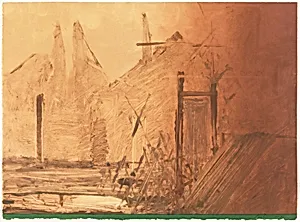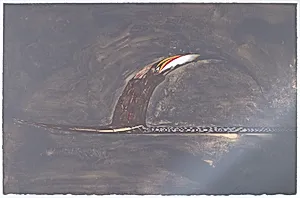
Nathan Oliveira (1928–2010) was an American painter and printmaker associated with the Bay Area Figurative Movement who developed a distinctive approach to the human figure that balanced gestural expressionism with haunting psychological presence. Born in Oakland, California, to Portuguese immigrant parents, he studied at the California College of Arts and Crafts and Mills College.
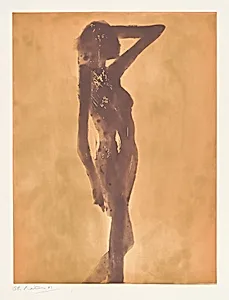
Oliveira emerged in the late 1950s as part of the Bay Area Figurative Movement, alongside David Park, Richard Diebenkorn, and Elmer Bischoff — artists who returned to figuration after periods of abstraction. Oliveira's approach was distinct: his solitary figures, often standing or walking in undefined, atmospheric spaces, convey a sense of existential isolation and vulnerability. Painted with broad, energetic brushstrokes and muted, earthy colors, these figures seem to materialize from and dissolve back into the paint itself.
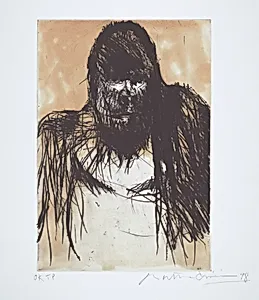
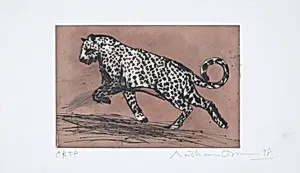
Beyond painting, Oliveira was a prolific and innovative printmaker, working in lithography, monotype, and etching. He was also a talented sculptor, producing bronze figures that extended his painted explorations of the human form into three dimensions. His monotype prints are particularly celebrated for their luminous, painterly qualities.
Oliveira taught at Stanford University for over three decades, influencing generations of Bay Area artists. He exhibited widely throughout his career, including at the São Paulo Biennial, the Venice Biennale, and major museums in the United States and Europe. His work is held by the Museum of Modern Art, the Whitney Museum of American Art, the Smithsonian American Art Museum, and the San Francisco Museum of Modern Art.

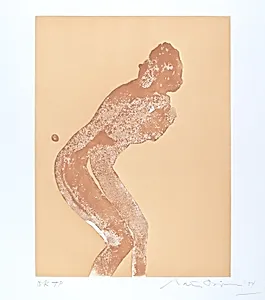
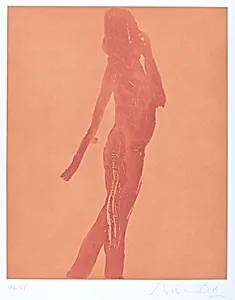
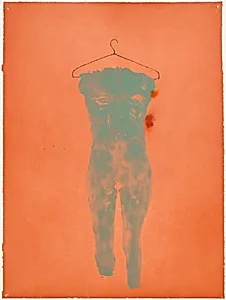
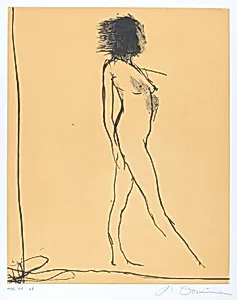
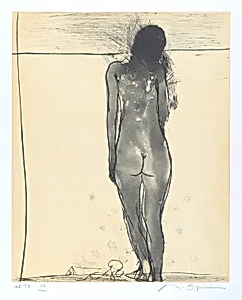
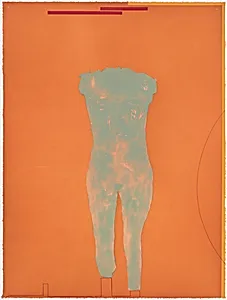
![Stairs to the Stars [working proof 1]](https://images.artheonmuseum.org/nga/thumb/stairs-to-the-stars-working-proof-1-nga-230544.webp)
![Stairs to the Stars [working proof 2]](https://images.artheonmuseum.org/nga/thumb/stairs-to-the-stars-working-proof-2-nga-230545.webp)
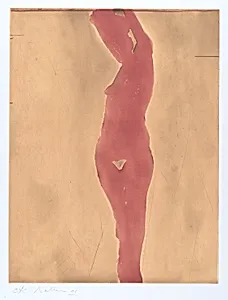
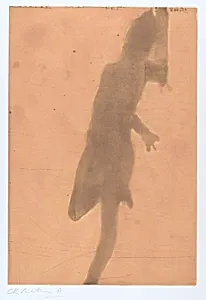
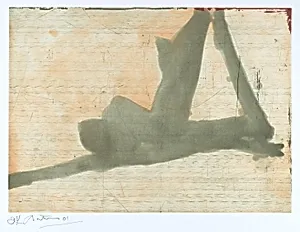
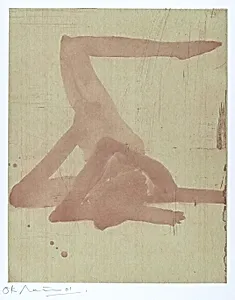
![Copper Plate Nude 1 [working proof 1]](https://images.artheonmuseum.org/nga/thumb/copper-plate-nude-1-working-proof-1-nga-230525.webp)
![Copper Plate Nude 2 [working proof 1]](https://images.artheonmuseum.org/nga/thumb/copper-plate-nude-2-working-proof-1-nga-230526.webp)
![Copper Plate Nude 2 [working proof 2]](https://images.artheonmuseum.org/nga/thumb/copper-plate-nude-2-working-proof-2-nga-230527.webp)
![Copper Plate Nude 3 [working proof 1]](https://images.artheonmuseum.org/nga/thumb/copper-plate-nude-3-working-proof-1-nga-230539.webp)
![Copper Plate Nude 4 [working proof 1]](https://images.artheonmuseum.org/nga/thumb/copper-plate-nude-4-working-proof-1-nga-230540.webp)
![Copper Plate Nude 5 [working proof 1]](https://images.artheonmuseum.org/nga/thumb/copper-plate-nude-5-working-proof-1-nga-230541.webp)
![Copper Plate Nude 6 [working proof 1]](https://images.artheonmuseum.org/nga/thumb/copper-plate-nude-6-working-proof-1-nga-230542.webp)
![Copper Plate Nude 6 [working proof 2]](https://images.artheonmuseum.org/nga/thumb/copper-plate-nude-6-working-proof-2-nga-230543.webp)