Ctrl K
**Nayarit artist(s)** were anonymous creators working in the ancient ceramic traditions of West Mexico, particularly in the modern state of Nayarit. Active primarily during the Late Formative to Early Classic periods (roughly 300 BCE–400 CE), these artisans produced hollow ceramic figures and narrative models as funerary offerings placed in shaft-and-chamber tombs. Their works form one of the most vivid surviving records of daily life, social rituals, and community in pre-Columbian Mesoamerica, where no monumental stone architecture or sculpture survives from the region.
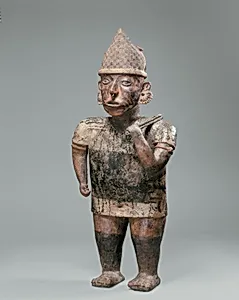
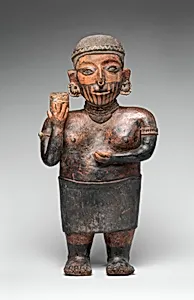
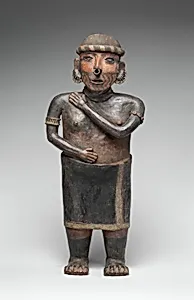
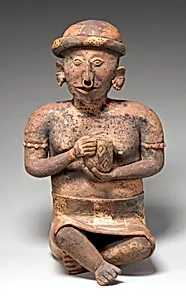
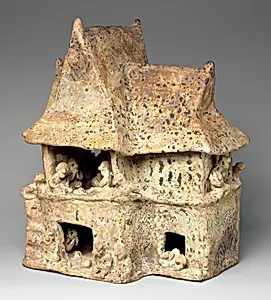
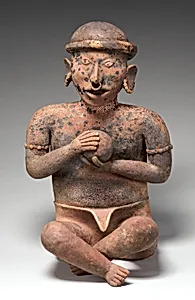
These artists specialized in hand-modeled terracotta sculptures, often using appliqué techniques to add details such as jewelry, clothing, and headdresses, then finishing pieces with slips in red, black, cream, and white. Subjects ranged from individual standing or seated figures—frequently depicting men and women with elaborate facial paint, multiple earrings, nose rings, and body adornments—to lively group scenes showing dancers, spectators, house models, and village gatherings. The figures emphasize expressive, stylized human forms with broad bodies and distinctive facial features, capturing both hierarchy and everyday interactions without overt signs of rigid social stratification.
Notable examples include village scene models that portray circular plazas with dancers locking arms, onlookers, and surrounding architecture, as well as paired male and female figures likely representing ancestors or lineage members. Specific works in major collections, such as those at The Metropolitan Museum of Art, feature finely detailed elements like black-painted zigzags for face paint, appliquéd earrings, and symbolic motifs possibly denoting lineage or status. These pieces were typically deposited in tombs alongside the deceased, serving both commemorative and ritual functions.
The legacy of Nayarit artists lies in their unparalleled ethnographic insight and sculptural vitality. Their animated compositions reveal community rituals like dances, feasts, and ballgames, offering a rare window into West Mexican village life. Today, these ceramics are celebrated for their humanistic warmth and technical sophistication, influencing modern appreciation of pre-Columbian art beyond the better-known traditions of central Mexico. With six works attributed to Nayarit artist(s) in the collection, they continue to illuminate the artistic achievements of this distinctive Mesoamerican culture.