Ctrl K

1818–1888
**The New England Glass Company: Pioneers of American Flint Glass**
The New England Glass Company was established on February 16, 1818, in East Cambridge, Massachusetts, by a quartet of prominent local businessmen: Amos Binney, Edmund Munroe, Daniel Hastings, and Deming Jarves. Jarves, drawing on his dry goods background and talent for recruiting Europe's finest cutters, served as operational manager, transforming a disused warehouse from the failed Boston Porcelain and Glass Company into a thriving works equipped with two flint furnaces, 24 steam-powered cutting mills, and America's only red-lead oven for superior crystal production. Under superintendent Thomas Leighton Sr. from 1826 and manager Henry Whitney, the firm exploded in scale: by 1823, 140 workers produced ten tons of glassware weekly, much of it intricately cut for Boston markets; by 1849, it employed 500, becoming the world's largest glass manufacturer. Jarves departed in 1826 to found the Boston & Sandwich Glass Company, but the NEGC's merit-based hiring and family dynasties—like the Leightons, with six sons entering the trade—sustained its excellence.
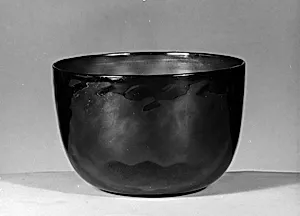
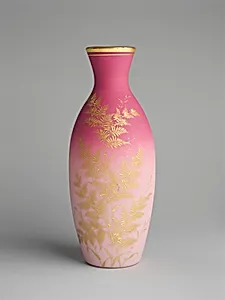
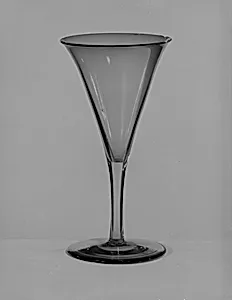
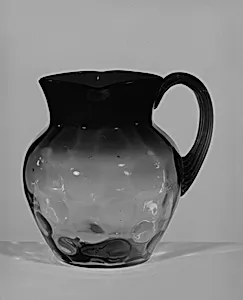
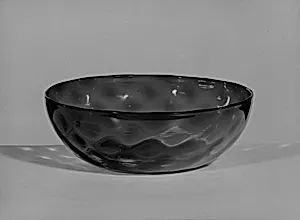
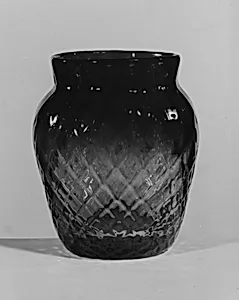
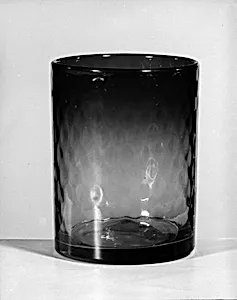
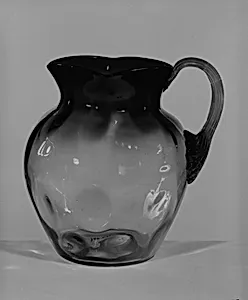
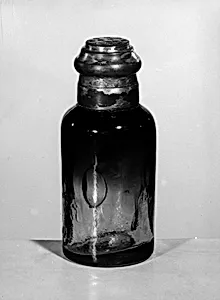
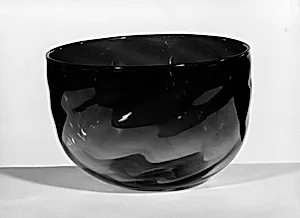
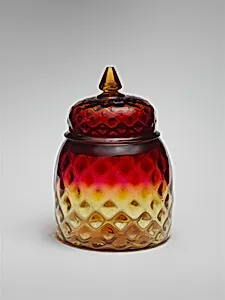
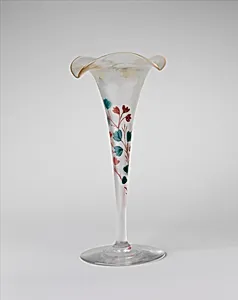
Renowned for flint lead glass tableware—blown, pressed, cut, engraved, etched, and gilded—the company worked in the Victorian cut glass tradition, producing everything from paperweights and ewers to opalescent lamps and colored novelties in ruby, emerald, and amberina. Innovations like early glass-pressing machines and steam cutting set benchmarks, while engraver Louis F. Vaupel, joining in 1856, elevated designs with pure metal motifs. Standout works include the monumental 1843 Presentation Vase—blown, cut, and engraved with the company's glasshouses, gifted from Whitney to Leighton as a "token of grateful remembrance"—and Joseph Locke's Aesthetic Movement Pomona art glass pitcher (ca. 1885–1887), with acid-etched cobalt florals on amber grounds. Patterns like Ashburton (1840s), Huber (1860s), and Blaze (1869) graced compotes, wines, and sugars, their heavy, resonant crystal rivaling European imports.
Facing cheaper soda-lime competitors it stubbornly rejected, fuel shortages, and strikes, the NEGC faltered post-Civil War; sales plummeted, leading to a 1877 auction and lease to agent William Libbey in 1878. His son Edward Drummond Libbey relocated operations to Toledo, Ohio, in 1888, rebranding as the Libbey Glass Company—heralding its enduring legacy as America's longest-running 19th-century glass factory (1818–1888). Its 1876 Centennial Exhibition cut glass ignited the Brilliant period, cementing NEGC's role in elevating U.S. glass from utilitarian to artistic mastery, with over 117 pieces preserved in collections today.
(Word count: 378)