Ctrl K
Nicholas Nixon, born on October 27, 1947, in Detroit, Michigan, initially pursued American literature at the University of Michigan, earning his B.A. in 1969. It was during this time that he discovered photography, later advancing his skills with an M.F.A. from the University of New Mexico in 1975. Settling in Boston in the 1970s, Nixon married Bebe Brown, whose family became central to his most iconic work. He taught photography as a part-time professor at the Massachusetts College of Art and Design from 1975 until his retirement in 2018, influencing generations of students.
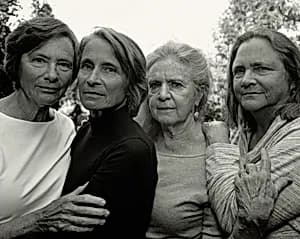
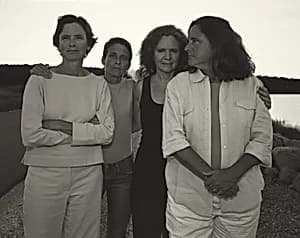
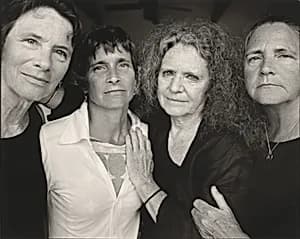
Nixon's oeuvre is defined by intimate black-and-white portraiture and documentary photography, captured with a signature 8×10-inch view camera that yields meticulous detail and emotional depth. Influenced by Edward Weston and Walker Evans, he forged a style emphasizing raw human connections, time's passage, and vulnerability. His breakthrough series, *The Brown Sisters* (1975–2021), comprises 47 annual portraits of his wife Bebe and her sisters—Heather, Mimi, and Laurie—charting aging and sisterly bonds with unflinching honesty; it debuted at the Museum of Modern Art in 1976 under curator John Szarkowski. Other landmark projects include *People with AIDS* (begun 1987, book 1991), compassionate images of those facing terminal illness; *School* (1998), portraits of children; and early 1970s urban landscapes featured in the seminal *New Topographics* exhibition.
Nixon's legacy endures through major retrospectives at institutions like MoMA, the National Gallery of Art, and the Museum of Fine Arts, Boston, alongside honors such as two Guggenheim Fellowships and three National Endowment for the Arts grants. His photographs grace over two dozen prestigious collections worldwide, from the Art Institute of Chicago to the Victoria & Albert Museum, cementing his role as a master chronicler of everyday profundity and the human condition. With 54 works in this virtual museum's holdings, Nixon invites viewers into the quiet poetry of lives unfolding.