Ctrl K
1855
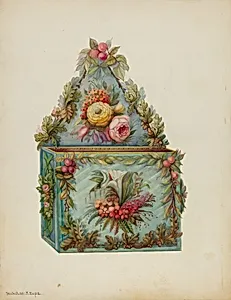
Nicholas Zupa was an American artist active around 1935 whose precise renderings of decorative objects form a notable part of the Index of American Design. Early life details are not well documented, and no records of formal training or specific teachers have survived. He contributed to this New Deal-era Federal Art Project initiative, which employed artists to create watercolor and mixed-media studies documenting American folk art, furniture, silverware, and household items as a visual record of the nation’s design heritage.
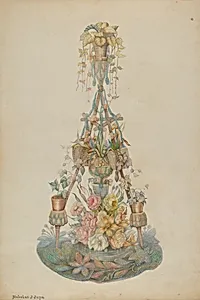
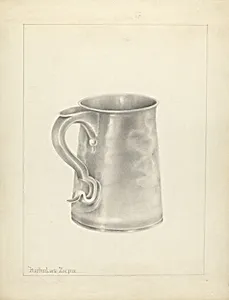
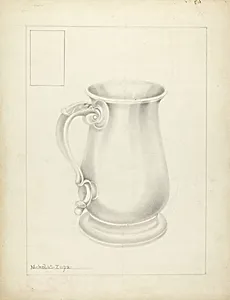
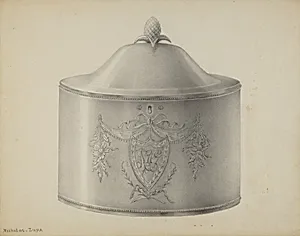
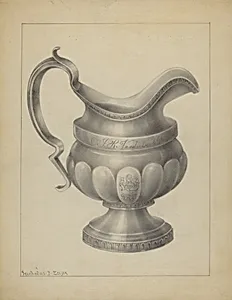
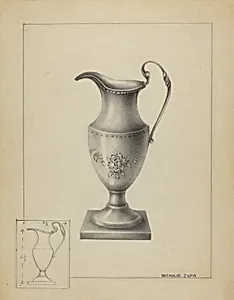
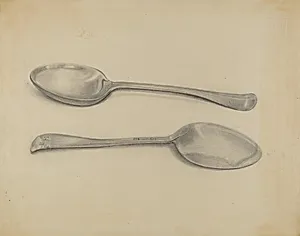
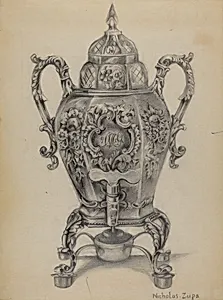
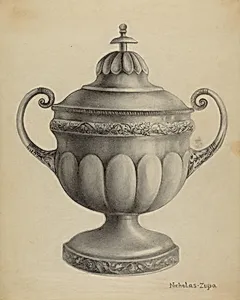
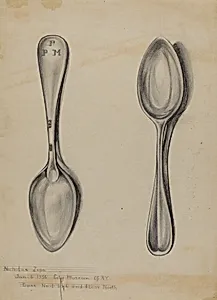
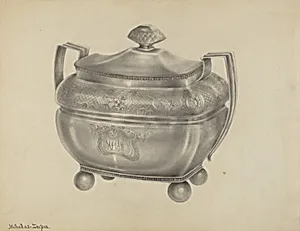
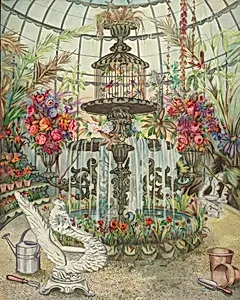
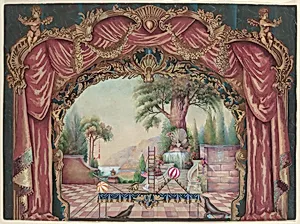
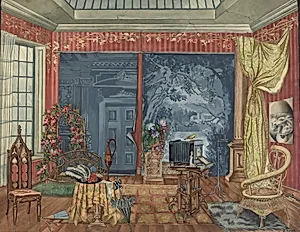
Zupa worked in a meticulous documentary style typical of the Index, combining watercolor, gouache, graphite, and colored pencil on paper or paperboard to capture textures, reflections, and forms with exceptional clarity. He frequently depicted silver objects such as creamers, tea caddies, mugs, spoons, bowls, and hot-water urns, treating these everyday items with the care of still-life studies. He also collaborated with fellow Index artist Perkins Harnly on more elaborate interior and theatrical scenes, including Conservatory Fountain (c. 1938) and Photographer’s Studio (1935–1942). These joint works blend architectural detail with atmospheric watercolor washes.
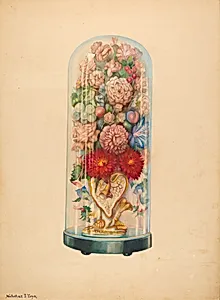
Among his documented pieces are Bell Jar (c. 1939), a delicate watercolor and gouache study of a glass-enclosed floral arrangement; Parlor Flower Stand (c. 1939), which records an ornate piece of Victorian furniture; and numerous silverware drawings dated between 1936 and 1938. These works, now held by the National Gallery of Art, demonstrate a quiet observational skill that elevates utilitarian objects into records of craftsmanship and period taste. The Index collection as a whole, including Zupa’s contributions, was transferred to the National Gallery after the project ended, preserving them as both artistic and historical documents.
Zupa’s legacy rests in this archival role rather than in a personal oeuvre or later career. His drawings continue to serve scholars and the public as accurate visual references for American decorative arts of the nineteenth and early twentieth centuries, illustrating how WPA artists transformed documentation into a distinctive form of watercolor illustration.