
Ctrl K
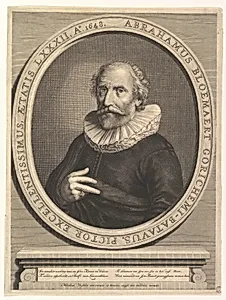
**Nicolaes Visscher I (1618–1679)** was a prominent Dutch engraver, cartographer, and publisher based in Amsterdam. Born on 25 January 1618, he was the son of the noted cartographer and publisher Claes Janszoon Visscher, inheriting and expanding the family’s influential workshop.
Visscher specialized in producing finely engraved maps and atlases, often enhancing them with decorative borders featuring mythological or allegorical scenes. His most celebrated work, the double-hemisphere world map *Orbis Terrarum Nova et Accuratissima Tabula* (1658), exemplifies this approach; its corners depict figures such as Zeus and Neptune, drawn by the painter Nicolaes Berchem. He also created detailed regional maps, including representations of the Americas and New Netherland.
Visscher’s legacy lies in advancing Dutch Golden Age cartography through precise engraving techniques and artistic embellishment. His son, Nicolaes Visscher II (1649–1702), continued the family business, ensuring the continuation of their publishing tradition after Visscher’s death in Amsterdam in 1679.
**Abraham Bloemaert (1566–1651)** was a leading Netherlandish painter and printmaker whose long career bridged Northern Mannerism and the emerging Dutch Baroque. Born in Gorinchem on 25 December 1566 to the architect Cornelis Bloemaert I, he moved with his family to Utrecht in 1575. He studied under Gerrit Splinter and Joos de Beer before traveling to Paris around 1581–1583, where he trained under Jehan Bassot, Maistre Herry, and Hieronymus Francken.
Bloemaert initially worked in the Mannerist style associated with Haarlem but shifted toward Baroque naturalism by the early seventeenth century. He excelled in history paintings, allegories, landscapes with pastoral elements, and religious subjects, often commissioned for Utrecht’s Catholic communities. Notable works include *Moses Striking the Rock* (1596) and *The Four Evangelists* (1615). He co-founded the Utrecht Guild of Saint Luke in 1611 and served as its dean.
As one of Utrecht’s most important teachers, Bloemaert trained numerous artists, including the Utrecht Caravaggisti and his own sons—Hendrick, Frederick, Cornelis, and Adriaan—who became accomplished painters and engravers. His emphasis on drawing from life and integrating figures into naturalistic settings influenced generations of Dutch artists. Bloemaert remained active in Utrecht until his death on 27 January 1651.