Ctrl K
1687–1772
Nicolò Ricciolini, born in Rome on February 1, 1687, emerged from a familial artistic milieu as the son of the painter Michelangelo Ricciolini, who imparted to him the initial rudiments of his craft. This early foundation in the Eternal City set the stage for a career deeply rooted in Roman Baroque traditions. Ricciolini soon advanced to the prestigious Accademia di San Luca, where he studied under the renowned Pietro da Cortona, a master whose grand manner profoundly shaped his pupil's approach to composition and drama. By 1703, at just sixteen, he had already earned a prize from the academy, signaling his precocious talent amid the vibrant intellectual circles of Roman art.
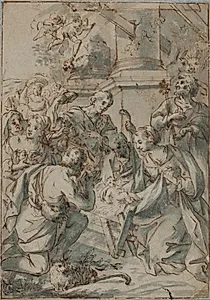
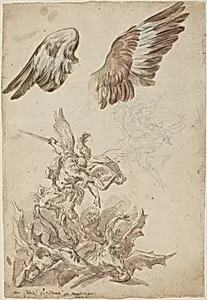
Ricciolini's style epitomized late Roman Baroque, characterized by theatrical religious subjects infused with dynamic movement, rich chiaroscuro, and emotional intensity. Influenced by Cortona's legacy, he specialized in devotional themes, blending the exuberance of high Baroque with a refined elegance that echoed contemporaries like Carlo Maratti and Francesco Trevisani. His oeuvre graced numerous Roman churches, though specific commissions often remain tied to ecclesiastical patrons. A defining moment came in his competition against Bolognese rival Marcantonio Franceschini, submitting cartoons for the Vatican's mosaic decorations; Ricciolini's designs prevailed, resulting in the realized mosaics of the *Crucifixion of St. Peter* and a poignant *Descent from the Cross* painting. Other notable works include playful *Puttos* adorning the Palazzo Ricciolini in Macerata, hinting at familial ties.
In his later years, Ricciolini solidified his status within Rome's artistic elite, joining the Confraternita dei Virtuosi in 1719 and the Accademia dei Virtuosi al Pantheon in 1721. He mentored pupils such as the sculptor Giuseppe Angelini, extending his influence into sculpture and ensuring the continuity of Baroque sensibilities. Though not among the era's most celebrated masters, Ricciolini's steadfast contributions to sacred art and Vatican projects cemented his reputation as a reliable pillar of Roman painting. He died in Rome on October 15, 1772, leaving a legacy of devotional works that continue to illuminate the city's chapels and inspire appreciation for the enduring vitality of Baroque expression.