Ctrl K
1807–1873
Noël Marie Paymal Lerebours was born on February 16, 1807, in Paris to Marie Jeanne Françoise Paymal, a seamstress from Vitry-sur-Marne. His biological father remains unknown, but on June 11, 1836, he was formally adopted by Jean Lerebours, a renowned optician whom his mother had married. Jean Lerebours (1761–1840), supplier to the French Navy and imperial family, owned a prestigious optical instrument manufactory celebrated for its precision lenses. Lerebours had worked in his adoptive father's shop at Place du Pont-Neuf since 1830, gaining hands-on expertise in optics that would define his career.
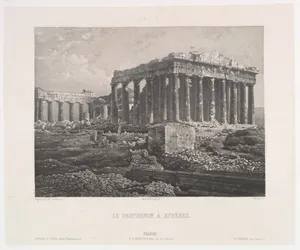
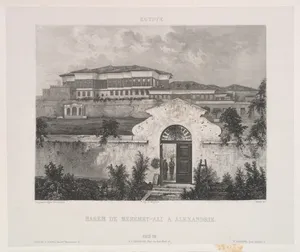
Following Jean Lerebours's death in 1840, Noël took over the business, expanding it into a partnership with Marc Secretan in 1845 under the name Lerebours et Secretan. The firm supplied high-quality lenses and glasses to astronomical observatories worldwide. Amid the daguerreotype craze of the 1840s, Lerebours immersed himself in early photography, commissioning photographs of global landmarks from traveling daguerreotypists. These images were meticulously redrawn as aquatint engravings by skilled artists, blending photographic precision with the aesthetic appeal of traditional printmaking. His masterpiece, *Excursions Daguerriennes: Vues et Monuments les Plus Remarquables du Globe* (published in installments from 1839 to 1844), featured over 140 such views—from the pyramids of Egypt to the ruins of Athens and the spires of Notre-Dame—making monumental architecture accessible to a wide audience through luxurious illustrated volumes.
Lerebours's work bridged optics, photography, and fine art, pioneering the transformation of raw daguerreotypes into publishable engravings at a time when photography was novel and mechanically reproduced images scarce. Though not a traditional painter, his editions, held in collections like the Metropolitan Museum of Art and the J. Paul Getty Museum, exemplify the Romantic fascination with travel and antiquity, rendered with unprecedented topographical accuracy. He died on July 23, 1873, in Paris, leaving a legacy as a key figure in photography's transition from scientific curiosity to artistic medium. Lerebours's innovations influenced subsequent photobook publishers, cementing his role in democratizing visual culture during the July Monarchy era.
(Word count: 348)