
Ctrl K
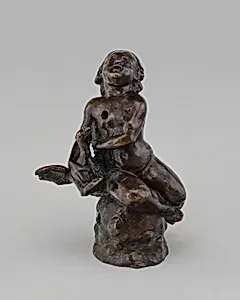
The designation North Italian 16th or 17th Century encompasses the many unidentified painters and sculptors active across the prosperous city-states of Northern Italy, from Venice and the Veneto to Lombardy, Brescia, and Parma, during the shift from High Renaissance splendor to early Baroque drama. Early life is not well documented for these creators, who typically trained and produced within large family workshops or regional studios where individual names were rarely recorded, leaving their output attributed simply by geography and era. This period saw Northern Italy as a dynamic crossroads of artistic exchange, blending local traditions of precise observation with the luminous color and atmospheric depth that defined the region.
Artists of this time worked in the Venetian school tradition, absorbing the colorito techniques pioneered by masters such as Titian, Tintoretto, and Veronese, who emphasized rich oil glazes, sensual figures, and poetic landscapes over the linear disegno of central Italy. In Lombardy, they drew on Leonardo da Vinci’s lingering influence of sfumato and naturalism, later incorporating Mannerist elegance with elongated forms and intricate compositions. By the 17th century, many adopted the tenebrist lighting and unidealized realism associated with Caravaggio, a native of the Milanese area, while sculptors excelled in small-scale bronzes featuring mythological, religious, and portrait subjects. Training occurred through apprenticeships in these vibrant centers, where oil painting on canvas became dominant and bronze casting reached high technical refinement.
Typical major works include half-length portraits of armored nobles or women, intimate religious scenes such as paxes with the Madonna or Pietà, and decorative objects like inkstands with satyrs or oil lamps in monstrous forms, many executed in gilded or patinated bronze. These pieces, often found in collections like the National Gallery of Art, demonstrate the era’s fusion of classical mythology, Christian devotion, and courtly elegance, with one such work representing this anonymous output in the present collection. The sculptures in particular highlight the North Italian mastery of small bronzes, combining intricate detailing with dynamic poses that capture movement and emotion.
The legacy of these North Italian artists lies in the vast body of anonymous yet high-quality works that fill museums worldwide, preserving the diversity of regional styles that enriched Italian art beyond its most famous names. Their contributions to color, light, and naturalistic observation influenced subsequent Baroque developments across Europe and continue to offer insight into the workshop practices and patronage of a golden age, reminding us that much of the period’s brilliance emerged from collective rather than solely individual genius.