
Ctrl K
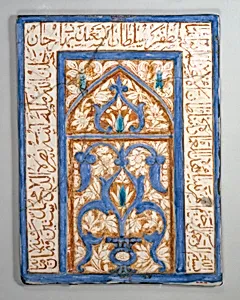
Nusrat al-Din Muhammad was a calligrapher active in mid-fifteenth-century Iran, best known for his signed work on a ceramic tile preserved in the Metropolitan Museum of Art. The piece, titled *Tile with Niche Design*, is dated 860 AH (1455–56 CE) and features intricate Arabic inscriptions within an architectural niche motif executed in stonepaste with inglaze painting in blue and luster on an opaque white glaze. Attributed to Iran, the tile exemplifies the refined integration of calligraphy and decorative arts that characterized Timurid and early Safavid material culture.
Little is recorded about Nusrat al-Din Muhammad’s personal background or training. No details survive regarding his teachers, apprenticeship, or specific artistic lineage, leaving his early life largely undocumented. His contribution appears confined to the specialized realm of epigraphic decoration on architectural ceramics, a craft that required both calligraphic mastery and technical knowledge of glazing and firing processes common in Iranian workshops of the period.
The single known work bearing his name highlights the role of calligraphers in enhancing the spiritual and aesthetic dimensions of Islamic architecture through mihrab-like designs. Such tiles often adorned mosques or religious structures, blending Qur’anic verses with geometric and floral elements to create focal points for prayer and contemplation.
Despite the scarcity of biographical information, Nusrat al-Din Muhammad’s signed tile stands as a tangible testament to the high level of craftsmanship in fifteenth-century Persian ceramic arts. Its preservation in a major collection underscores the enduring value of these anonymous or semi-anonymous artisans whose inscriptions lent both beauty and sanctity to the built environment of their time.