Ctrl K
1850–1915
**Otto Heinigke (1850–1915)** was an American artist and stained-glass designer whose career bridged traditional European techniques and the American Arts and Crafts movement. Born in New York as the son of a respected German miniaturist who had immigrated to the United States, Heinigke grew up immersed in artistic practice.
He received formal training at the Brooklyn Polytechnic Institute and initially pursued easel painting, textiles, book design, and mural work, exhibiting landscapes and still lifes at the Pennsylvania Academy of the Fine Arts. His father’s influence as a miniaturist fostered a lifelong attention to detail and color that would define his later output.
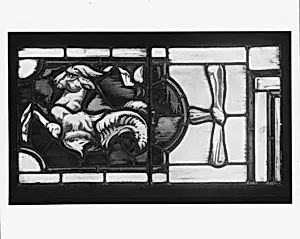
In the early 1880s Heinigke entered the stained-glass field, working briefly with Roger Riordan before forming the partnership Heinigke & Bowen with Owen J. Bowen in 1890. The firm quickly gained prominence, creating leaded-glass windows and mosaic decorations for major American institutions including the New York Stock Exchange, Carnegie Hall, and the Library of Congress. A 1896 European tour deepened his commitment to medieval painted pot-metal glass techniques, which he blended with contemporary opalescent glass in a distinctive hybrid style that set his work apart from contemporaries such as Louis Comfort Tiffany and John La Farge.
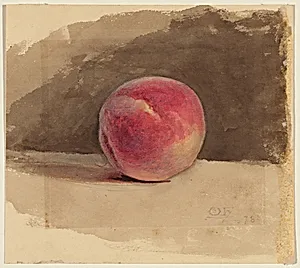
Heinigke’s watercolors—ranging from landscapes and genre scenes to detailed still lifes such as *A Peach*—reveal the same sensitivity to light, color, and nature that informed his glass designs. He remained active in the Society of Mural Painters and helped lead the late-nineteenth-century revival of traditional stained-glass methods in America. After his death in 1915, his son Otto Weir Heinigke continued the family firm, extending its influence into the mid-twentieth century. Today Heinigke is recognized as one of the key figures in the American stained-glass renaissance, with his paintings and windows preserved in museum collections and historic buildings across the country.
All 2 artworks loaded