Ctrl K
1874–1930
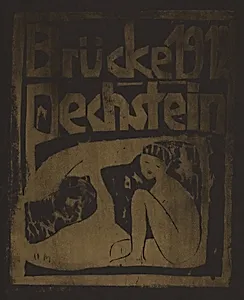
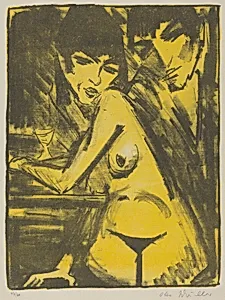
Otto Mueller (1874–1930) was a German Expressionist painter whose distinctive vision of the human figure in landscape made him one of the most poetic and individual voices within the Die Brücke movement. Born in Liebau in Silesia, he trained at the Dresden Academy of Fine Arts and subsequently worked briefly in Munich before his pivotal association with the artists of Die Brücke — Ernst Ludwig Kirchner, Erich Heckel, Karl Schmidt-Rottluff, and others — drew him into the most energetic current of early German Expressionism around 1910.
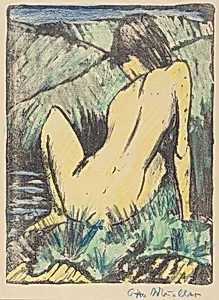
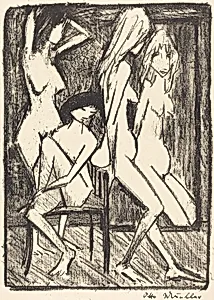
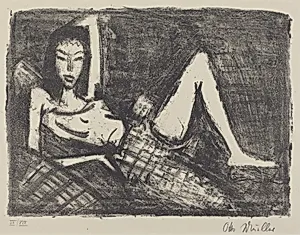
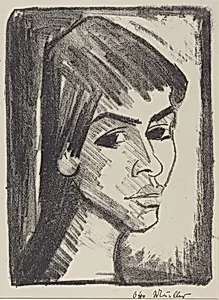
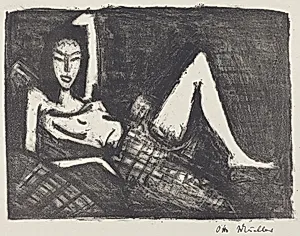
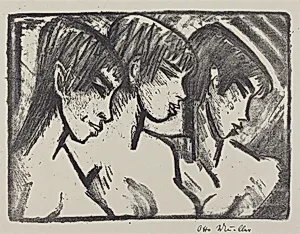
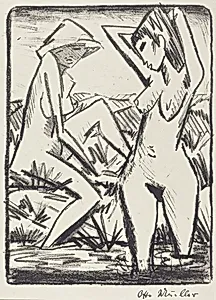
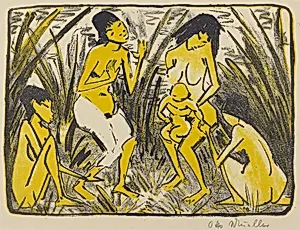
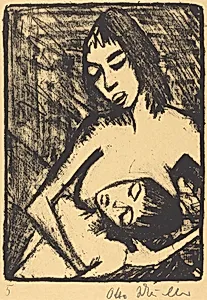
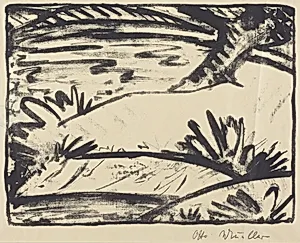
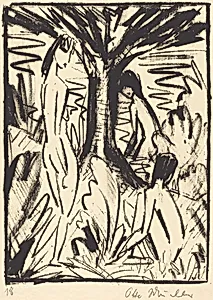
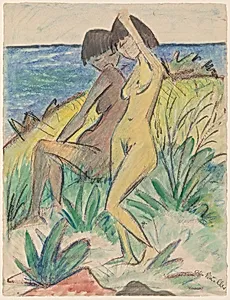
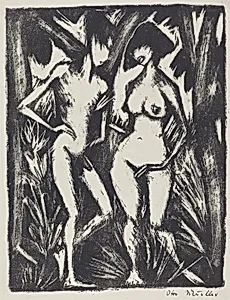
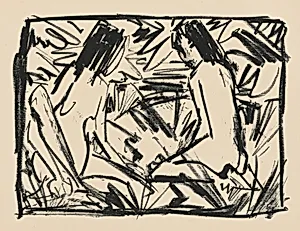
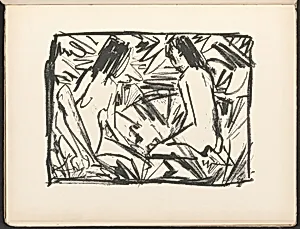
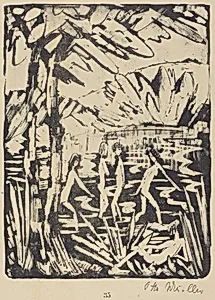
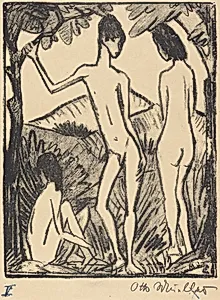
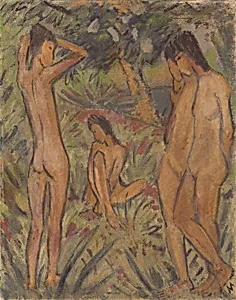
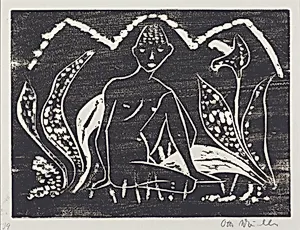
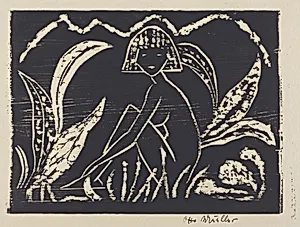
Mueller's art is immediately recognizable for its elongated, flattened figures, muted earthy palette, and the dreamlike harmony he sought between the naked human body and the natural world. Where his Brücke colleagues often depicted the body with angular violence or urban tension, Mueller's nudes — rendered in distemper, a technique that produced the flat, mat surfaces characteristic of his work — breathe an atmosphere of timeless arcadian calm. His figures, frequently associated with the Romani people of central Europe, move through landscapes of reeds, lakes, and dunes with an ease suggesting an existence outside the pressures of modern civilization.
This idealization of a life close to nature was not mere escapism but carried something of the era's longing for wholeness and authenticity in the face of industrial modernity. Mueller's Romani subjects in particular reflect both an empathetic fascination and the utopian primitivism common to his generation, though his treatment remains among the most tender and respectful in European art of the period.
Mueller taught at the Breslau Academy from 1919 until his death in 1930, and his influence on subsequent generations of German artists was considerable. His work was declared degenerate by the Nazi regime and removed from German museums, an act of cultural violence that only underscores the radical humanity at the heart of his art.