Ctrl K
1369–1411
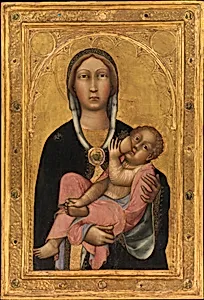
Paolo di Giovanni Fei (c. 1345–c. 1411) emerged as a distinctive voice in the Sienese school of painting, a tradition rooted in Siena's medieval artistic heritage. Originally from San Quirico near Castelvecchio, he settled in Siena by 1369, when records document his membership in the city's General Council, indicating he had already reached adulthood. By 1389, he appeared in the register of the painters' guild, marking his professional establishment. Fei likely received his training in Siena workshops, where affinities with Francesco di Vannuccio's style are evident in his early output, and he later collaborated closely with Bartolo di Fredi on the 1397 frescoes in the Malavolti Chapel of San Domenico.
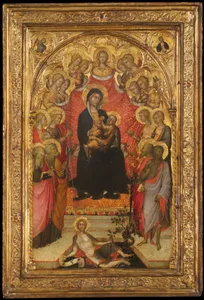
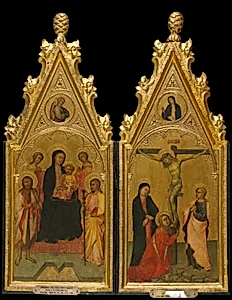
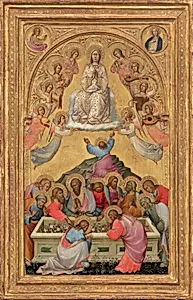
Fei's style epitomized the late Gothic elegance of the Sienese school, blending influences from masters like the Lorenzetti brothers—Pietro and Ambrogio—Bartolo di Fredi, and Simone Martini. His panels feature luminous, bright palettes set against gilded and punched grounds, alive with intricate naturalistic details, ornate patterns, and delicate figures. This ornamental richness, combined with a clear, jewel-like clarity, distinguished him from the emerging Renaissance naturalism in Florence, preserving Siena's conservative, decorative idiom.
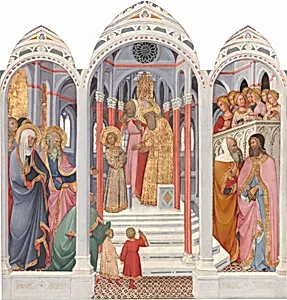
Among his major works, the signed and dated *Birth of the Virgin* (1381, Pinacoteca Nazionale, Siena) showcases his early mastery, while *Madonna and Child Enthroned* (National Museum of Serbia, Belgrade) exemplifies his throne compositions. The *Presentation at the Temple* further highlights his narrative skill. From 1395 to 1410, Fei contributed to Siena Cathedral, producing altarpieces and frescoes that integrated seamlessly into the city's sacred spaces. His career bridged the 14th and 15th centuries, with documents ceasing around 1411.
Fei's legacy endures in the survival of Sienese Gothic traditions amid Italy's Renaissance shift. Rediscovered by Bernard Berenson, his oeuvre—preserved in museums worldwide—captivates with its opulent detail and devotional fervor, offering a window into Siena's vibrant, introspective art world. With at least four works in prominent collections, Fei remains a testament to regional mastery, influencing later Sienese painters like Giovanni di Paolo.