Ctrl K
1771–1844
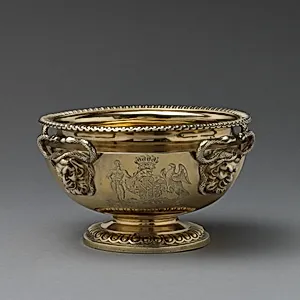
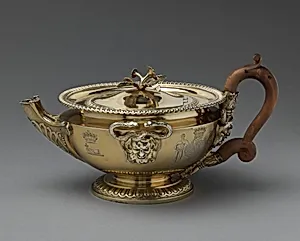
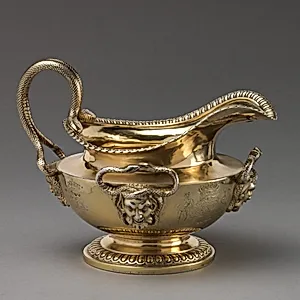
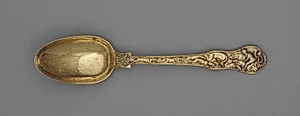
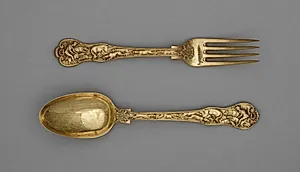
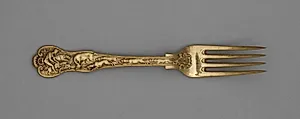
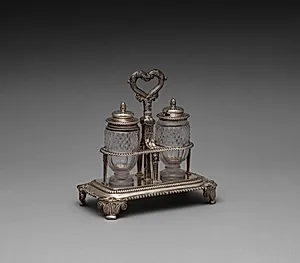
Paul Storr (baptized 28 October 1770, London – 18 March 1844, London) was England's preeminent silversmith of the Regency era, renowned for his masterful neoclassical designs that graced royal tables and aristocratic homes. Born to Thomas Storr, a silver-chaser who later became an innkeeper in Westminster, young Paul began his training around 1785 as an apprentice to the Swedish silversmith Andrew Fogelberg in Soho's Church Street. This rigorous mentorship honed his skills in chasing and design, leading to his freedom of the Goldsmiths' Company in 1792 and the registration of his first mark that year in partnership with William Frisbee. In 1801, he married Elizabeth Susanna Beyer, daughter of piano maker Adam Beyer from a Saxon family of instrument builders; the couple raised ten children at their home in Tooting, including son Reverend Francis Storr, who erected a memorial to his father.
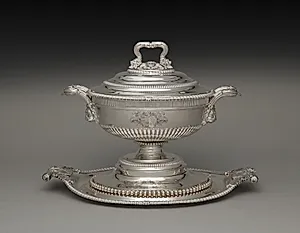
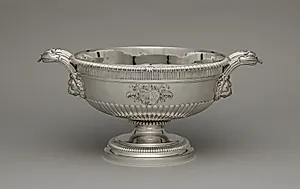
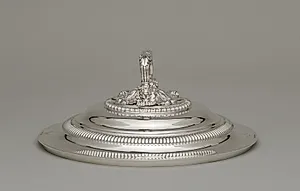
Storr's career flourished after establishing his independent workshop in Soho, where he worked in the grandiose neoclassical style, drawing on classical motifs, rhythmic proportions, and intricate chasing. From 1807 to 1819, he headed the silver factory for Rundell, Bridge & Rundell—the royal goldsmiths to George III and George IV—overseeing massive production, including up to 10,000 ounces of plate monthly. Dissatisfied with mass production, he departed in 1819 to set up anew, later partnering with John Mortimer (Storr & Mortimer, 1822–1838), blending neoclassicism with naturalistic and Rococo revival elements in exuberant, asymmetrical forms.
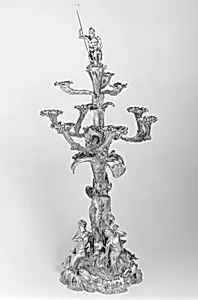
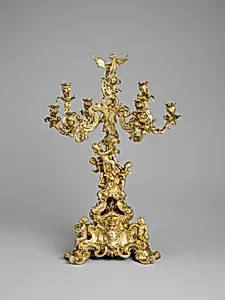
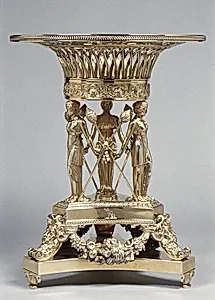
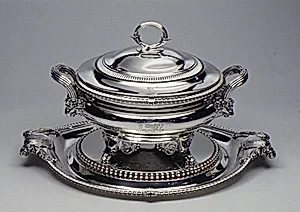
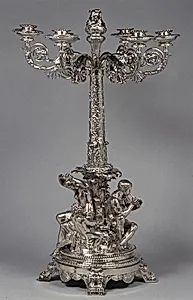
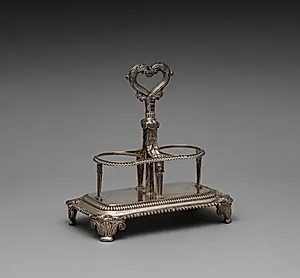
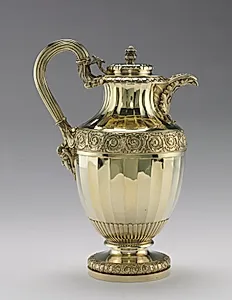
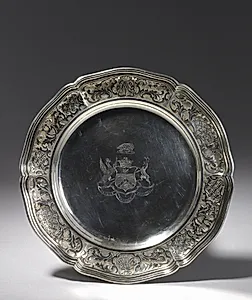
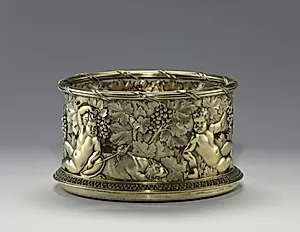
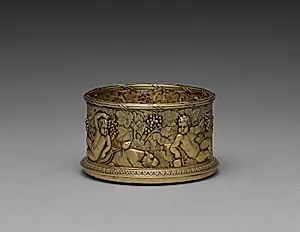
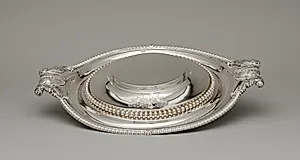
Among his masterpieces is the gold font of 1797, commissioned by William Cavendish-Bentinck, 3rd Duke of Portland (now British Museum), followed by the "Battle of the Nile Cup" (1798–1799) honoring Lord Nelson (Royal Museums Greenwich). Other icons include the silver-gilt wine cooler (1810, White House Collection), table centerpiece (1810–1811), Theocritus Cup (1812–1813, presented by Queen Charlotte to the Prince Regent, Windsor Castle), and a William IV silver tray (1835). These works, supplied to monarchs, nobility, and even Tsar Nicholas I, exemplify his fusion of artistry and technical prowess.
Retiring in 1838 to Hill House in Tooting, Storr left an indelible legacy as the "last of the goldsmiths," bridging 18th-century craftsmanship with industrial shifts. His pieces endure in treasures like Buckingham Palace, the V&A's National Silver Collection, the Metropolitan Museum of Art, and beyond, captivating collectors with their timeless elegance and historical resonance.