Ctrl K
1901–1986
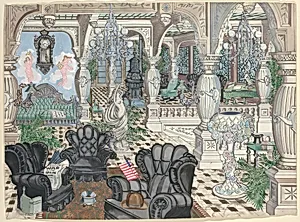
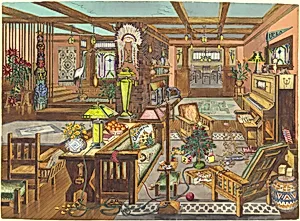
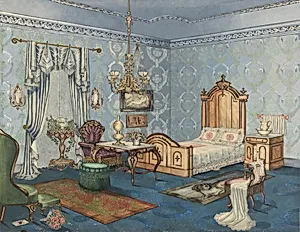
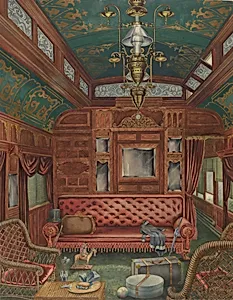
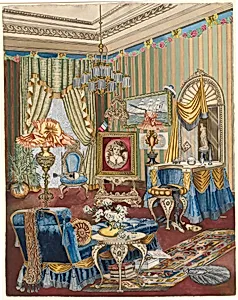
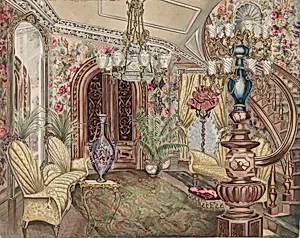
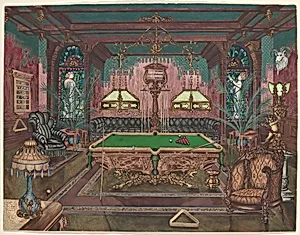
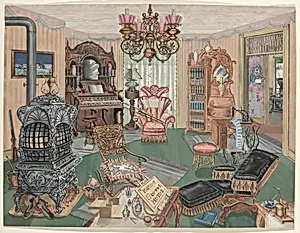
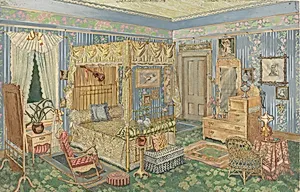
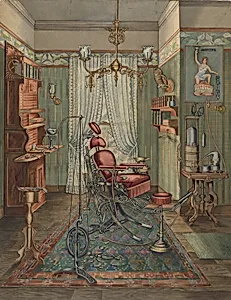
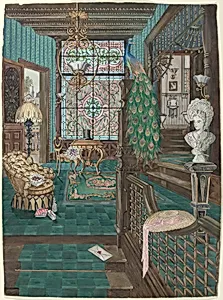
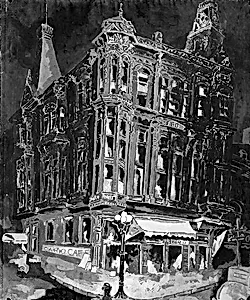
Perkins Harnly was born on October 14, 1901, on a cattle ranch in the rugged plains of Ogallala, Nebraska—the same year Queen Victoria died, an irony that foreshadowed his lifelong obsession with Victorian opulence. Leaving behind the stark Midwest, he ventured to Los Angeles in 1922, spending six years there before settling in New York City in 1928. There, Harnly studied at the School of Interior Design, honing skills that fueled his signature watercolors of lavish Victorian furnishings and interiors, often laced with a satirical edge that poked at ornate excess.
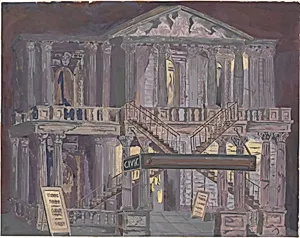
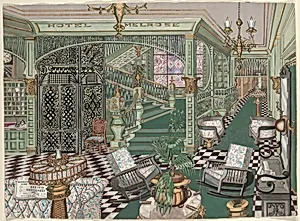
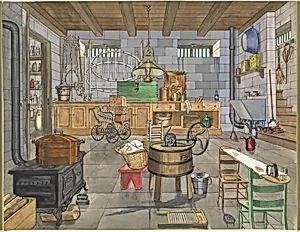
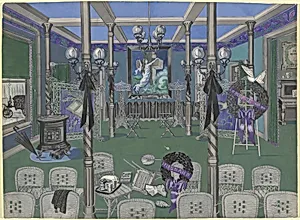
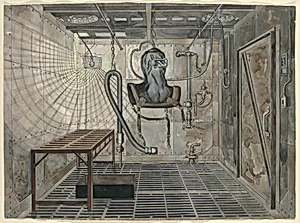
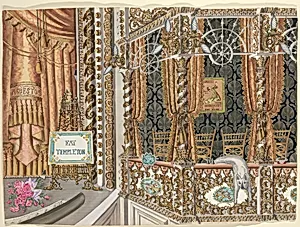
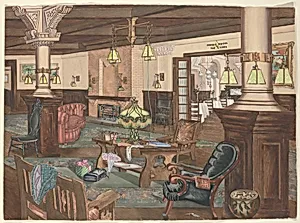
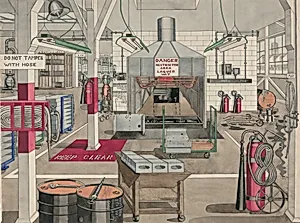
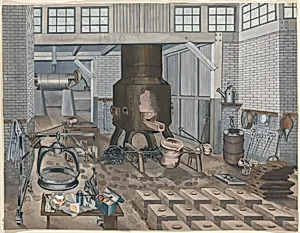
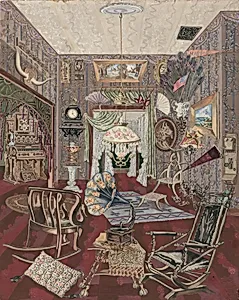
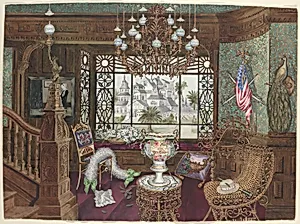
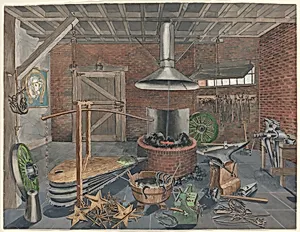
Harnly's breakthrough came with his debut exhibition in 1933 at the Julien Levy Gallery, alongside luminaries like Joseph Cornell. By December 1935, he joined the Federal Art Project, transitioning in 1938 to its Index of American Design, where he meticulously rendered forgotten American decorative arts in gouache and watercolor. These works, donated to the National Gallery of Art, captured evocative scenes like the *Hotel Melrose Lobby (1880)*, *Theatre Box (1892)*, *Funeral Parlor (1895-1920)*, and *Basement of Urban House (1910)*, all created around 1947. His contributions preserved a vanishing aesthetic, blending precision with wry commentary on bygone grandeur. The Metropolitan Museum of Art showcased his Index pieces in the 1942 exhibition *I Remember That*, cementing his reputation.
In the 1940s, Hollywood beckoned when producer Albert Lewin, impressed by Harnly's exhibit, summoned him for set designs on *The Picture of Dorian Gray* and commissioned supplementary paintings for the National Gallery. Harnly produced the folio *A Century of American Interiors, 1850–1950* before returning to California, residing in the Culver Hotel until his death in 1986. His oeuvre graces collections at the Smithsonian American Art Museum, Whitney, and beyond, with a 1981–1982 solo show there highlighting his enduring legacy. A 2021 biography by Sarah Burns explores his bohemian circles, affirming Harnly's place as a quirky chronicler of America's decorative past.