
Ctrl K
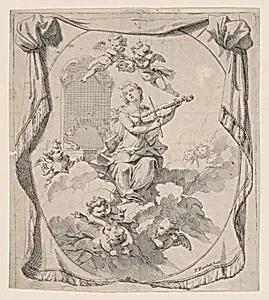
1659–1720
Peter Berchet (1659–1720), also known as Pierre Berchet, was a French painter whose career bridged the courts of Europe, ultimately finding his greatest patronage in England. Born in France, Berchet studied under the esteemed Charles de La Fosse, a leading figure in French Baroque painting renowned for his grand historical and allegorical compositions. By the age of eighteen, Berchet secured employment decorating the royal palaces, honing his skills in opulent interior schemes that blended illusionistic architecture, mythological figures, and vibrant ornamentation.
Berchet's international career began in 1681 when he traveled to England to collaborate with Jacob Rambour, a specialist in architectural painting, on commissions for Antonio Verrio at Windsor Castle. Returning briefly to France, he soon received a prestigious summons from King William III to assist Dutch designer Daniel Marot in decorating the newly built Het Loo Palace in the Netherlands, a project that occupied him for fifteen months. The revocation of the Edict of Nantes in 1685, which persecuted Huguenots like Berchet, prompted his permanent settlement in England. There, he thrived amid the wave of French Protestant émigrés, focusing on lavish interior decorations for the nobility's country estates.
Working in the rich Baroque tradition exemplified by his mentors and collaborators—characterized by dramatic perspective, gilded flourishes, and theatrical narratives—Berchet contributed to the grandeur of English Palladian and Stuart interiors. Though few standalone canvases survive, his frescoes and overmantels graced halls at venues like Chatsworth and Boughton House, influencing the fusion of French elegance with English opulence. Berchet's legacy endures as a pivotal figure in the Huguenot artistic diaspora, elevating domestic decoration to courtly splendor and paving the way for later ornamentalists. His life, spanning the opulent courts of Louis XIV's France to William III's Britain, embodies the era's cross-Channel cultural exchange, as detailed in historical accounts like his Wikipedia entry and art historical records.
(Word count: 312)