
Ctrl K
**Pier Antonio Pazzi (also known as Pietro Antonio or Antonio Pazzi) was an Italian engraver active in the eighteenth century.** Born in 1706, he worked primarily as a reproductive printmaker, creating detailed etchings and engravings after the designs of other artists. His career extended at least until the mid-1760s, with records noting activity through 1766 or shortly thereafter. Pazzi specialized in portraits and scenes that helped disseminate images of notable figures and artworks across Europe.
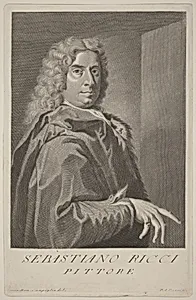
Pazzi frequently collaborated with or worked after the Florentine painter, draughtsman, and engraver Giovanni Domenico Campiglia (1692–1768). Their partnership produced notable portraits, including an engraving of the painter Sebastiano Ricci and a depiction of the sixteenth-century artist Cherubino Alberti, dated between 1752 and 1762. He also contributed plates to larger publications, such as the 1744 volume *Scelta di XXIV Vedute delle principali... Palazzi della Città di Firenze*, which featured views after Giuseppe Zocchi. Other works include *Cupid Dominating a Lion* from the 1760s and additional portraits, such as that of Cardinal Domenico Amedeo Orsini d’Aragona.
Stylistically, Pazzi belonged to the tradition of Italian reproductive engraving, employing precise line work and tonal effects typical of the late Baroque and early Rococo periods. His prints translated paintings and drawings into accessible black-and-white images, serving both documentary and decorative purposes. While little is recorded about his formal training, his output reflects the professional standards of mid-eighteenth-century Florence and Rome, where such printmakers played a vital role in the art market.
Pazzi’s legacy endures through his contributions to major museum collections, including the National Gallery of Art in Washington, D.C., the Metropolitan Museum of Art in New York, and the Philadelphia Museum of Art. His engravings continue to provide valuable visual records of earlier Italian masters and eighteenth-century artistic networks. With only one known artwork attributed to him in certain institutional holdings, his focused output underscores the specialized nature of reproductive printmaking during his era.