Ctrl K
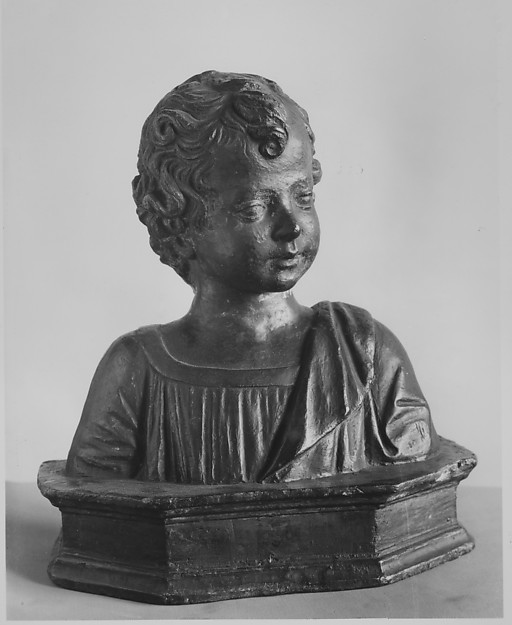
1520–1553
Occupations
Pierino da Vinci (c. 1529–1553/54), born Pier Francesco di Bartolomeo di Ser Piero da Vinci, was an Italian Renaissance sculptor whose brief but brilliant career was cut tragically short by malarial fever at age twenty-three. Born in Vinci, Tuscany, around 1529, Pierino was the nephew of Leonardo da Vinci—the son of Leonardo's younger half-brother Bartolomeo. His family recognized his artistic talent early and saw him as the heir to his uncle's genius, though Leonardo had died when Pierino was still a child. Despite his youth, Pierino demonstrated precocious sculptural ability that earned him training under two distinguished masters: Baccio Bandinelli and Niccolò Tribolo. His work shows profound influence from Michelangelo, particularly in his ambitious relief panels and sculpture groups. A formative year in Rome (1546–47) exposed him to classical antiquity and contemporary developments in sculpture. His death from malarial fever in Pisa in 1553 or 1554 left an exceptionally small oeuvre, making his surviving works rare and highly valued. Almost all biographical information comes from Giorgio Vasari's Lives of the Artists, which mixes fact and legend.
Pierino da Vinci was born around 1529 in the small town of Vinci in Tuscany, the same birthplace as his famous uncle Leonardo da Vinci (1452–1519). He was the son of Bartolomeo da Vinci, Leonardo's younger half-brother.
Though Leonardo had died when Pierino was still a child, the family recognized Pierino's artistic ability at an early age and saw him as the heir to Leonardo's talent. This familial expectation may have influenced the direction of his education and career.
The da Vinci family arranged for Pierino to receive professional artistic training, recognizing his precocious gifts.
Pierino studied under two distinguished sculptors: Baccio Bandinelli (1488–1560), one of Florence's leading sculptors and a rival of Michelangelo, and Niccolò Tribolo (1500–1550), a sculptor known for his decorative work and garden sculpture.
This training under two masters with different specializations—Bandinelli's monumental figure sculpture and Tribolo's decorative sculpture—provided Pierino with comprehensive technical education.
During his training, Pierino demonstrated remarkable ability to absorb the Michelangelesque style, showing particular skill in complex compositions with multiple figures.
In 1546–47, Pierino spent approximately one year in Rome, a crucial formative experience for any Renaissance sculptor. This visit exposed him to classical antiquity firsthand—the ancient sculptures that were being excavated and collected—as well as to Michelangelo's recent and ongoing projects.
This Roman year deepened Pierino's understanding of classical sculpture and reinforced the Michelangelesque tendencies already evident in his work.
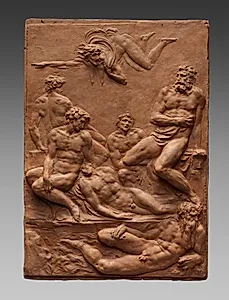
Returning from Rome, Pierino produced his most important works during the final six or seven years of his life. Despite his youth, he created ambitious relief panels and sculpture groups that demonstrated sophisticated compositional ability and technical mastery.
His notable works included the 'River God,' influenced by Michelangelo's designs; relief panels like 'Pisa Restored'; and 'The Death of Count Ugolino and His Sons,' based on a famous episode from Dante's Divine Comedy.
These works reveal a sculptor of exceptional promise who had absorbed the lessons of Michelangelo while developing his own artistic voice.
Tragically, Pierino's promising career was cut short when he died from malarial fever in Pisa in 1553 or 1554, at approximately age twenty-three.
Due to his untimely death, his oeuvre is exceptionally small, making surviving works incredibly rare acquisitions for museums and causing art historians to speculate what he might have achieved with a full career.
Artheon Research Team
Last updated: 2025-11-09
Biography length: ~469 words
Wikidata (CC0); Getty ULAN (ODC-By)