Ctrl K
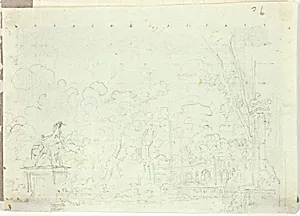
1761–1827
Pierre-Antoine Mongin (1761–1827) was a prolific French painter, engraver, and designer whose career bridged the late Enlightenment and the Romantic era. Born in Paris, little is known of his early life beyond his formal training at the Académie Royale de Peinture et de Sculpture from 1782 to 1785, where he studied under the esteemed history painters Noël Hallé, Gabriel-François Doyen, and François-André Vincent. This rigorous academic foundation equipped him with a mastery of landscape, genre, and historical subjects, often infused with the elegant, picturesque qualities reminiscent of Jean-Honoré Fragonard. Mongin established his studio at 29 rue de Sèvres in Paris, from which he taught notable pupils including Hippolyte Lecomte and Alexis-Victor Joly.
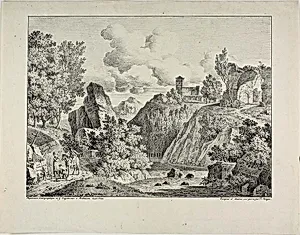
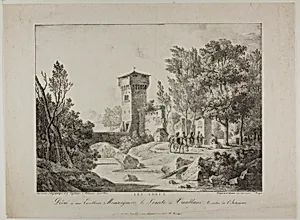
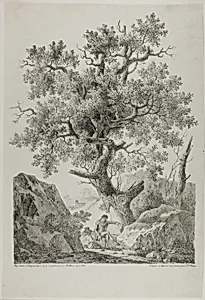
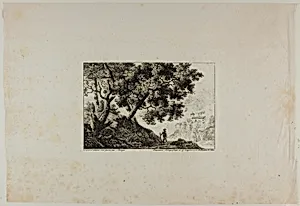
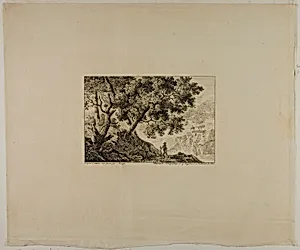
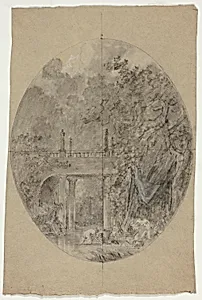
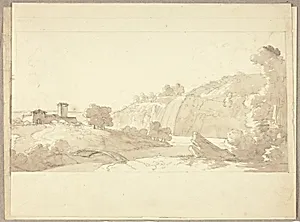
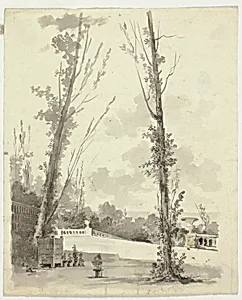
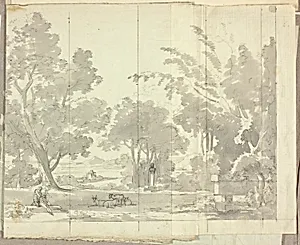
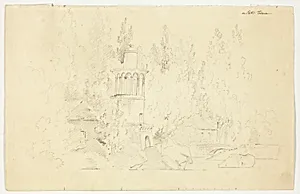
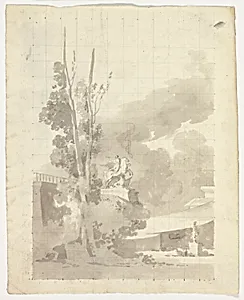
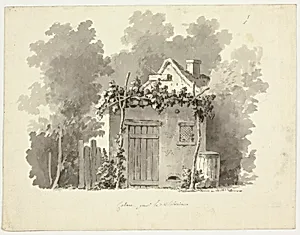
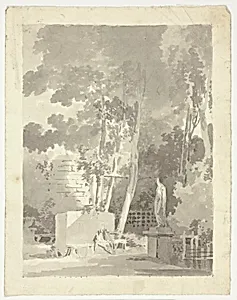
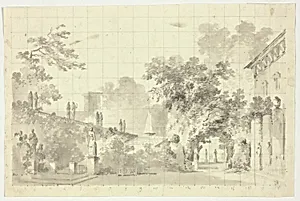
Mongin's oeuvre is characterized by luminous landscapes featuring manicured gardens, fountains, follies, and architectural elements from grand estates like Versailles, Saint-Cloud, and the Château d'Anet. He exhibited regularly at the Paris Salon from 1791 to 1824, showcasing oils, gouaches, watercolors, and drawings such as *View of the Park at Versailles: Women Bathing Beneath a Bridge* and *Vue du jardin du château d’Anet* (Louvre). Early highlights include his contribution to *The Fortune Teller* (1812 Salon), where he painted the landscape and architecture alongside Marie-Guillemine Benoist, and intimate scenes like *Corner of a Park* (Metropolitan Museum of Art) and a bather in a landscape (1818). An early adopter of lithography, he collaborated with Godefroy Engelmann on prints like *Le Chien de l’aveugle* and *Chêne* (both 1816).
In his later years, Mongin pioneered scenic wallpaper design, adapting his idyllic visions to industrial production. For Joseph Dufour et Cie, he created *The English Gardens* (c. 1804), followed by masterpieces for Zuber & Cie: *L'Hindoustan* (1807), *Greater Helvetia* (1814), *Lesser Helvetia* (1818), *French Gardens* (1821), and *Distant Lands* (1825). These panoramic papers evoked exotic locales and amorous garden idylls, revolutionizing interior decoration. His works grace collections at the Art Institute of Chicago, Metropolitan Museum of Art, Louvre, and Cooper-Hewitt, with *L'Hindoustan* even featured on a 2013 French postage stamp. Mongin's legacy endures as a versatile innovator who seamlessly fused fine art traditions with emerging decorative technologies.