Ctrl K
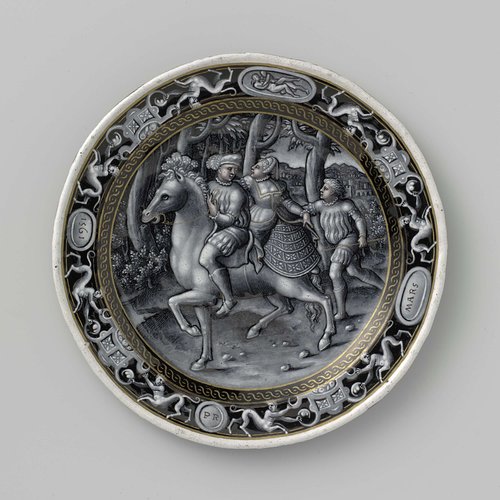
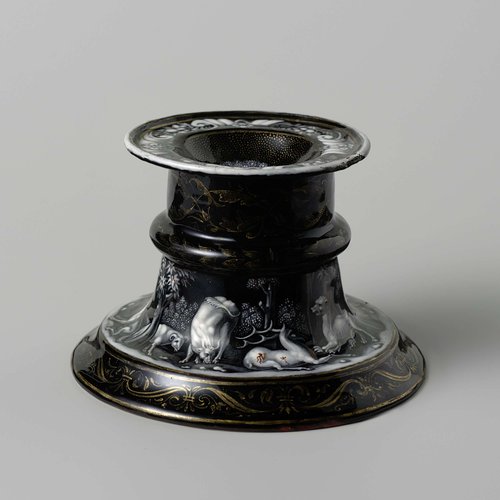
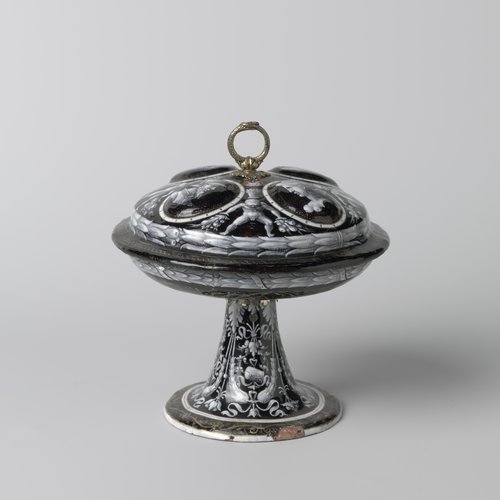
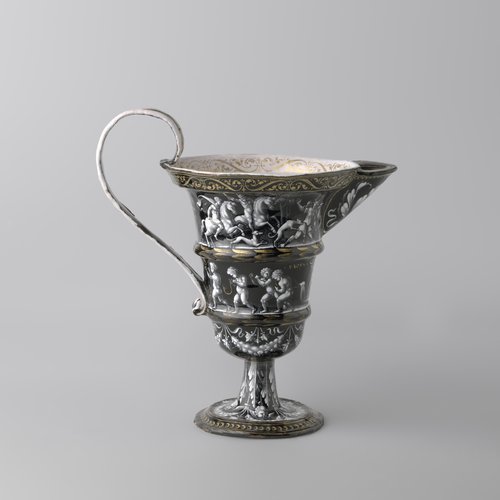
Pierre Reymond (c. 1513–after 1584) was among the most celebrated and prolific Limoges enamel painters of the French Renaissance, whose technical mastery and artistic sophistication elevated painted enamel from decorative craft to recognized fine art. Active for over forty years with dated works spanning from 1537 to 1578, Reymond worked in the grisaille technique—combining white, black, and red into richly varied gray tones enlivened with gold—to create enamel plaques, plates, and dishes depicting biblical, mythological, and classical subjects with exceptional refinement. Reymond's pride in his artistic identity manifested in his practice of prominently signing his works with initials and dates, unusual for craftsmen but standard for Renaissance artists claiming individual authorship. He used various signatures including Remmo, Rexmon, Remon, and Rexman, particularly during business relationships with major German families who commissioned his works. His artistic evolution shows technical refinement: in 1540, he used polychrome enamels in thin layers on white backgrounds; by 1560, he incorporated flesh tones, gold, and grotesque ornaments; around 1575, his palette darkened for dramatic effect. His works are preserved in major museums worldwide including the Metropolitan Museum of Art, demonstrating his lasting significance in Renaissance decorative arts.
Pierre Reymond was born in Limoges around 1513, entering the city's thriving enamel-working community during the technique's golden age. Limoges had established itself as Europe's principal center for painted enamel production, with workshops creating luxury objects for aristocratic and royal patrons across the continent.
Reymond's earliest dated work appears in 1537, indicating he had completed his apprenticeship and established independent production by his mid-twenties. His early works already demonstrated sophisticated command of the grisaille technique that would characterize his mature production.
During the 1540s, Reymond used polychrome enamels applied in thin layers over white backgrounds, creating compositions of exceptional luminosity and color refinement. His subjects drew from Renaissance humanist culture, depicting biblical narratives, classical mythology, and historical scenes that reflected his patrons' educated tastes.
Reymond's workshop in Limoges became one of the city's most productive, creating plates, plaques, dishes, and religious objects. His business success reflected both artistic quality and shrewd commercial practices, including signing works prominently to establish brand recognition.
By 1560, Reymond's technique had evolved significantly. He incorporated flesh tones to achieve greater naturalism in figural representation, added gilding for decorative enrichment, and introduced grotesque ornaments on rims and borders, reflecting Italian Renaissance decorative vocabulary's growing influence on French arts.
Around 1575, Reymond's palette shifted toward darker tonalities, creating more dramatic contrasts and somber atmospheric effects. This evolution may have reflected changing aesthetic tastes or Reymond's personal artistic development toward greater tonal sophistication.
Throughout his career, Reymond maintained significant business relationships with German families who commissioned substantial quantities of his work. These international connections required signing variants of his name—Remmo, Rexmon, Remon, Rexman—adapted to German pronunciation and spelling conventions while maintaining recognizable connection to his identity.
Reymond's last dated work appears in 1578, though he evidently lived beyond this date, with some sources indicating he worked until after 1584. His production over more than forty years established him as one of Limoges's most enduring and influential enamel painters, whose works set standards for technical excellence and artistic sophistication.
Artheon Research Team
Last updated: 2025-11-09
Biography length: ~478 words
Wikidata (CC0)