Ctrl K
1545–1584
**Pieter Huys** (c. 1519/1520 – c. 1584) was a Flemish Renaissance painter and engraver active primarily in Antwerp. He became a master in the Antwerp Guild of St. Luke in 1545, marking the start of his independent career.
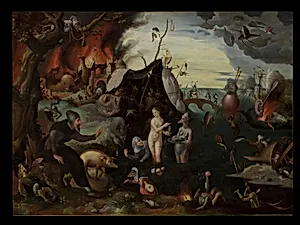
Huys belonged to a family of artists; his brother Frans Huys (c. 1522–c. 1562) was also an engraver. The brothers collaborated on prints for publishers such as Hieronymus Cock and Christoph Plantin, including illustrations for anatomical and devotional works. While little is documented about his early training, Huys worked in the Antwerp artistic milieu and developed a distinctive style as a creative follower of Hieronymus Bosch. His paintings feature Boschian themes of temptation, hellish visions, and moral allegory, yet with more lifelike figures, stronger colors, and thicker brushwork than his predecessor. He also drew on influences from Pieter Bruegel the Elder and emerging Mannerist trends, blending imaginary scenes with humanistic symbolism.
Among his major signed and dated works are two versions of *The Temptation of Saint Anthony* (1547, Louvre; 1577, Museum Mayer van den Bergh, Antwerp), *Hell* (1570, Prado, Madrid), and *The Bagpipe-Player* (1571, Staatliche Museen, Berlin). These demonstrate his range from macabre Bosch-inspired fantasies to moralizing genre scenes popular among Flemish intellectuals. Other attributions exist, though some overlap with artists like Jan Mandijn.
Huys contributed to the enduring Northern Renaissance tradition of Boschian imagery well into the late sixteenth century. His integration of moral symbolism with increasingly naturalistic and colorful execution helped sustain and evolve these themes for new audiences, securing his place in Flemish art history alongside contemporaries who explored similar allegorical subjects.