Ctrl K
1602–1672
Pieter Jansz (1602–1672) was a Dutch glass painter and draughtsman working in Amsterdam during the Dutch Golden Age, a period when the art of painted glass windows experienced a distinctive flowering in the Protestant Netherlands. While the Reformation had largely ended the tradition of elaborate stained glass religious imagery in Dutch churches, secular painted glass continued to thrive, particularly in the form of heraldic windows for private residences, civic buildings, and some church commissions. Jansz, trained by the Haarlem glass painter Jan Philipsz van Bouckhorst, created an important group of seventeen windows for the Nederlands Hervormde Kerk in Oudshoorn (1666–1671) that survive today, demonstrating the high level of craftsmanship maintained in this specialized art form.
Pieter Jansz was born in 1602 in Amsterdam, the son of a cooper (barrel maker) who died in the year of Pieter's birth. This early loss meant that young Pieter grew up without his father, though the circumstances of his upbringing and how he entered artistic training remain undocumented. In 1633, he married Oetje Jacobs, and the couple lived successively on the Wolvestraat and Herengracht in Amsterdam, addresses that suggest at least moderate prosperity.
According to Arnold van Houbraken, who wrote about Jansz in his 'Groote schouburgh' (Great Theatre of Dutch Painters, 1718–1721), Pieter was a glass painter and a 'konstig teekenaar op papier' (an artful draughtsman on paper). Van Houbraken further recorded that Jansz had been trained in Haarlem by Jan Philipsz van Bouckhorst (c. 1588–1631), who also specialized in glass painting. This training in Haarlem, one of the major Dutch artistic centers, would have provided Jansz with comprehensive instruction in the specialized techniques of glass painting: designing compositions suitable for the medium, understanding how light would transmit through and illuminate colored glass, and mastering the technical processes of applying and firing glass paints.
Jansz established himself in Amsterdam as a glass painter, working during a period when Dutch glass painting had developed a distinctive character. Unlike the medieval tradition of elaborate figurative stained glass that had flourished in Catholic Europe, Dutch Protestant glass painting after the Reformation focused largely on heraldic designs, decorative patterns, and occasional figurative work for civic and private commissions rather than religious imagery.
An important group of seventeen windows painted by Jansz survives in the Nederlands Hervormde Kerk (Dutch Reformed Church) in Oudshoorn, near Alphen aan den Rijn. These windows, installed between 1666 and 1671, demonstrate the persistence of painted glass in Dutch Reformed churches despite Protestantism's general avoidance of elaborate religious imagery. The Oudshoorn windows likely featured heraldic designs, decorative borders, and possibly some figurative elements appropriate to Reformed sensibilities.
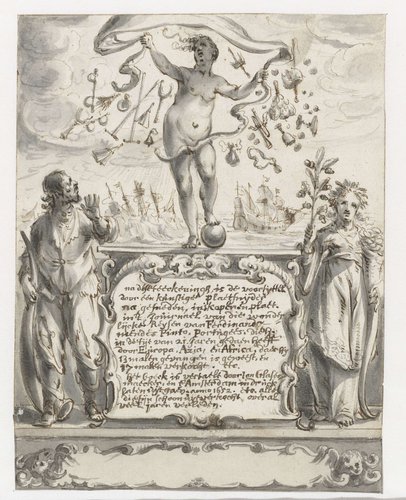
Beyond his work as a glass painter executing finished windows, Pieter Jansz was also active as a designer creating drawings that would be executed by others. He created designs for cartouches (decorative frames, often featuring scrollwork, for Joan Blaeu (1596–1673), the famous Dutch cartographer. Blaeu's publishing house produced some of the most elaborate and beautiful atlases of the seventeenth century, and the decorative cartouches that framed maps and title pages were important elements of their visual appeal. Jansz's designs for these cartouches demonstrate his versatility and his integration into Amsterdam's network of skilled craftsmen and artists working in various media.
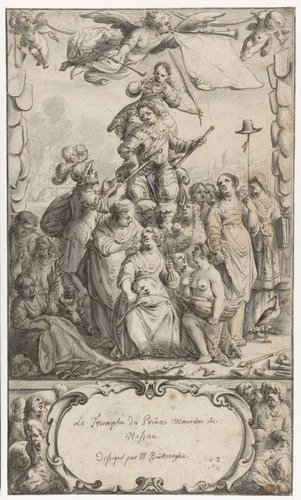
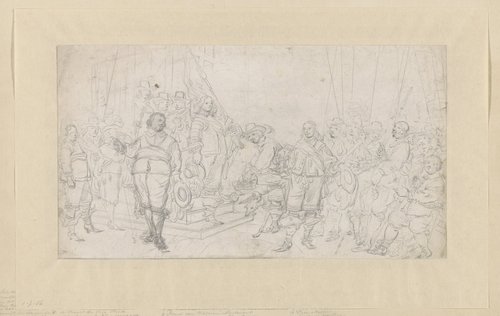
For Jodocus Jansonius (another major Amsterdam map publisher), Jansz drew the 'Triomf van Frederik Hendrik' (Triumph of Frederick Henry), which was then engraved by Jacob van Meurs. This multi-stage collaborative process—designer creating original composition, engraver translating it into print—was typical of Dutch printmaking and illustrated book production. It demonstrates that Jansz was not solely a glass painter but also a draughtsman whose designs could serve as source material for engravings.
Pieter Jansz was buried in Amsterdam's Nieuwe Kerk on April 8, 1672, having lived through most of the Dutch Golden Age and witnessed Amsterdam's transformation into one of Europe's great cultural and commercial centers. His death occurred during a particularly dark year for the Netherlands—the 'Rampjaar' (Disaster Year) of 1672, when the Dutch Republic faced invasion by France, England, Münster, and Cologne simultaneously. He died just months before the crisis would reach its peak.
Artheon Research Team
Last updated: 2025-11-09
Biography length: ~858 words