Ctrl K
1614–1623
**Pietro Bernardi (c. 1580/1590 – 1623) was an Italian painter from Verona whose brief career positioned him as one of the earliest and most direct followers of Caravaggio in northern Italy.** Active at the turn of the sixteenth and seventeenth centuries, he remains a somewhat elusive figure in art history, with limited documentation and only a handful of securely attributed works. Contemporary sources, including Bartolomeo dal Pozzo’s 1718 biographies of Veronese artists, identify him as a pupil of the Mantuan-born painter Domenico Fetti, suggesting training that blended local traditions with broader Baroque influences.
Bernardi earned recognition as the “Caravaggio of Verona” for his strikingly faithful adoption of Caravaggesque techniques—dramatic chiaroscuro, realistic figure modeling, and nocturnal scenes lit by candlelight or hidden sources—well before other Veronese artists brought similar ideas back from Rome. Art historians believe he may have traveled directly to Rome around 1610, absorbing the influence of Michelangelo Merisi without intermediaries. His style stands out for its raw realism and autonomous personality, free from lingering Mannerist elements, and he is counted among the five most significant painters of seventeenth-century Verona.
Only a small number of paintings are firmly attributed to him, most dated around 1615. These include *The Annunciation* in the church of San Fermo Maggiore, two scenes of Saint Charles Borromeo (*Saint Charles among the Plague-Stricken* and *Saint Charles Distributing Bread to the Poor*) in the church of San Carlo, and the *Holy Family with Saints Joachim and Elizabeth* (or variants with Saints John and Elizabeth) now in Verona’s Museo Civico di Castelvecchio. A particularly evocative *Holy Family* from around 1610, featuring intimate domestic details like a sleeping kitten, exemplifies his early mastery of artificial light and everyday realism.
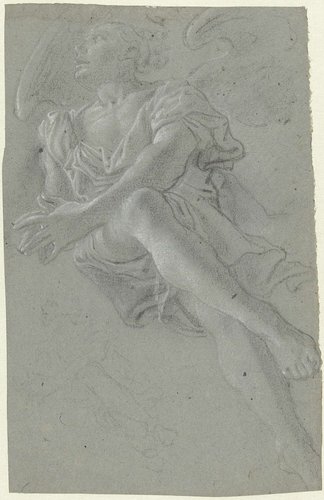
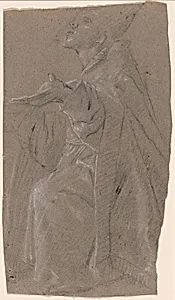
Rediscovered in the mid-twentieth century through the scholarship of Maddalena Salazzari Brognara, Bernardi’s legacy lies in his pioneering role as Verona’s first true Caravaggesque. Though his output was modest and he died young (possibly before 1623), his direct, unmediated engagement with Caravaggio’s innovations distinguishes him from later, more eclectic Veronese painters. Recent studies of his drawings further reveal a talented draftsman capable of powerful, almost proto-modern realism, ensuring his place as a fascinating, if understudied, bridge between Roman naturalism and northern Italian Baroque.