Ctrl K
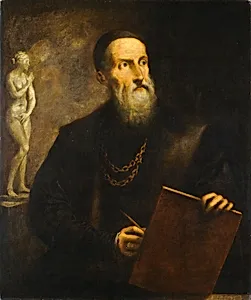
1602–1676
Pietro della Vecchia (1603–1678), a versatile Venetian painter from a family of artists, was born in Vicenza or possibly Venice to Gasparo della Vecchia, a painter admitted to the Venetian guild, and belonged to the prominent Dalla Vecchia lineage. In 1649, he married Clorinda Régnier, daughter of the Flemish painter Nicolas Régnier and a painter herself known for her spirited character; their union connected him to brother-in-law Daniel van den Dyck, with whom he collaborated on frescoes at Palazzo Pesaro in Preganziol. They had a son, Gasparo Prospero, who pursued painting alongside music and mathematics, and four daughters. Della Vecchia received his initial training under Alessandro Varotari, known as Padovanino, whose classicism rooted in Titian's early manner profoundly shaped his affinity for sixteenth-century Venetian masters; early influences also included Carlo Saraceni and Jean Leclerc, evident in his Caravaggesque tendencies from a likely Roman sojourn.
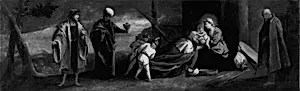
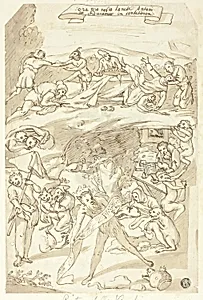
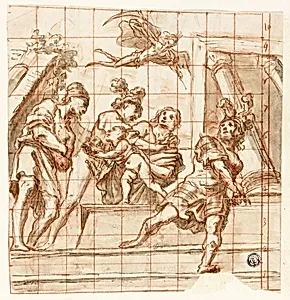
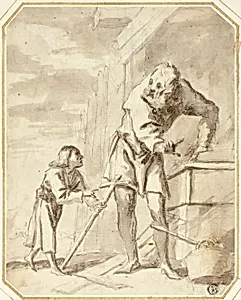
Admitted to Venice's painters' guild from 1629 to 1640, della Vecchia rose as a leading religious painter in the 1630s, securing the role of pittor ducal (ducal painter) from 1640 to 1674. He worked in the late Mannerist to early Baroque tradition, blending Titian and Tintoretto's monumentality with Caravaggisti drama, grotesque exaggeration, and esoteric subjects—earning the moniker "simia da Zorzon" (Giorgione's ape) for his virtuosic pastiches of Giorgione, Titian, Palma Vecchio, and others, sometimes passed as originals to delight connoisseurs. Major works include the *Calvary* (1633, San Lio, Venice), *Angel Offering a Skull to St. Giustina* (1640, Gallerie dell'Accademia), *Allegory of Architecture* (1654, Accademia Carrara, Bergamo), and *Conversion of Francis Borgia* (1664–1674, Musée des Beaux-Arts de Brest). He painted genre scenes of feathered "bravi" soldiers, fortune-tellers, philosophers, and rare landscapes like *Rocky Landscape with Warriors* (Hermitage), alongside cartoons for St. Mark's mosaics.
Beyond painting, della Vecchia ran a bustling workshop, hosted a drawing academy, and taught pupils like Gregorio Lazzarini (later Tiepolo's master). Renowned as a restorer—he mended Giorgione's *Castelfranco Madonna* (1643–1644)—and art expert, he valued collections with his father-in-law. Formerly misattributed as Pietro Muttoni until 1984, his rediscovery highlights his insights into seventeenth-century views of Renaissance giants and his influence on Venetian Baroque through prolific output and pedagogical legacy, bridging old masters with emerging Rococo sensibilities.